Cotton arrivals in Pakistan rose 7.53 per cent year-on-year to 4.08 million bales by 15 October, according to the Pakistan Cotton Ginners Association (PCGA), even as domestic cotton and textile businesses report a deepening squeeze. Industry representatives say roughly 500 ginning factories, more than 150 textile mills and nearly half of the country’s power looms are lying idle.
PCGA figures put arrivals at 4,081,265 bales, an increase of 285,628 bales from 3,795,637 a year earlier. Punjab recorded 1.64 million bales, up 7.79 per cent, while Sindh’s arrivals rose 7.35 per cent to 2.44 million. In Punjab, Bahawalnagar led with 418,750 bales, followed by Bahawalpur, Dera Ghazi Khan, Rahim Yar Khan and Layyah. In Sindh, Sanghar topped the list with 1.14 million bales, ahead of Sukkur, Naushehro Feroze and Khairpur.
Arrivals up, but stocks still unsold
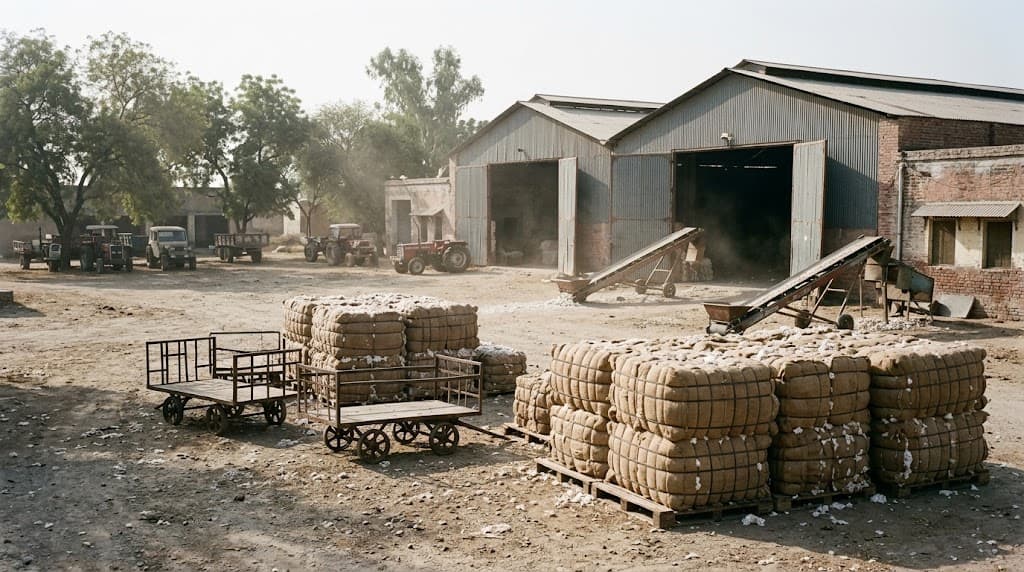
Nationwide, 471 ginning factories were operating. Textile mills had bought about 3.45 million bales and exporters 97,000, leaving 531,530 bales unsold. Arrivals in the preceding fortnight alone totalled 872,863 bales. Cotton arrivals in Pakistan therefore show a stronger seasonal flow into ginneries, yet not all of that lint has found buyers.
Cotton Ginners Forum chairman Ihsanul Haq cautioned that bad weather could still push national output below earlier hopes. He also flagged a gap between PCGA arrivals for Punjab—1.638 million bales by 15 October—and the Punjab Crop Reporting Service estimate of provincial production at 2.983 million bales.
Why factories say the crisis is deepening
Industry voices tie the textile industry crisis in Pakistan to higher production costs and alleged misuse of the Export Facilitation Scheme (EFS)—a government facility meant to ease imports of inputs for goods that should be re-exported. Ginners claim imported yarn and fabric meant for re-export are instead being sold on the local market.
Mr Haq cited estimates that 40 million to 50 million metres of fabric had been brought in from China alone under the scheme, without matching export growth. Aptma (All Pakistan Textile Mills Association) figures showed man-made yarn imports rising from 3,056 tonnes in the first quarter of 2025-26 to 12,773 tonnes in the same quarter of 2026-27, while man-made fabric imports jumped from 660 tonnes to 8,628 tonnes. He alleged that some of those imports were sold locally, where an 18 per cent sales tax applies, putting home producers at a disadvantage.
Aptma has welcomed Customs steps against alleged EFS misuse and called for tighter limits on man-made yarn and fabric imports under the scheme. It repeated that around 500 ginning factories and more than 150 textile mills have closed, with nearly half of power looms inactive.
Farmers, quality and what comes next
Sajid Mahmood, head of the Transfer of Technology Department at the Central Cotton Research Institute (CCRI) in Multan, said cotton revival must focus on farmers’ profits, costs, market access and lint quality—not arrivals alone. If returns stay weaker than rival crops, growers may cut acreage next season, he warned. With 15 to 20 days of picking still left, CCRI has advised a spray of 2kg urea in 100 litres of water where plants hold eight to 10 green bolls, plus careful watch for pink bollworm, prompt picking of mature bolls and dry-weather harvest to limit contamination.
Karachi Cotton Brokers Forum leader Naseem Usman urged the government to set a support price and a procurement route if market prices fall below it. He also hoped stricter enforcement would curb undocumented trade and could lift overall cotton crop production in Pakistan.
Timeline: what has happened so far
- First quarter 2025-26: Aptma data show man-made yarn imports at 3,056 tonnes and man-made fabric at 660 tonnes.
- First quarter 2026-27: The same Aptma series puts yarn imports at 12,773 tonnes and fabric at 8,628 tonnes.
- Fortnight before the 15 October count: 872,863 bales arrived at ginning factories.
- By 15 October: PCGA reported 4,081,265 bales of cotton arrivals in Pakistan, up 7.53 per cent from a year earlier; 531,530 bales remained unsold after mill and exporter purchases.
Aasan alfaaz mein
Kapas ki amad ginning factories mein pichhle saal se zyada ho gayi hai—lagbhag 4.08 million bales mid-October tak. Phir bhi industry ke mutabiq kai sau ginning units aur 150 se zyada textile mills band ya bekaar hain. Log kehte hain mehangi production aur EFS ke under aane wali yarn/fabric local market mein bechne se local mills mushkil mein hain. Kissan aur mazdoor ke liye yeh matlab hai ke zyada kapas aane ke bawajood nokriyan aur munafa pressure mein reh sakte hain jab tak policy aur qeemat ka masla clear na ho.