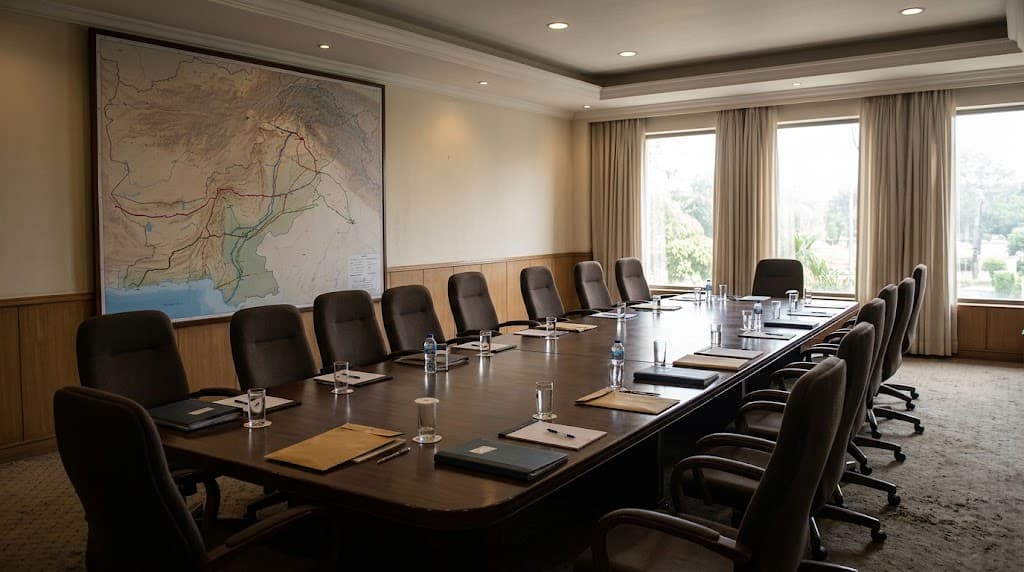
Federal Minister for Finance and Revenue Senator Muhammad Aurangzeb chaired a high-level meeting on Monday to review a proposed gas sector restructuring in Pakistan and a roadmap for deregulating the sector. The plan is still a proposal, not a finished policy, and it will be presented to the Prime Minister before further work goes ahead. The meeting focused on financial sustainability, operational efficiency, consumer welfare and greater private-sector participation.
What the meeting covered
Participants discussed a phased move toward greater competition in the gas market, supported by effective regulation, better operational performance and a more sustainable approach to gas pricing and supply. In a press release, the Ministry of Finance said the proposed reforms aim to build a financially sustainable, efficient and competitive gas market that supports businesses, attracts private investment and protects consumers. The finance minister stressed the need to align all stakeholders around a practical and implementable reform design. The federal minister for petroleum, the adviser to the prime minister on privatisation, the special assistant to the prime minister on energy and senior officials also attended.
Challenges and expected outcomes
Participants reviewed several problems in the sector. Circular debt refers to unpaid dues that pile up along the gas supply chain, while cross-subsidies mean some users pay part of the cost of others. Unaccounted-for-gas (UFG) losses are supplies that enter the system but are not billed, and supply and demand do not always match. Officials said a sustainable resolution of legacy circular debt and a clear approach to cross-subsidies were important for restructured gas utilities and for a competitive market.
The meeting also listed expected outcomes of the framework. These include stronger energy security, more private investment, lower fiscal and sovereign risks, more business-to-business gas transactions, steadier pricing and better access to competitively priced gas for exporters. Lower system losses are expected through efficiency benchmarks and performance-based incentives. The framework draws on gas-sector reforms in Türkiye and the United Kingdom, adjusted to Pakistan's institutions and market conditions.
What happens next
The proposed framework will be presented to the Prime Minister. Further technical work and stakeholder consultations will then help refine the reform approach, and the government said it will move in a phased and consultative manner. Participants also stressed careful sequencing to safeguard security of supply and protect regulated consumers. No implementation date has been announced, so the gas sector restructuring in Pakistan remains at the planning stage for now.
Aasan alfaaz mein
Gas sector ki restructuring ka matlab hai gas ke nizam ko zyada muqabalati aur mazboot banane ka plan. Finance Minister Muhammad Aurangzeb ne is tajweez ka jaiza liya, jo ab Prime Minister ke saamne rakhi jayegi. Abhi yeh sirf ek proposal hai, is liye ghar ke bills par iska asar aglay faislon par munhasir hai. Circular debt aur gas losses jaise masail is plan ke bade hisse hain.