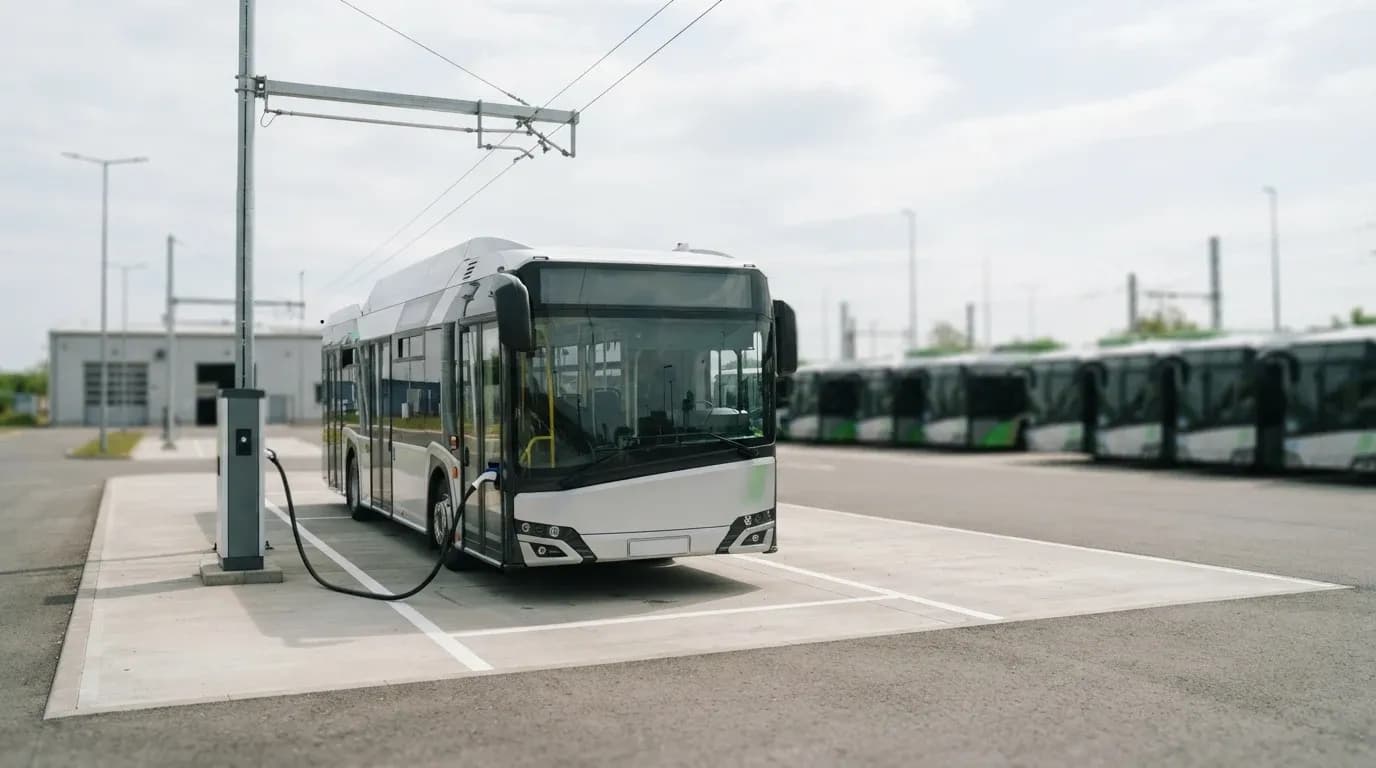
The Punjab cabinet, meeting in Lahore under Chief Minister Maryam Nawaz Sharif, has approved a wide set of transport, policing, hiring and development measures, including a renewed push for 5,000 electric buses across the province and 50 AI-based electric vehicles for Punjab Police.
The 38th cabinet session also cleared recruitment against 3,080 vacancies in the Prisons Department, fresh appointments in the Child Protection and Welfare Bureau, and the purchase of 10 operational vehicles for Murree Police. Ministers paid tribute to the chief minister’s recent city visits and the public response at those engagements.
Electric buses and police modernisation
Officials reiterated the government’s commitment to roll out 5,000 electric buses on Punjab routes, framing the fleet as part of a broader service drive. Separately, the cabinet sanctioned 50 AI-powered electric cars for the police—vehicles that use artificial-intelligence tools to support policing—and approved ten more operational vehicles for the hill-station force in Murree.
Speaking at the meeting, the chief minister said credit for public appreciation of service schemes belonged to ministers, advisers and special assistants working together. She said she measured success by each day being better than the last, and that the government had kept moving despite financial strain on ordinary households. She also pointed to completion of a target to build 250,000 houses.
Jobs, schemes and major grants
Beyond policing and buses, the cabinet folded 62 development schemes for Dera Ghazi Khan, 27 for Muzaffargarh and two projects for Okara into the provincial Annual Development Programme (ADP)—the yearly list of publicly funded works. Funds were approved for urgent repair of a rundown bus stand, and 450 laptops were cleared for students at Kinnaird College for Women in Lahore.
Reconstruction, renovation and expansion of Punjab House in Murree were approved, along with a dairy supply-chain project. The restoration of Kamran Baradari in Lahore was shifted from the Parks and Horticulture Authority to the Punjab Archaeology Department. Historic buildings and bazaars in Rawalpindi’s old city were cleared for protected heritage status.
On financing, the cabinet approved a Rs500 million grant for the Punjab Judicial Academy and an additional Rs5 billion for the Punjab Institute of Neurosciences for financial year 2026-27. A supplementary Rs9 billion grant will cover emergency rehabilitation of flood-damaged infrastructure, desilting of canals and continued operation of lift irrigation schemes. Extra money was also sanctioned for the Safe Prisons Punjab project, and the Multan Development Authority’s annual budget estimates were passed.
Rules, industry and price directions
The meeting approved the Punjab Women Hostels Authority Rules 2026 under the 2023 Act, amendments to police service rules, and changes to rules on motor-vehicle transactions. It also cleared the proposed Punjab Electric Power Regulatory Authority Bill 2026—aimed at regulating electricity at provincial level—and expansion of Quaid-i-Azam Business Park in Sheikhupura by 200 acres.
Maryam Nawaz welcomed Sikh pilgrims visiting Punjab and said she had ordered trolleys after seeing travellers carry luggage on their heads. She criticised departments for not fixing damaged roads until she intervened, and told lawmakers to push approved projects into action at once. Food Minister Salma Butt was assigned to bring flour prices down. Authorities were told to review curbs on new cement plants and expansion of existing units in prohibited areas and report within a week.
Aasan alfaaz mein
Punjab ki cabinet ne province mein 5,000 electric buses aur police ke liye 50 AI wali electric gaariyan manzoor ki hain. Prisons department mein 3,080 naukrion aur flood ke nuqsan ke liye 9 arab rupay ka fund bhi pass hua. Flour sasta karne ka kaam Food Minister Salma Butt ko diya gaya hai. Agar yeh plans ground par chalain to sawari, naukriyan aur flood se mutasir ilaqon ki marammat behtar ho sakti hai.