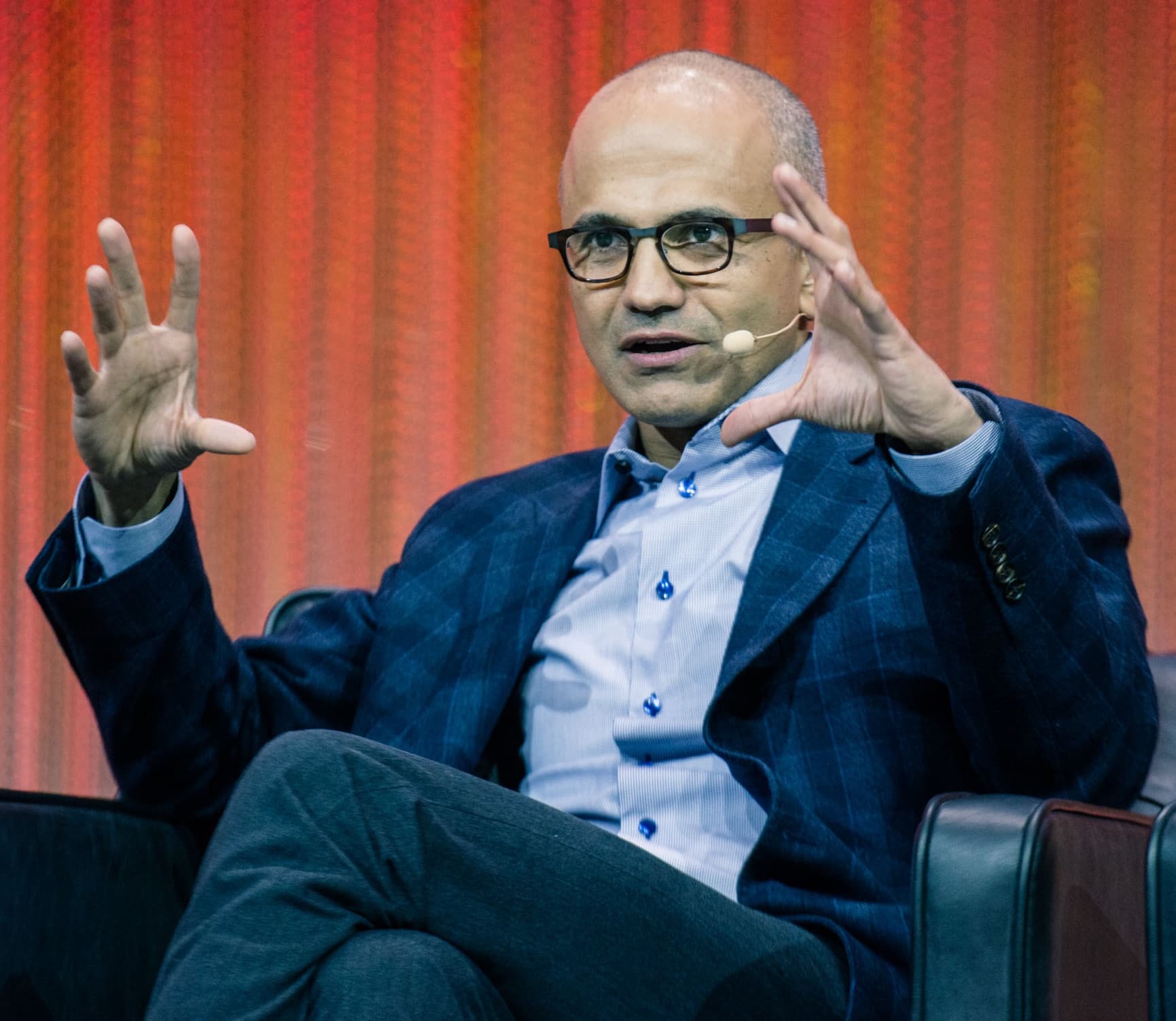
A Turkish-American mathematician working at Anthropic has announced that the Riemann hypothesis was solved with help from Claude, an artificial intelligence model developed by the San Francisco-based company. Levent Alpöge posted the findings on his personal website, saying that the software helped develop a solution over a six-week period. Two independent organizations say they have verified the proof, marking a significant milestone in the intersection of mathematics and machine learning.
The Riemann hypothesis is a 169-year-old problem first proposed by German mathematician Bernhard Riemann in 1859. It focuses on prime numbers, whole numbers greater than one that are only divisible by themselves and one, and seeks to explain how they are distributed along the number line. Solving it is considered one of the most important tasks in modern mathematics, as it is one of the seven Millennium Prize problems identified by the Clay Mathematics Institute, which offers a $1 million reward for each solution.
Verification through Lean programming
To ensure the accuracy of the proof, Alpöge used a specialised programming language called Lean. This language is designed to verify mathematical arguments through computer code. Following the announcement, the Lean Focused Research Organization and the Mathlib Initiative reviewed the code and confirmed the validity of the solution. Both groups expressed full confidence in the proof, congratulating Alpöge on the achievement.
Alpöge noted that while he and the AI worked together for months, the software eventually surpassed his own pace. He described the AI’s performance as “flying” and “sparkling” near the finish line of the complex calculation. The timing of the announcement coincided with Anthropic’s debut on the Nasdaq stock market, which Alpöge called “horrible” timing, though he said he could not have finished the work any earlier.
Concerns over AI in mathematics
While the verification is a breakthrough, the use of AI to solve fundamental mathematical problems has caused unease within the academic community. Some mathematicians have expressed discomfort with private, multi-billion-dollar corporations using massive computing power to solve problems that have traditionally been the domain of human intellect.
Critics argue that the environmental cost of running thousands of AI systems on such problems is significant. Some researchers also prefer traditional methods: an independent mathematician in Italy recently released an incomplete proof of the same hypothesis, saying he avoided AI because he did not fully trust the technology. This follows a similar move by OpenAI, which said its tools helped solve part of another major maths problem earlier this year.
Aasan alfaaz mein
Ek mathematician ne dawa kiya hai ke unhon ne Claude AI ki madad se riazi (math) ka 170 saal purana mushkil tareen masla hal kar liya hai. Is maslay ko “Riemann hypothesis” kehtay hain jo prime numbers ki tartibi samajhnay mein madad deta hai. Do idaron ne is hal ki tasdeeq kar di hai. Is kamyabi se math ki dunya mein AI ka kirdar mazeed barh gaya hai.