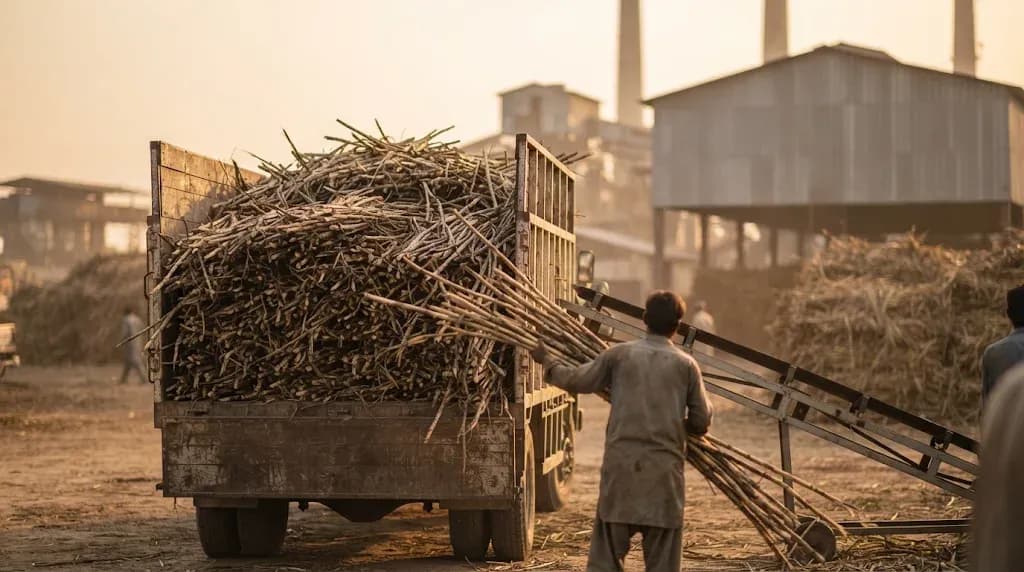
ISLAMABAD: The federal cabinet on Tuesday approved a National Policy for Deregulation of Sugar Sector, ending export subsidies, government price controls and curbs on moving sugar between provinces. Officials framed the step as fulfilment of a long-delayed structural benchmark set by the International Monetary Fund (IMF) — the global lender that sets conditions for Pakistan’s financing programme.
The policy was cleared through circulation. Informed sources said Prime Minister Shehbaz Sharif recused himself from sugar-sector decisions because of his immediate family’s involvement in the sugar business.
Why the IMF pressed for sugar deregulation
The IMF had long urged Islamabad to leave sugarcane pricing, production and trade to market forces rather than state direction. Pakistan had been in breach of the sugar-deregulation structural benchmark since June 2026. Meeting it was required before the lender’s executive board meeting, now scheduled for Dec 11.
The decision followed a Friday clearance for exporting more than 400,000 tonnes of sugar, on top of about 200,000 tonnes shipped a few months earlier.
How the policy reached the cabinet
A ministerial committee led by Power Minister Sardar Awais Leghari, with the finance, national food security and economic affairs ministers, finalised the draft. The prime minister’s adviser on industries, the Federal Board of Revenue (FBR) chairman, federal secretaries, provincial chief secretaries and other stakeholders also sat on the body.
Official records put the original completion deadline at June 30, 2026. The fund proposed revised terms of reference on July 31; those were built into the committee’s mandate and approved by the prime minister. On IMF directions, the industries and production ministry inserted further amendments and shared a draft with the fund by the end of August. The IMF refined the text again on Oct 1 and insisted Sindh’s consent was needed.
Three provinces had already agreed. Sindh’s holdout amounted to a virtual veto until Nov 21, when the provincial government cleared the policy after securing amendments in backdoor talks.
What changes for farmers, mills and trade
At the farm level, zone and variety restrictions on sugarcane are lifted, so growers may sell to any buyer and mills may sell freely. Sugarcane prices will be set by the market, though a negative list of banned sugar varieties will remain. Mills face no ban on new plants or capacity expansion, and may choose raw materials and output by market conditions. Government retail price controls end.
Export subsidies stop, and inter-provincial movement restrictions are removed. The cabinet was told the policy sets a predictable import-export mechanism and transitional rules for the current crushing season.
Farmer safeguards include third-party checks on weighing scales, a sucrose-testing framework and interest from millers on late cane payments. The sugarcane cess is to support research, with easier credit and mechanisation access for growers and millers. The state keeps power to hold buffer stocks and to gather timely crop, production and market data. The policy also points toward mandatory ethanol blending and a fairer market.
Timeline: what has happened so far
- June 30, 2026: Original IMF deadline to complete sugar deregulation.
- July 31, 2026: IMF proposes revised terms of reference for the ministerial committee.
- End of August 2026: Industries ministry shares an amended draft with the IMF.
- Oct 1, 2026: IMF further revises the draft and requires Sindh’s agreement.
- Nov 21, 2026: Sindh clears the policy after securing amendments.
- Tuesday (cabinet day): Federal cabinet approves the deregulation policy through circulation; IMF board meeting remains set for Dec 11.
Aasan alfaaz mein
Sarkar ne sugar ki policy badal di hai taake IMF ki shart poori ho. Ab sarkar ke daam control, export subsidy aur province se province sugar rokne wali qaidain khatam hongi. Ganne ke daam aur mills ke faisle zyada market par honge. Aam logon ke liye seedha matlab yeh hai ke sugar ke daam ab zyada market se linked honge, lekin sarkar buffer stock rakh sakti hai.