The United Nations has unveiled an Inter-Agency Winterisation Strategy for 2026-27 for Pakistan. It is a plan to deliver immediate, life-saving help to disaster-affected, displaced and highly vulnerable households during the October-to-March winter period. The strategy was jointly prepared by the UN Office for the Coordination of Humanitarian Affairs (UN-OCHA) and the International Organization for Migration (IOM). According to the document, humanitarian partners have only $540,100 available, along with $90,000 in pooled funds, against a total requirement of over $3.54 million.
Funding gap and who is covered
The Winterisation Strategy says the gap would fall to $1.92 million if the Sindh caseload were removed. There was no major disaster in the province this year, and provincial disaster authorities described the need there as more of a winter contingency. The plan covers 53 priority districts across six provinces and regions, including four in Azad Jammu and Kashmir (AJK), nine in Gilgit-Baltistan (GB) and 16 in Khyber Pakhtunkhwa (KP). These districts were identified through consultations with provincial and regional disaster authorities and sector partners.
The document estimates that 4.13 million people are affected. The shelter and non-food items sector aims to support 826,106 individuals, equal to 118,015 families, with one winterisation kit per family. As a rough check, that target is about one-fifth of the affected population, since 826,106 divided by 4.13 million is roughly 0.2. Women-headed households, children, older persons, persons with disabilities and households with specific protection needs will receive particular attention.
What aid will include
The main response is winter-appropriate non-food items (NFIs), meaning goods other than food, such as blankets, quilts, warm clothing and bedding. These will be given in kind or as cash where markets are working and accessible. Where needed, families may also receive basic weatherproofing, insulation, emergency shelter improvements and heating solutions.
The United Nations Children's Fund (UNICEF) is planning its own support for November and December 2026 across the six provinces and regions. This includes 14,000 children's winter clothing kits, 24,600 blankets and 1,920 quilts, with priority for cold-exposed and flood-affected households. The strategy focuses on immediate humanitarian needs rather than longer-term seasonal services. The Winterisation Strategy is being coordinated with all relevant UN agencies, and how much of the remaining gap is filled will shape how far the distributions can reach.
Where the cold is expected to bite
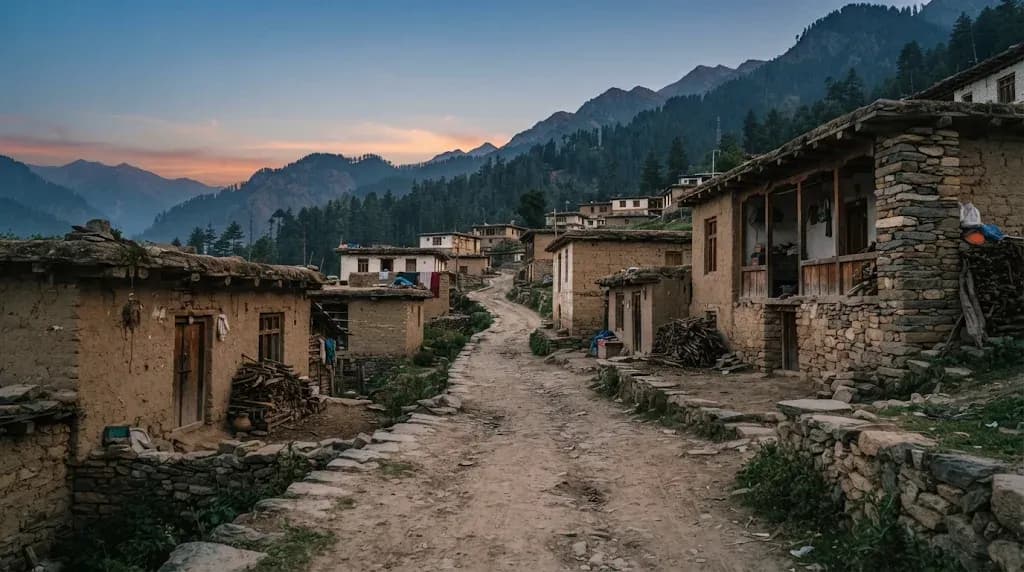
The National Disaster Management Authority's early warning for October to December 2026 projects snow cover expanding across the Hindu Kush, Karakoram and western Himalayan ranges. Gilgit-Baltistan, Upper Chitral, northern KP and mountainous AJK are expected to face the highest winter exposure. Within AJK, Muzaffarabad, Neelum, Poonch and Haveli have been identified as the highest priorities because of snowfall, landslide risks and road closures.
In KP, seven districts, including Swat, Upper Dir, Shangla, Mansehra, Lower Chitral, Upper Chitral and Upper Kohistan, are classified as very high risk. Punjab is a moderate priority, with cold nights, fog, smog and the continued vulnerability of flood-affected households. In lower-altitude flood-hit districts of Sindh and Punjab, winter may worsen conditions for families still living in temporary or inadequate shelters.
Aasan alfaaz mein
UN agencies ne Pakistan ke liye sardiyon ki madad ka plan jari kiya hai, jis mein 53 districts shamil hain. Is plan ke mutabiq 4.13 million log mutassir hain, lekin abhi sirf lagbhag 0.6 million dollar available hain aur zaroorat 3.5 million dollar se zyada ki hai. Iska matlab hai ke garam kambal, quilt aur kapre pahaari aur sard ilaqon ke kuch gharon tak pohanch sakte hain, magar funds kam hon to madad mein der ho sakti hai. Sard ilaqon ke logon ko apne ilaqe ke disaster authorities ki hidayat par nazar rakhni chahiye.