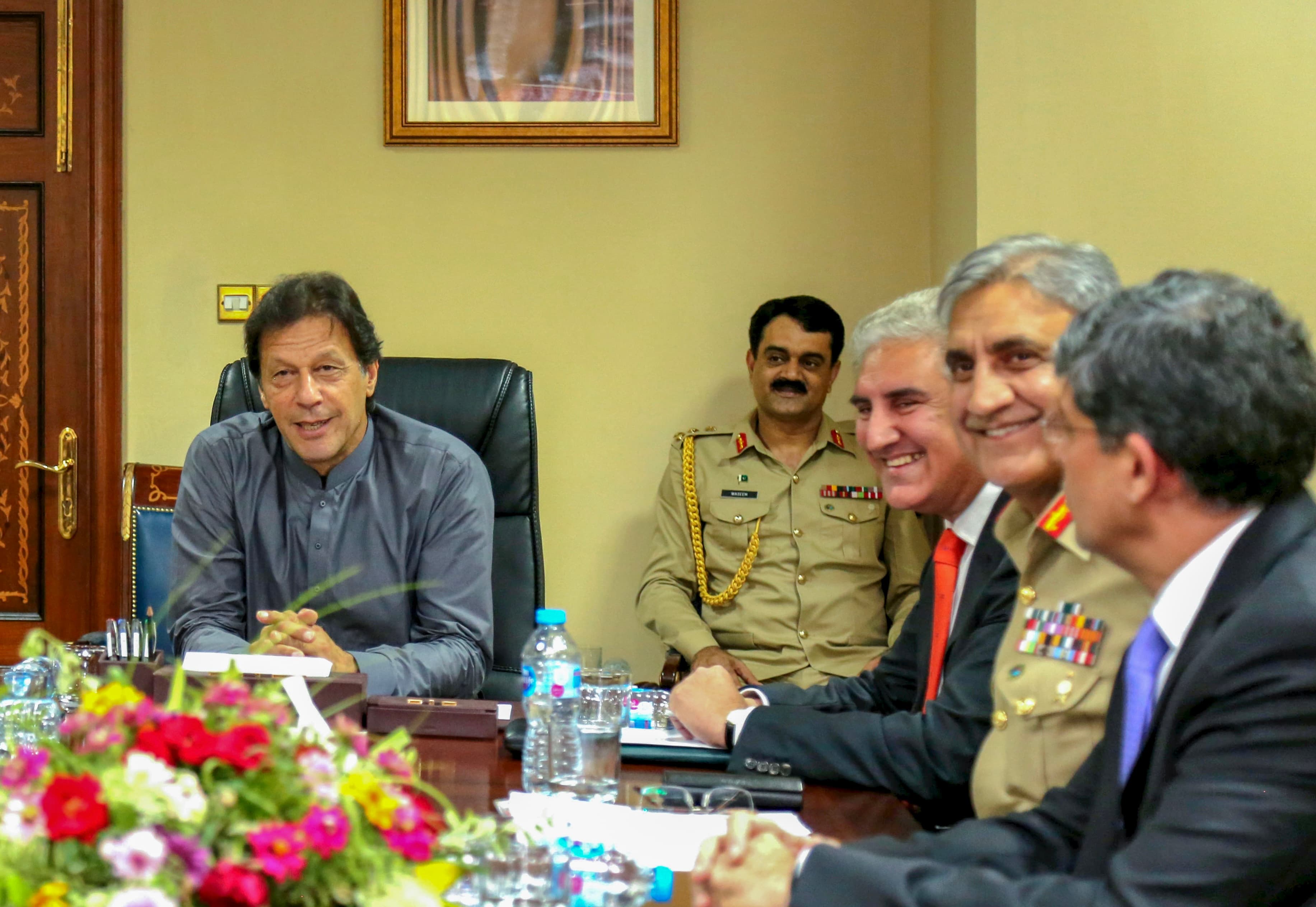
Pakistan-Iran relations moved into the spotlight this week after Field Marshal Asim Munir, who serves as Chief of Defence Forces (CDF) and army chief, met Iran's Foreign Minister Abbas Araghchi in Rawalpindi on Monday. The military's media wing, the Inter-Services Public Relations (ISPR), announced the meeting on Tuesday. The talks took place while the war between the United States and Iran, which began with US attacks on February 28, remains unresolved. Araghchi was in Pakistan mainly to attend the 30th meeting of the Economic Cooperation Organisation (ECO) Council of Foreign Ministers, a regional bloc.
What was discussed in Rawalpindi
According to the ISPR, Munir stressed that sustained engagement, mutual trust and close coordination between the two countries can help advance peace and stability in the region. The two men also reviewed issues of shared interest, regional security and shifting geopolitical developments, and they compared views on ways to meet common security challenges. Araghchi praised Pakistan's constructive role in promoting peace and said Iran wants to deepen bilateral ties further.
Araghchi also said Tehran regards Islamabad as a good friend and is satisfied with how Pakistan is carrying out its role. Separately, Deputy Prime Minister and Foreign Minister Ishaq Dar said he held frank and comprehensive discussions with Araghchi on the sidelines of the ECO meeting. Dar said Islamabad has not given up on its diplomatic effort to bring the war to a peaceful end.
Pakistan's mediation and the stalled talks
Islamabad has acted as a go-between for Washington and Tehran since the war began. Pakistan brokered a ceasefire between the two sides on April 8, and hosted direct US-Iran talks on April 11 and 12. The Islamabad Memorandum of Understanding (MoU), signed in Geneva on June 17, set a framework for moving toward a permanent end to the war. Hostilities later resumed, and months of diplomacy have not settled the conflict.
Munir has been central to these efforts. He travelled to Tehran on August 24 and met President Masoud Pezeshkian, Parliament Speaker Mohammad Bagher Ghalibaf and Araghchi. During his October 21 visit, Iranian leaders told him that Washington must take the first steps to rebuild trust, and that US acceptance of Tehran's seven-point peace proposal could serve as a starting point for renewed negotiations. Munir has also joined officials from the Makkah defence pact, a tripartite arrangement between Pakistan, Saudi Arabia and Turkiye, in Tehran, amid concern over the security of the Strait of Hormuz and the prospect of renewed US and Israeli military action.
Negotiations are currently stalled. Dar said Iran had shortened its seven-day plan to reopen the Strait of Hormuz into a two-day plan, and that the US response is still pending. He hoped Washington, which he said was no longer occupied with its midterm elections, would respond soon.
Timeline: what has happened so far
- February 28: US attacks on Iran mark the start of the war.
- April 8: Pakistan brokers a ceasefire between the two sides.
- June 17: The Islamabad MoU is signed in Geneva, setting a framework toward ending the war.
- August 24: Munir travels to Tehran and meets Iranian leaders, including Pezeshkian and Araghchi.
- October 21: Munir visits Iran again, and Iranian leaders set out conditions for renewed talks.
- Monday: Munir meets Araghchi in Rawalpindi; the ISPR statement follows on Tuesday.
Aasan alfaaz mein
Pakistan ke army chief Asim Munir ne Rawalpindi mein Iran ke foreign minister Abbas Araghchi se mulaqat ki aur dono ne bharosay aur qareebi rabte par zor diya. America aur Iran ke beech jang abhi khatam nahin hui aur baat cheet ruki hui hai, lekin Pakistan darmiyan mein tasleeh karwane ki koshish jari rakhe hue hai. Aam logon ke liye abhi koi fori tabdeeli nahin hai, lekin agar jang phaili to tail ki qeematon, rupay aur Gulf mein kaam karne walon ki aamdani par asar ho sakta hai. Is liye taaza khabron par nazar rakhna behtar hai.