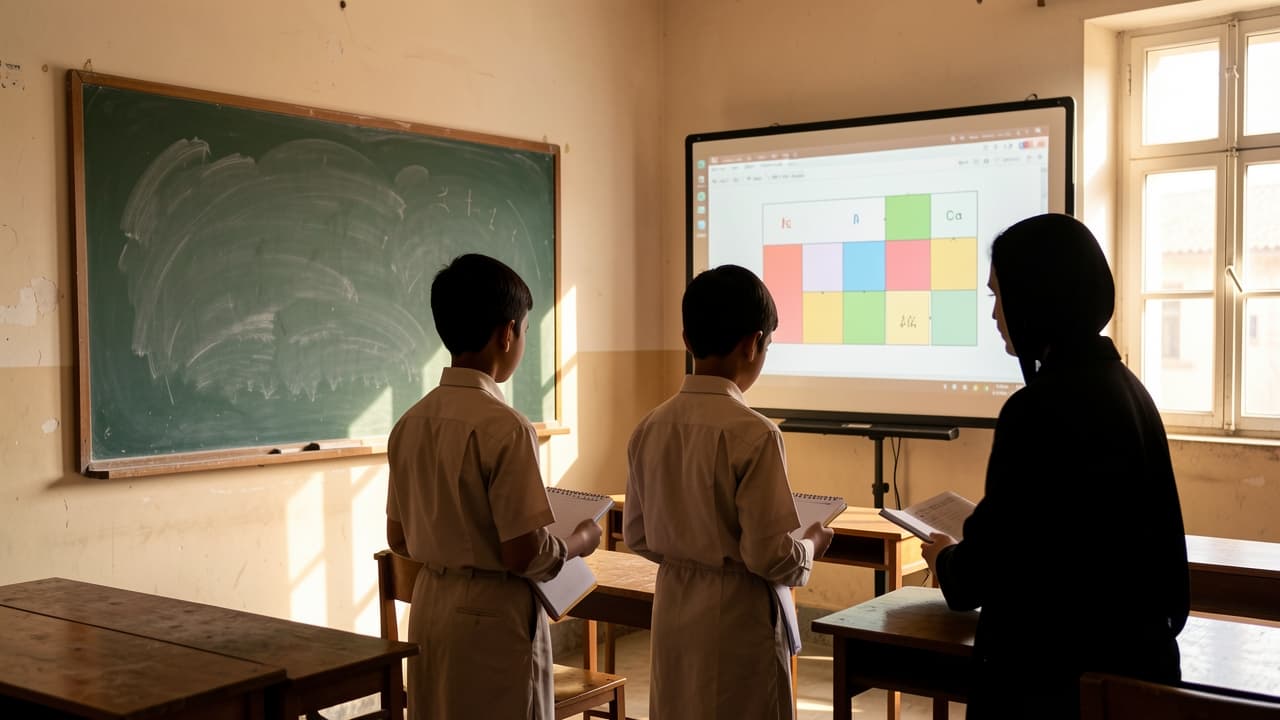
Bilawal Bhutto Zardari has said that girls' education and women's rights remain part of the Pakistan Peoples Party's commitment. In a report datelined Karachi, The Nation quoted his message on the International Day of the Girl Child. He argued that a daughter should be treated as a sign of hope, and that poverty must not decide how far she can go.
The Nation report records a political statement. It restates programmes the PPP already links to family support and schooling. Bilawal said Pakistan's daughters are blessed with "boundless talent, courage, and dreams," and that an equal chance for women can change a life and the direction of the country.
What he takes from Benazir Bhutto
The PPP chairman offered the political life of Shaheed Mohtarma Benazir Bhutto as his main example. He described her career as proof that an equal chance to advance lets women reshape their own lives and, in his words, "alter the course of a nation's history."
He set that claim inside the democratic and egalitarian outlook he credits to Quaid-e-Awam Shaheed Zulfikar Ali Bhutto and to Benazir Bhutto. Support for girls, he said, is a condition of a society that is strong, prosperous and just. The state, families, educational institutions and society as a whole, he added, have to create a setting in which a daughter is seen "not as a burden, but as a symbol of hope and a bright future."
Programmes named in the message
According to The Nation, Bilawal said the party has taken many measures for the welfare of women, in line with that legacy. He cited the Benazir Income Support Programme, known as BISP, together with Waseela-e-Taleem and education scholarships. He presented them as help for deserving families and as a push to keep children in education.
He said initiatives in Sindh covering girls' education, women's rights and social protection belong to the same commitment. His formulation was that poverty should never "stand in the way of a girl's future." The Nation's account attaches no new budget, beneficiary total or launch date to those steps.
The standard he set
Bilawal's stated vision is a Pakistan in which every girl can reach education, healthcare and protection, remain safe from violence and exploitation, and have an equal chance to realise her potential. He described spending and care directed at girls' education and well-being as an investment in the future of Pakistan's next generation. He left that work with the state, families, educational institutions and society, without naming a ministry or spelling out a change in how existing support is delivered.