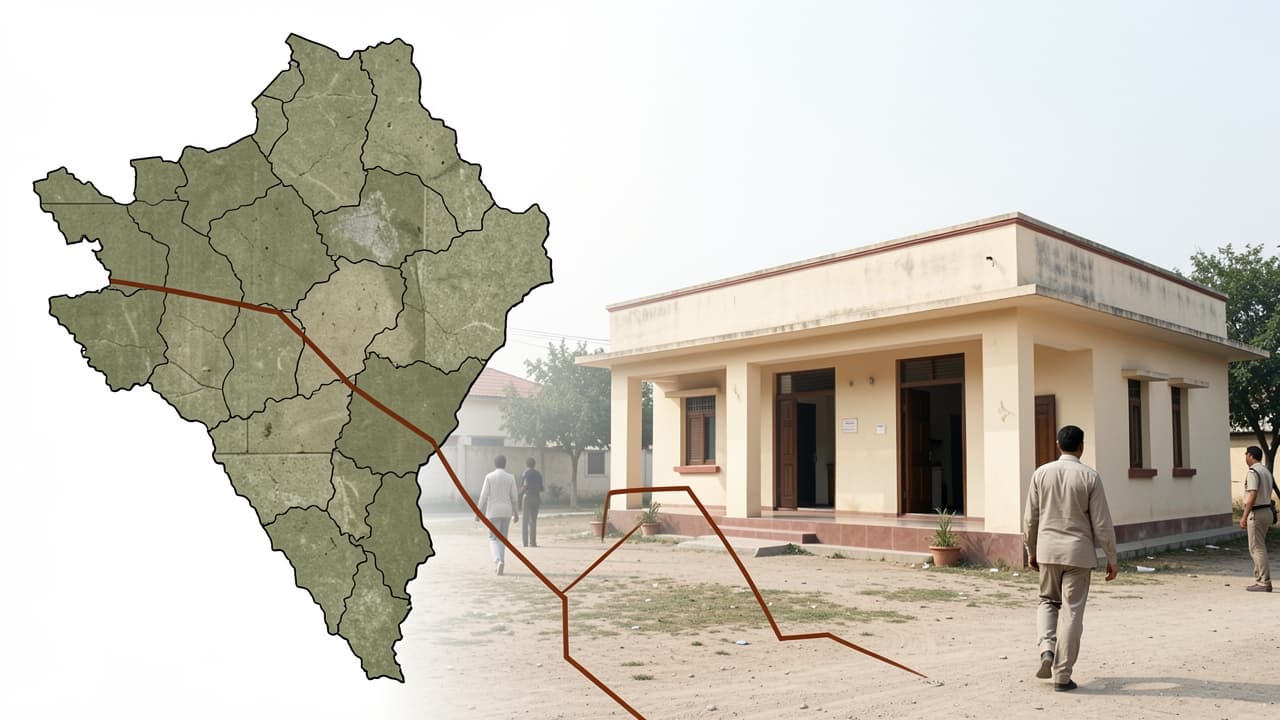
The federal government has imposed emergency powers and enforced KP governor rule across Khyber Pakhtunkhwa on Sunday, citing severe security concerns and the collapse of formal talks with the provincial administration. President Asif Ali Zardari issued the proclamations under Articles 232 and 234 of the Constitution following advice from Prime Minister Shehbaz Sharif during an emergency federal cabinet session, according to reports from Business Recorder and Dawn.
Constitutional Framework and Parliamentary Process
Under Article 232 of the Constitution, the president is empowered to declare an emergency if the security of Pakistan or any part of it is threatened by external aggression or internal disturbances beyond provincial control. Article 234 addresses the breakdown of constitutional machinery within a province, enabling the president to assume provincial functions or authorize the provincial governor to exercise executive powers. Under the constitutional framework, the proclamation under Article 234 remains effective for two months unless placed before a joint sitting of Parliament, which may grant extensions up to a maximum duration of six months.
Alongside the emergency declaration, Law Minister Azam Nazeer Tarar announced that the federal government issued a fresh proclamation under Article 245 of the Constitution to call in the armed forces to assist civil authorities. The cabinet also cited Article 149(4), which authorizes the federal government to issue directives to provincial governments regarding public order and national security.
Security Escalation and Stalled Negotiations
Federal ministers defended the decision by pointing to rising militant violence across the province. Interior Minister Mohsin Naqvi told reporters during a joint press briefing covered by Business Recorder that 518 police personnel had been martyred over the preceding 18 months, noting that residents in several districts faced severe movement restrictions after evening hours. Naqvi stated that repeated attempts to reach an understanding with Chief Minister Sohail Afridi and Pakistan Tehreek-e-Insaf (PTI) leadership had concluded without agreement.
Information Minister Attaullah Tarar alleged that the provincial administration had neglected law enforcement bodies despite receiving Rs700 billion through the National Finance Commission (NFC)—the constitutional mechanism that distributes tax revenue between the federal center and the provinces. Prime Minister Sharif noted that counterterrorism transfers of Rs800 billion between 2010 and 2026 had not resulted in adequate police upgrades or forensic capabilities. Meanwhile, political reactions and demonstrations have begun emerging across the province, including rallies across Peshawar and Bannu.
Administrative Overhaul and Governance Outlook
Under the framework of KP governor rule, administrative oversight has been assigned to Governor Faisal Karim Kundi of the Pakistan People's Party (PPP), supported by an 11-member advisory council. The federal government indicated that this arrangement will steer provincial security and administrative priorities for an initial six months.
To facilitate the transition, the federal government appointed Dr Muhammad Fakhr Alam Irfan, a BPS-22 officer of the Pakistan Administrative Service, as the new KP chief secretary, while senior officer Muhammad Yahya Akhunzada was placed at the provincial administration's disposal. Despite the enforcement of emergency measures, Prime Minister Sharif confirmed that a joint political delegation would continue seeking dialogue with provincial representatives through Jamiat Ulema-e-Islam-Fazl chief Maulana Fazlur Rehman.