The decent work definition answers a question readers ask when a jobs story uses the phrase: what standard is the writer applying? The International Labour Organization uses it for work that is productive, paid at a fair level and secure, with social protection for the household, room for a person to develop, and a real chance to speak about decisions at work. Women and men are meant to receive the same opportunity and treatment. Dawn has taken up the measurement side of that idea in “Measuring decent work”.
The definition is an international benchmark. It is not, on its own, a new Pakistani statute, a pay award or a household subsidy.
What the decent work definition covers
People often hear “decent” as a moral compliment. In the ILO’s usage it is a checklist. Income is the first item, and it has to be fair relative to the work done, not merely above zero. Security comes next: the worker should not be one illness, or one cancelled shift, away from having nothing to live on.
Rights at work cover contracts, hours, safety and equal treatment. Social protection covers support when work stops, or when a family faces sickness, injury, old age or maternity. Social dialogue means workers and employers can speak, bargain and be heard.
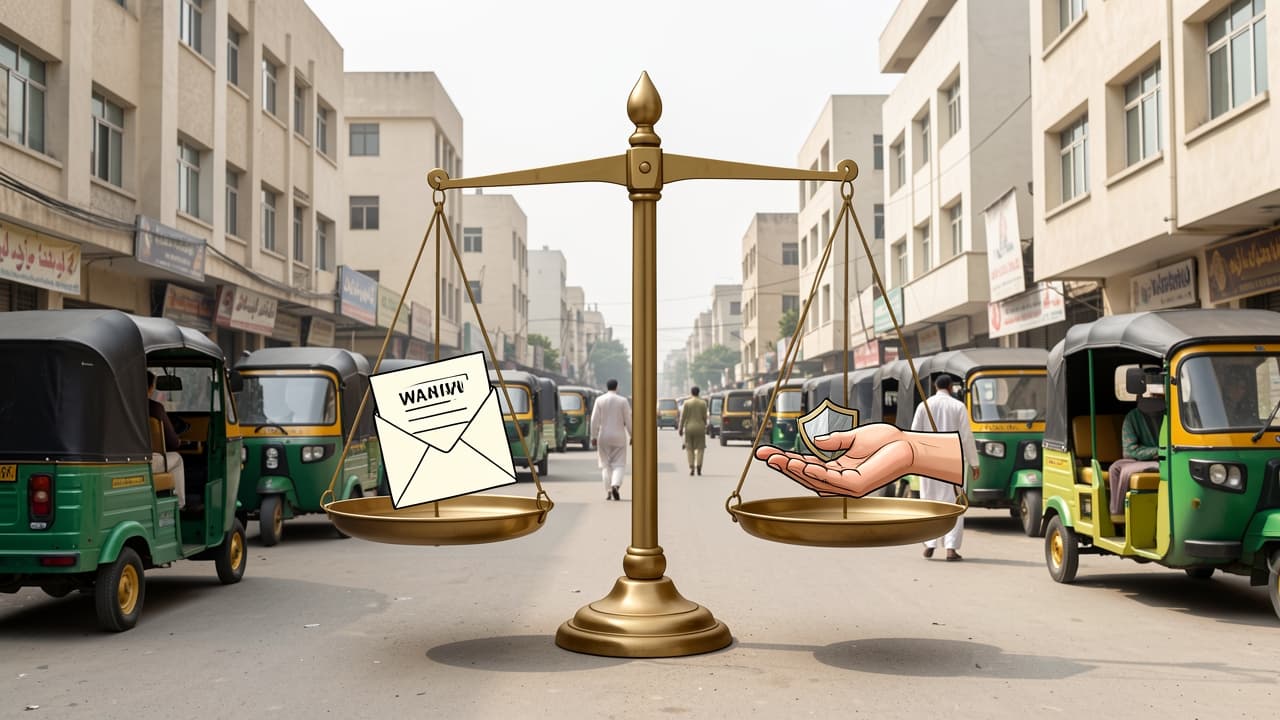
The ILO’s agenda ties these aims together: employment opportunities, rights at work, social protection and social dialogue. A high wage with no safety net still leaves a gap. A secure post that pays too little to run a household leaves another. The standard is met only when the pieces are read together.
How measurement works
To keep the phrase from staying a slogan, the ILO asks countries to look at indicators rather than one headline number. Those ILO decent work indicators mix survey figures with legal facts. On the statistical side they follow employment opportunities, earnings, working time, how stable the job is, equal treatment, workplace safety and coverage of social protection.
On the legal side they ask whether the law recognises rights such as organising, and whether forced labour and child labour are prohibited. A single pass mark is the wrong picture. A labour market can look busy and still pay too little, or look well protected on paper while workers remain outside that protection in practice. Readers who want the Pakistan-specific discussion should go to Dawn’s article; the account here is the yardstick, not a fresh national score.
How a worker in Pakistan can use the idea
For someone comparing two offers, in a large city or a smaller town, the decent work definition turns into ordinary questions. Will the pay cover rent, food and transport? Are hours known in advance? What happens after an injury, and is there any leave?
Can a complaint be made without losing the job? Women and men are supposed to be judged by the same standard, including the chance to combine work with family care. Work that only keeps a person occupied can fail those questions.
Daily wages, piece rates and jobs without a written understanding are not automatically outside the idea, but they can miss parts of the checklist: unpredictable income, no injury cover, no voice. Naming that gap does not, by itself, change the wage on offer this week.
What a measure does not change overnight
Publishing a measure does not move prices, electricity bills or school fees. It gives a shared language for talking about whether jobs are good enough. Officials can track indicators over time, while unions and employers argue about which shortfall is urgent. Readers can apply the same questions to their own workplaces.
No national score is stated in this article. If a ranking appears in another report, treat it as that source’s claim and check it. The meaning stays the same even when the numbers move: fair income, security, rights, protection and a voice.