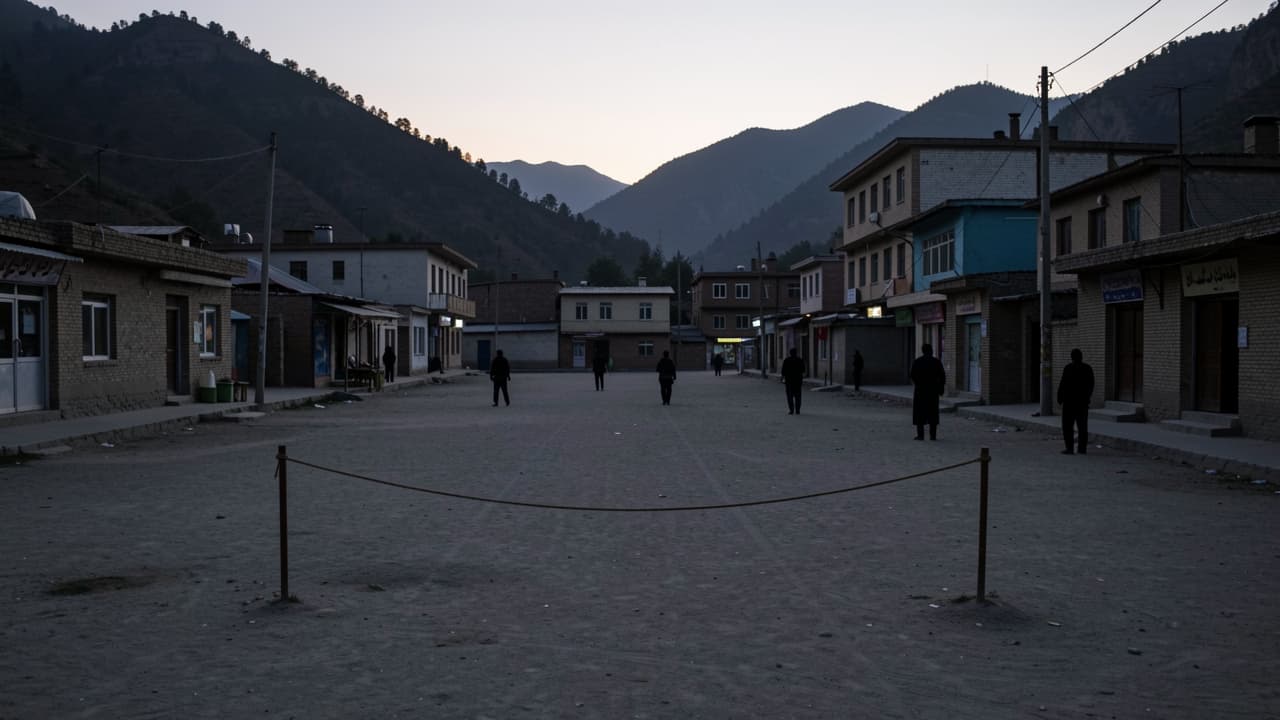
Islamabad delivered a direct message to Kabul on Monday, with a formal Ishaq Dar warning to Afghan Taliban leaders stating that their administration will ultimately endure the fallout if cross-border attacks persist unchecked. Speaking at a conference hosted by the Institute of Strategic Studies Islamabad (ISSI), the Deputy Prime Minister and Foreign Minister stressed that neighbouring soil must not serve as a launchpad for violent outfits targeting Pakistan. The admonition follows months of heightened friction between the two capitals over cross-border infiltration, as reported by The Nation.
Escalating Violence and Border Strain
Security challenges along the western frontier have intensified sharply in recent months. According to Geo News, data gathered by the Pakistan Institute for Conflict and Security Studies (PICSS), an independent monitoring body in the capital, revealed 225 militant strikes nationwide during September 2026. This figure represented a 13 percent jump from August's tally of 199 strikes, establishing the highest monthly violence level observed in twelve years. The upward trajectory has disproportionately impacted Khyber Pakhtunkhwa and Balochistan, fueling broader concerns regarding Pakistan Afghan Taliban relations.
During his address, Dar noted that Pakistan has shouldered a massive human toll, losing upwards of 90,000 citizens and personnel throughout its protracted counterterrorism campaigns. He highlighted recent atrocities, including the assault on the Jaffar Express passenger train alongside targeted kidnappings and killings of laborers in Balochistan. The deputy premier underscored that domestic armed forces conduct continuous defensive operations under directives issued by Field Marshal Syed Asim Munir, who serves as Chief of Defence Forces (CDF) and Chief of Army Staff (COAS).
Broken Pledges and Cross-Border Safe Havens
Central to the friction is the presence of the outlawed Tehreek-e-Taliban Pakistan (TTP), an extremist network that Islamabad asserts enjoys sanctuary inside Afghan territory. The foreign minister pointed out that diplomatic delegations had travelled repeatedly to Kabul to negotiate cooperative security arrangements. He specifically cited a three-way summit held in August of last year between Pakistan, China, and Afghanistan, observing that the de facto Afghan rulers have neglected the security commitments agreed upon during those discussions.
Dar reiterated that Pakistan's core demand remains singular: Afghan soil must never be permitted as a staging ground against neighbours. In this context, this latest Ishaq Dar warning to Afghan Taliban authorities included an explicit call to immediately halt weapons provision and logistical aid to armed factions. He cautioned that violent elements crossing rugged mountain borders to strike Pakistani targets before retreating could soon jeopardize wider regional stability beyond South Asia.
Border Control, Humanitarian Relief, and Regional Security
The surge in fatal cross-border incidents previously compelled Pakistani authorities to shut down shared border crossings to stem militant mobility. Nevertheless, Islamabad permitted 1,000 transit freight containers into Afghanistan after receiving formal representations from the United Nations, demonstrating a balance between national security priorities and humanitarian considerations. The foreign minister maintained that persistent violence harms Pakistan's global standing and urged foreign partners to provide capacity-building assistance to Pakistani law enforcement rather than offering mere verbal sympathy.
In his remarks on external interference, Dar also pointed to Indian covert involvement, referencing the detention of Kulbhushan Jadhav, an Indian naval operative apprehended for espionage and sabotage. As Pakistan counter terrorism policy recalibrates to confront multi-front security threats, the broader Ishaq Dar warning to Afghan Taliban leadership highlights an increasingly firm posture from Islamabad. Without tangible enforcement from Kabul against extremist safe havens, bilateral ties and transit corridors risk enduring prolonged strain.