The United States says its naval blockade of Iran's oil exports will remain in full force. The President made that point in a recent announcement, which also said the United States would not launch military strikes on Iran before the midterm elections. Iranian export volumes are lower than before, but the analysis says they are not zero, and it questions the President's view on this point.
How Iran is moving trade around the blockade
Trade through Balochistan, the Caspian and China remains central to Iran's efforts to get around sanctions, according to the analysis. With access through the Gulf restricted, Iran is relying on costlier northern and eastern corridors, where Pakistan, Russia and China offer alternatives to routes controlled by Western countries. Strictly speaking, Iran is no longer limited to trading through the Strait of Hormuz, the narrow sea passage at the mouth of the Gulf.
Husain Haqqani, a former ambassador who is now a senior fellow at the Washington-based Hudson Institute, wrote in a commentary dated September 29 that sanctions are hurting Iran without achieving the outcome Washington wants. He argued that several trade routes help Iran evade sanctions. Tajikistan's energy and water resources ministry told a regional news agency that Iranian oil and petroleum products began arriving in late August, after talks on expanding oil and gas cooperation. The ministry did not disclose shipment volumes, commercial terms or how the cargo was transported.
Pakistan's role in Iran's trade
Iran shares a porous border of about 900km with Pakistan. The analysis describes bilateral trade as relatively small, at $3.13 billion in March 2025, but says it matters to Iran because cash payments and barter arrangements help it bypass dollar-clearing requirements. Dollar-clearing refers to the process of settling dollar transactions through the US banking system.
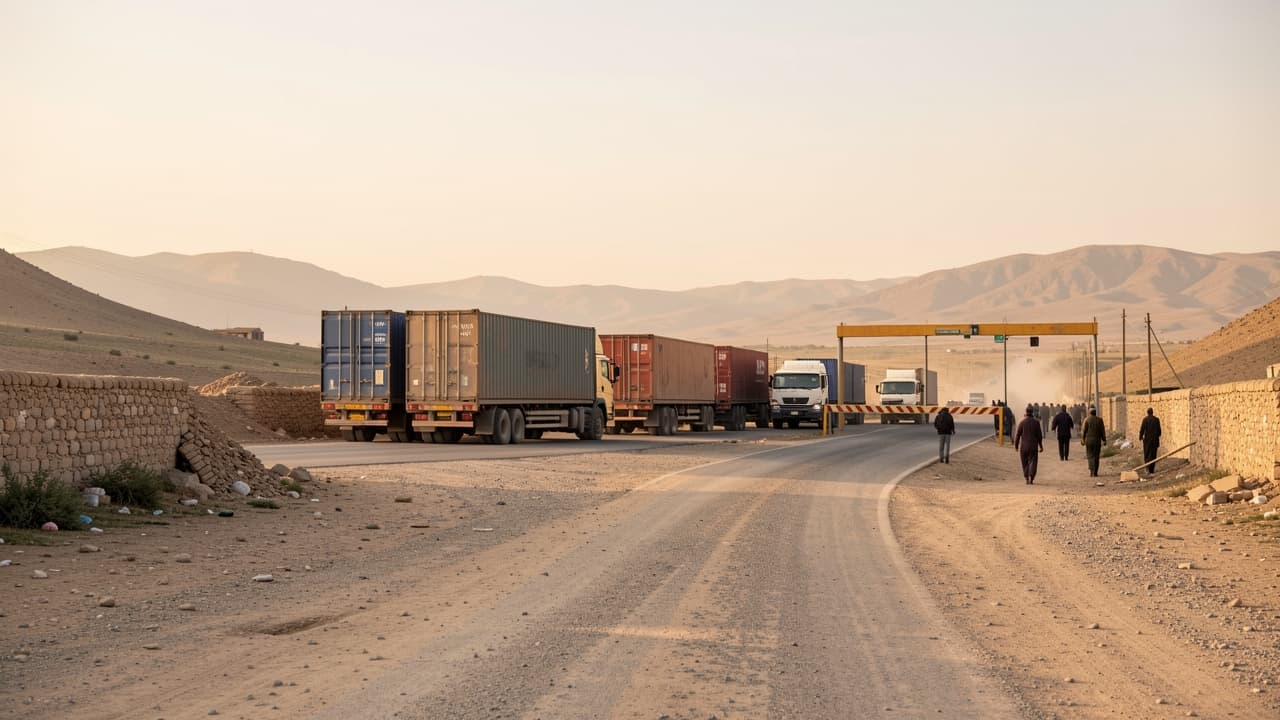
After Pakistan mediated a ceasefire between Iran and the US in June, it allowed goods from third countries to enter Iran overland through Pakistan. When Iran tried to block the Strait of Hormuz, Pakistan designated six road corridors linking Karachi's ports, including Port Qasim, and Gwadar to the Gabd and Taftan crossings in Balochistan. The analysis says these crossings have handled daily essentials as well as fuel, electricity and gas.
Iran and Pakistan are also using a barter mechanism and the TIR Convention of 1975, a customs transit agreement, which the analysis says helps them avoid scrutiny in traditional banking channels. The sources available for this report do not include a comment from either government on these arrangements, so their official position is not confirmed here.
Timeline: what has happened so far
- Undated announcement: the President said there would be no US military strikes on Iran before the midterm elections, and that the naval blockade of Iran's oil exports would remain in full force.
- March 2025: Pakistan-Iran trade was valued at $3.13 billion.
- June: Pakistan mediated a ceasefire between Iran and the US, and soon after allowed third-country goods to enter Iran overland.
- Late August: Tajikistan began receiving Iranian oil and petroleum products, according to its energy ministry.
- September 29: Husain Haqqani's commentary on sanctions and trade routes was published.
Aasan alfaaz mein
Amreeka ka kehna hai ke Iran ke tail exports par naval blockade poori tarah lagu rahega, aur midterm elections se pehle US fauji hamla nahi karega. Iran ki exports pehle se kam hain lekin mukammal band nahi hui, aur tijarat Balochistan, Caspian aur China ke raston se ho rahi hai. Pakistan ke Gabd aur Taftan crossings se roz ki zaroori cheezon, fuel, bijli aur gas ka tabadla bhi hota hai. Aam shehri ke liye iska asar sarhadi tijarat aur us se judi qeematon par ho sakta hai, lekin sources mein koi qeemat ya figure nahi di gayi.