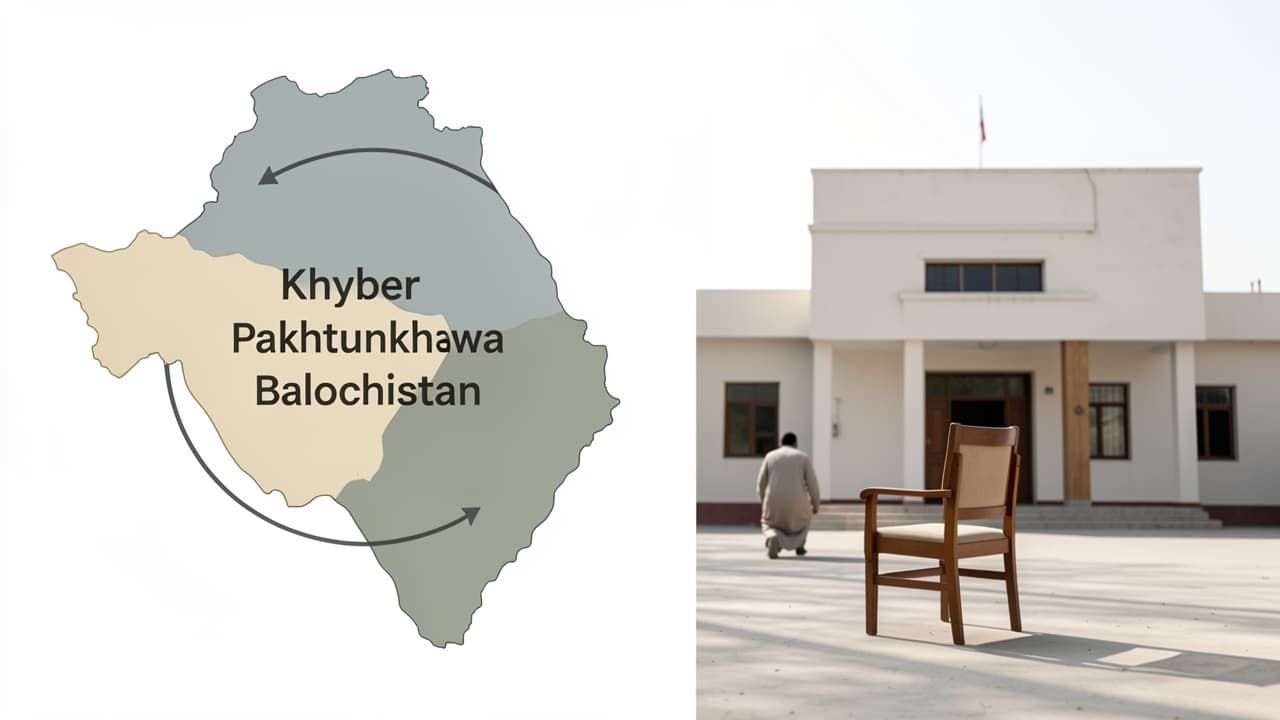
The federal government has announced an 11-member advisory council for Khyber Pakhtunkhwa (KP), headed by Governor Faisal Karim Kundi, days after emergency measures and governor's rule were imposed in the province. The council was announced on Sunday, shortly after the measures took effect, and it effectively removed the Pakistan Tehreek-e-Insaf (PTI) provincial government from power. On Monday, Prime Minister Shehbaz Sharif added a second layer of oversight by forming a committee to monitor the Centre's handling of the province.
Advisory council and secretariat
Information Minister Attaullah Tarar told a press conference that the council would oversee key provincial departments, including finance, education, energy, health, law, industries, mines and minerals, information and development. The government also decided to set up a dedicated secretariat for 12 districts facing serious security challenges. That secretariat will report directly on administrative affairs in those districts and keep the federal government informed about conditions on the ground.
A federal government notification assigned portfolios to individual members. Dr Syed Aamir Abdullah was given education, and Tariq Mahmood Pasha was given finance, revenue, excise and taxation. Usman Saifullah Khan will oversee energy, power, planning and development, while Aamir Javed will handle law and parliamentary affairs. Kundi chaired the council's first meeting, where he was reported to have said the province's fight is against terrorism.
Committee and political reaction
At a meeting chaired by the prime minister, the government constituted a committee headed by Deputy Prime Minister and Foreign Minister Ishaq Dar, who was named its convener. Its named members include Rana Sanaullah, the prime minister's adviser on political affairs, Law Minister Azam Tarar, Planning Minister Ahsan Iqbal, Kashmir Affairs Minister Amir Muqam, Parliamentary Affairs Minister Tariq Fazal Chaudhry and Education Minister Khalid Maqbool Siddiqui. Representatives of the Pakistan People's Party, the Balochistan Awami Party and the Istehkam-e-Pakistan Party are also expected to join, which would bring membership to 11. That expansion has not been confirmed.
Official sources said the committee's first meeting reviewed the situation and discussed law and order, administrative continuity and relief for the affected population. Opposition parties, lawyers and rights groups have condemned the measures, and they have questioned the political and constitutional implications of federal intervention. Critics point to the removal of a PTI-led provincial government that had a two-thirds majority. The security situation has been cited as the justification for governor's rule.
A post by the ruling party's official account on X said reports from the governor and the Interior Ministry were presented at a cabinet meeting. According to that post, the governor wrote to the federation under Article 234 of the Constitution, which deals with a breakdown of constitutional machinery in a province. The government has not been quoted in the sources explaining the decision beyond the security concerns.
Timeline: what has happened so far
- Shortly before Sunday: Emergency measures and governor's rule are imposed in Khyber Pakhtunkhwa.
- Sunday: The government announces an 11-member advisory council headed by Governor Faisal Karim Kundi, and a secretariat for 12 districts.
- Monday: The PM constitutes a committee led by Ishaq Dar, which holds its maiden meeting.
- Tuesday: The prime minister is expected to consult allied political parties on the next steps.
Aasan alfaaz mein
KP mein emergency aur governor's rule lagaye gaye hain, aur PTI ki sarkar ki jagah ab ek 11 members wali council kaam dekh rahi hai jiska sarbarah governor hai. Wafaqi hukumat ne 12 districts ke liye alag secretariat aur Ishaq Dar ki qayadat mein ek committee bhi bani hai. Opposition, wakeel aur insani huqooq ki tanzeemein is faislay par tanqeed kar rahi hain. Aam shehri ke liye ahem baat yeh hai ke sarkari faislay ab kis tarah hon ge, is par nazar rakhni hogi.