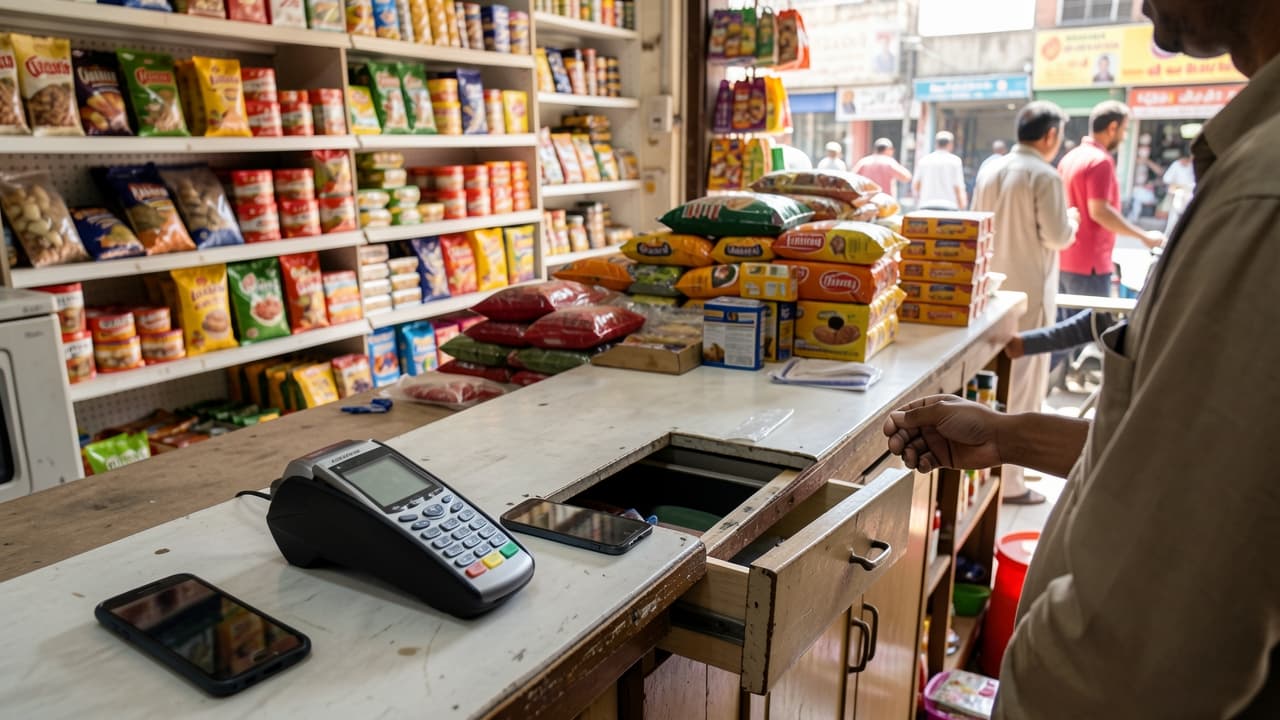
The government has decided to tighten who counts as an active user or merchant under the Prime Minister's Cashless Pakistan initiative, and to ask for tax policy changes that could speed electronic payments. Minister of State for Railways and Finance Bilal Azhar Kayani chaired the meeting on Tuesday at the Finance Division in Islamabad. The move follows a fourfold rise, in the last fiscal year, in merchants that accept electronic payments.
What the committee decided
The committee decided to review and then set definitions of active app users, active merchants and unique digital payment users. Participants examined three dashboard indicators for this year: active and unique users of digital channels, digital transactions over a year, and active merchants taking digital payments. They also discussed whether those indicators, and the ideas of usage, activity and uniqueness, are a sound way to judge the programme.
Kayani asked private-sector members of the committee to draw up a list of tax policy recommendations for review. The aim, he said, is to help the shift to digital payments while making everyday services easier, improving transparency and bringing more of the economy into the documented sector. He said the dashboard must use figures that are accurate, validated and not duplicated, and he told both sides to work more closely on the targets of the Cashless Pakistan initiative.
These digital payment rules centre on who is counted as active, and on tax ideas still to be reviewed. Kayani restated that the government will work with regulators, banks, financial technology companies and the wider private sector to expand digital payments and financial inclusion.
Who sat in the Islamabad meeting
The meeting was called to look at this year's dashboard and to map the next phase. Participants included senior people from government and from banks and financial technology firms. The State Bank of Pakistan, the country's central bank, sat with the Finance Division, the Ministry of Information Technology and Telecommunication, the National Database and Registration Authority (NADRA) and the Pakistan Digital Authority.
On the private side were the chairman of the Pakistan Banking Association, the president of Easypaisa Digital Bank, the chairman of JazzCash, and the president and chief executive of Bank Alfalah. Senior officials of JS Bank and Karandaaz Pakistan were also there, with other firms in the digital payments business.
What has already changed in public offices
The meeting set out gains from the past year. NADRA has digitised 99 percent of payments at its service centres across the country. Passport centres have been enabled to accept digital payments, covering identity and administrative services used by millions of people.
The government has reached approximately 75 percent digital payment acceptance across centralised entities and self-accounting entities. The meeting presented that share as acceptance inside those public entities.
Aasan alfaaz mein
Hukumat Cashless Pakistan programme ke tehat yeh tay karegi ke active user aur active merchant kin logon ko kaha jaye. Pichle fiscal year mein electronic payment lene wale merchants chaar guna barh gaye. Tax par abhi sirf tajaveez mangi gayi hain, koi naya rate nahi bataya gaya. NADRA centres par 99 feesad payments digital ho chuki hain, aur passport centres par bhi digital payment chal raha hai.