The main KP emergency news on Sunday was a rebuke from PTI chairman Barrister Gohar Ali Khan. He told a press conference that governor's rule and an emergency in Khyber Pakhtunkhwa would not solve the province's problems, and that counterterrorism needed one strategy agreed through political consensus, Dawn reported. ARY News said he called the emergency a "serious political mistake". Dawn's report on the same briefing does not use that phrase.
Dawn said the Tehreek-i-Tahafuz Ayin-i-Pakistan (TTAP), a grouping formed around protection of the Constitution, condemned the imposition as unconstitutional and contrary to democratic principles. TTAP said it would challenge governor's rule in the courts, the assemblies and public forums, and that a long march would go ahead as planned.
Why governor's rule covers all of KP
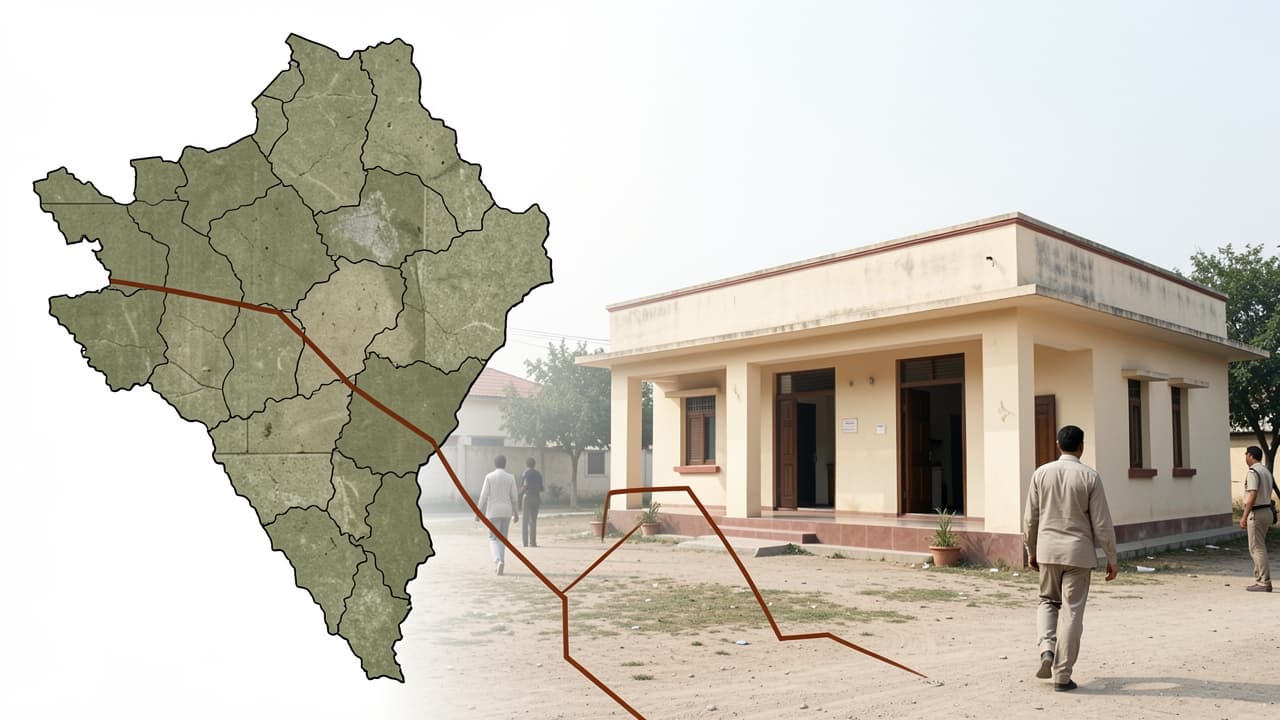
Gohar rejected the allegation that the Khyber Pakhtunkhwa government had failed to cooperate with the federal government on terrorism. He said the provincial administration was still committed to removing the threat. "If the problem of terrorism exists in 12 districts, why has governor's rule been imposed across the province?" he asked.
He said PTI had condemned terrorism in every form and that the country's security and defence remained paramount. He argued that those measures should not be used against his party, and that sidelining an elected chief minister was inconsistent with democratic principles after federal interference had weakened the province's authority.
He claimed terrorism was not discussed in 15 meetings with government representatives before Oct 2, even as the province increased police capacity, provided security resources and joined counterterrorism meetings. These reports do not include a reply from the federal government.
Who sits on the advisory council
Express reported that, with governor's rule in force, an 11-member special advisory council was formed under Governor Faisal Karim Kundi to run administrative, financial and legal affairs. The KP advisory council includes administrative, economic, legal, political and medical figures, with experts in finance, energy, minerals, law, industry, interior, information, education, health and development.
Express said the council includes two former chairmen of the Federal Board of Revenue (FBR), the federal tax authority, a former senator, a former advocate general, a former inspector general of police and a former surgeon general of the Pakistan Army. Dr Syed Amir Abdullah, a former caretaker minister for industry and trade and a UN Development Programme consultant, will look after education. Former FBR chairman Tariq Mahmood Pasha will handle finance, revenue, excise and taxation.
Former senator Usman Saifullah Khan will cover energy, electricity, planning and development. Former Khyber Pakhtunkhwa advocate general Amir Javed was assigned law and parliamentary affairs. Zaviya has also published the KP Advisory Council Members Named by Federal Government and reported that the Khyber Pakhtunkhwa council holds first meeting under Kundi.
The court path and the long march
Gohar said PTI would challenge governor's rule through the courts, the assemblies and public forums. He asked for political prisoners to be freed and for former prime minister Imran Khan to be moved to hospital, with family visits and details of his treatment shared.
He said the party had approached the Supreme Court and the high courts 19 times without relief, which is why a long march for Aug 5 was announced. He claimed about 1,500 PTI workers were imprisoned in Punjab, along with 10 members of the provincial assembly, including three ministers, and eight members of the National Assembly. Dawn presented those numbers as his claims.
PTI secretary general Salman Akram Raja said the long march announced by Chief Minister Sohail Afridi was unchanged. "We will not throw stones. Through peaceful protest, we have to express our moral position," he said. He called the arrest of a provincial assembly speaker extraordinary, and said the assembly still exists.
Talks PTI says were cut short
Raja said decisions on security operations should be taken with all political parties. He wanted earlier agreements, including the Parachinar agreement, carried out rather than new conditions, citing the February 2026 Apex Committee meeting and a peace jirga resolution. "We cannot give anyone written permission to do whatever they want and then endorse it," he said.
He said talks involving Mahmood Khan Achakzai, Allama Raja Nasir Abbas and Maulana Fazlur Rehman had been going well, and he called the emergency hasty. He cited Senator Kamran Murtaza as saying negotiations were on the right track, and said any decision on governor's rule had to follow the Constitution and political consensus.
Allama Raja Nasir Abbas, head of Majlis Wahdat-i-Muslimeen, said the provinces share one Constitution and criticised the treatment of PTI. He urged that the National Action Plan (NAP), the country's framework against terrorism, be implemented, and said seven days of talks could have been used for a settlement that protects civilians.
The KP emergency news now turns on the court challenge and the long march the party says will stay peaceful. Rallies in Peshawar and Bannu have also been reported.