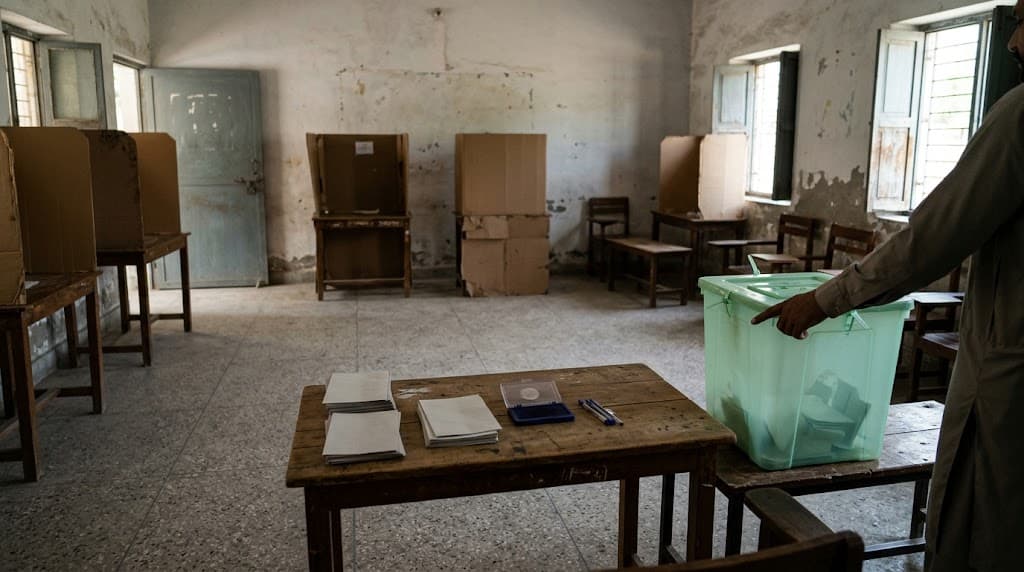
Americans went to the polls on Tuesday in the US midterm elections, a contest widely cast as a nationwide referendum on President Donald Trump. Democrats are seeking control of Congress as voters voice anger over living costs, fuel prices and a prolonged conflict with Iran — a shift that could tightly constrain the remaining two years of Trump's presidency.
All 435 House seats and 35 of the Senate's 100 seats were contested, along with governorships in 36 states. Democrats needed a net gain of three seats in the House and four in the Senate to take both chambers. Earlier coverage of voting and the House fight is here.
Cost of living and the Iran conflict
Trump returned to the White House last year promising lower prices. Inflation, tariffs and rising fuel costs linked to the Middle East conflict have kept pressure on households, and his approval rating has stayed near the low 30s.
In an Atlanta suburb, project manager Donta Comer, 38, said he had "voted for mostly Democratic candidates," citing "the cost of living, gas prices, those kind of things." Republicans countered that Trump's tax cuts and immigration stance help voters; in Austin, Texas, 84-year-old Daryl Ruley warned younger voters against socialism.
Trump defended his record in a Tuesday television phone-in, saying his immigration crackdown, war on Iran and tariff policy had helped rebuild the country. "We have to keep America great. We're great now. We were terrible two years ago," he told viewers.
What control of Congress would change
Polls pointed to a Democratic House majority, with a path also open in the Senate. Decision Desk HQ's final forecast projected Democrats at 241 House seats to 194 for Republicans, and a narrower 52–48 Democratic Senate majority. A House loss would let Democrats block Trump's legislative agenda and open investigations; a Senate loss would threaten confirmations for Supreme Court justices and senior appointments.
Republicans hold a 53–47 Senate majority, but races have widened into Kansas, Texas, Iowa, Ohio and Alaska. Democrats also defended tough seats, including Michigan, where Congresswoman Haley Stevens endorsed Republican Mike Rogers over Democratic nominee Abdul El-Sayed. The North Carolina Senate contest is tracked separately.
Trump, due to watch results at the White House on Tuesday night, told a podcast on Monday he could "veto everything" if Democrats take Congress, while adding he might later reach agreements. At his final Monday campaign stop he called the midterms "the most important midterm I believe in our lifetime," after dwelling on a Washington Reflecting Pool renovation. Senate Democratic leader Chuck Schumer called that a "pathetic closing message."
Monitors, lawsuits and early turnout
More than 57 million Americans had already voted early. The campaign drew more than $11 billion in political advertising, and Trump ally Elon Musk poured hundreds of millions of dollars into Republican efforts.
Concerns have grown over whether Republicans will accept the outcome. Trump, who tried to overturn his 2020 presidential defeat, has repeatedly alleged voter fraud without providing evidence. His administration has intensified probes into suspected non-citizen voting, though research and election officials say such cases are exceedingly rare.
The Justice Department — part of the executive branch headed by Trump — filed a lawsuit seeking to potentially block certification of Alaska's Senate race if Republican incumbent Dan Sullivan narrowly loses; a court rejected that effort on the eve of the election. The Supreme Court on Monday also rejected an emergency petition seeking to set aside more than 20,000 California mail-in ballots on citizenship grounds.
The Justice Department said it was deploying approximately 1,000 election monitors and observers across all 50 states and described the deployment as the largest election-monitoring effort in its history. Assistant Attorney General Harmeet K. Dhillon said election integrity was a top administration priority. Monitors are tasked with checking federal voting-rights compliance, including the Voting Rights Act, and with guarding against intimidation. Markets in Pakistan have already been watching the vote; gold prices eased as investors awaited the midterms.
Timeline: what has happened so far
- 2020: Trump attempted to overturn his presidential election defeat and has since alleged widespread fraud without evidence.
- Last year: Trump returned to the White House pledging to bring down prices.
- Monday: Trump held his final public campaign appearance; the Supreme Court rejected a California mail-in ballot petition; a court rejected the Alaska certification lawsuit on the election eve.
- Tuesday: Americans vote in the midterms; Trump was due to watch results at the White House; more than 57 million had already cast early ballots.
Aasan alfaaz mein
America mein aaj midterm elections ho rahe hain, jinhein Trump ki hukumat ka imtihaan samjha ja raha hai. Democrats Congress jeetne ki koshish kar rahe hain kyunke mehngai aur petrol ke daam logon ko pareshaan kar rahe hain. Agar Democrats jeet gaye to Trump ke liye naye qanoon aur appointments mushkil ho sakte hain. Pakistan ke liye yeh vote oil, dollar aur markets ke mood par asar daal sakta hai — lekin abhi nateeje clear nahi.