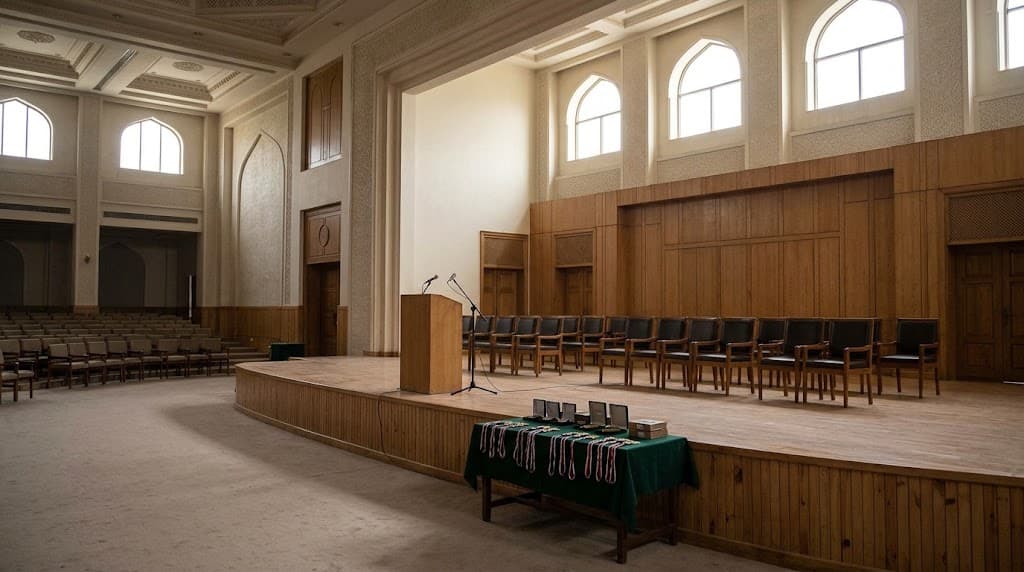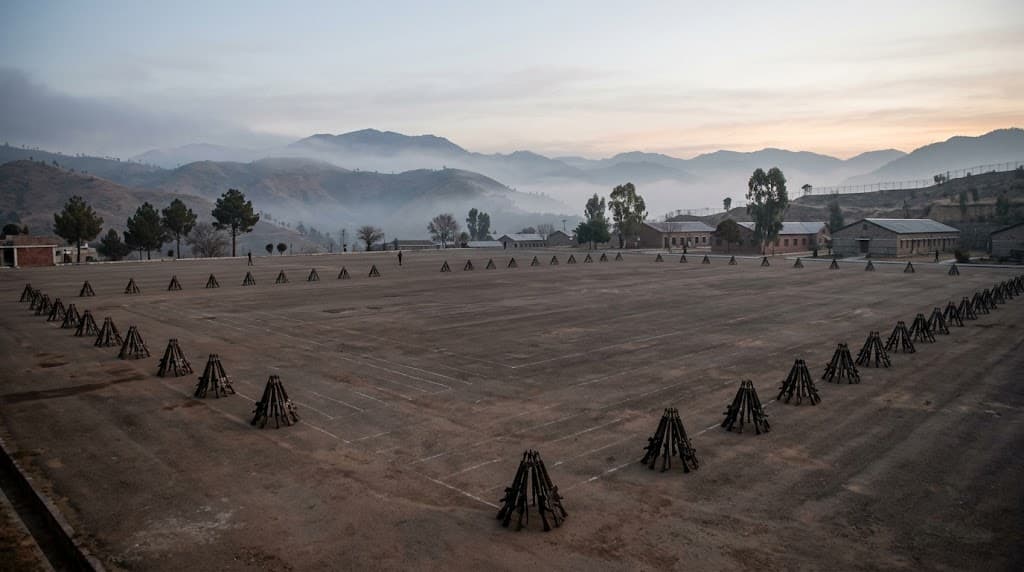
The CNSC warns India and other adversaries that any military miscalculation in a nuclearised environment would bring a response far stronger than the initiator expects. Commander National Strategic Command (CNSC) — the headquarters that oversees Pakistan's strategic forces — General Aamer Raza delivered the message on Saturday while addressing the passing-out parade of the 154th Long Course at the Pakistan Military Academy (PMA) in Kakul.
Speaking to newly graduating cadets, he said Pakistan's stance toward those with "hostile designs across our borders" was "resolute and unambiguous." There was "no space for conflict or war in a nuclearised environment," he said, and "any miscalculation will be met with a response far beyond the imagination or calculation of the initiator." He also reiterated that the armed forces stood ready to "defend every inch of the motherland" at all costs.
Context behind the warning
The CNSC warning India comes after Indian Defence Minister Rajnath Singh told Pakistan on Thursday that any "fresh terrorist activity from across the border would invite a strike even bigger than the last time." Gen Raza's remarks did not name the Indian minister in the quoted passages from the parade, but they framed Pakistan's policy as a clear deterrent signal in the same tense exchange.
He urged national unity and resilience against efforts to destabilise the country, casting the moment as one in which adversaries were testing both Pakistan's resolve and its internal cohesion.
Disinformation and proxy pressure
Gen Raza said that in a "post-truth era," hostile actors were trying to drive a wedge between the people and the armed forces through "calculated disinformation and narrative warfare." After what he called the failure of Operation Sindoor, he said adversaries sought to "fracture Pakistan's social cohesion and state infrastructure" by escalating proxy terrorism and sub-conventional warfare — pressure below the level of open conventional war.
Hostile elements, he added, still try to exploit internal vulnerabilities to "cultivate proxy instruments against our national unity." Safeguarding unity, sovereign integrity and territorial inviolability was, in his words, "an absolute imperative, which we shall uphold at all costs and under every circumstance."
Diplomacy and what comes next
Turning to the wider scene, Gen Raza said shifts in global geopolitics, including the escalating conflict in the Middle East, had again underscored Pakistan's strategic importance. He pointed to what he called a "decisive role in restoring regional stability," citing the Islamabad Accord as an example of commitment to peace and diplomacy, and described the Makkah Accord as "a sequel to the same vision of durable peace."
For readers, the immediate takeaway from how the CNSC warns India is deterrence language paired with a domestic call for social cohesion. Officials on both sides have raised the stakes in public; any further military or diplomatic moves will depend on decisions in Islamabad and New Delhi that have not yet been spelled out beyond these statements.
Aasan alfaaz mein
Pakistan ke strategic command ke head ne India ko saaf message diya hai ke fauji galti ki koi gunjaish nahi. Unhon ne kaha ke nuclear ilaqe mein jang ka koi faida nahi, aur agar koi ghalat qadam uthaega to jawab bohat sakht hoga. Ye baat PMA Kakul ke parade par kahi gayi, jab ke pehle Indian defence minister ne bhi Pakistan ko bari strike ki dhamki di thi. Aam logon ke liye matlab ye hai ke tension zyada hai, is liye hushiyari aur ittehad zaroori hai.