The Federal Constitutional Court has held that equal pay for equal work—and the wider constitutional promise of equality—cannot be used to demand matching pay or allowances unless claimants first show they are similarly placed in all material respects to those already receiving the benefit.
In a judgment authored by Justice Aamir Farooq on a two-judge bench, the court said mere common membership of a department, establishment or employer is not enough. What matters, it said, is the nature of the work, the degree of responsibility, working conditions and the risks attached to the duties, and whether the two classes of employees are truly similarly placed.
KP police risk allowance dispute
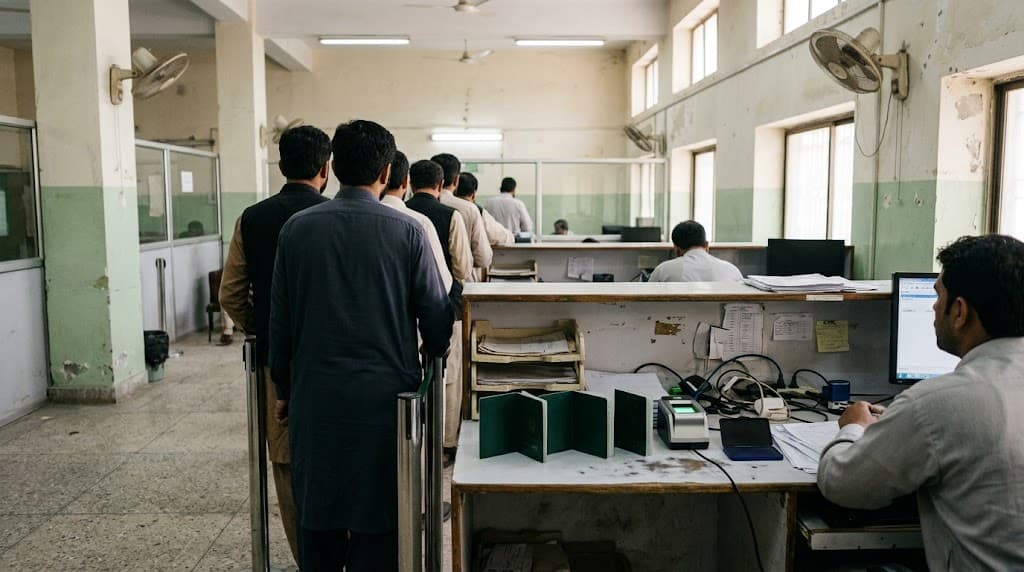
The case concerned employees of the Police Establishment of Khyber Pakhtunkhwa who work in internal or desk roles. They sought the Risk Allowance that is paid to uniformed police officials. After the department refused, they argued that withholding the same benefit was discriminatory under Article 25 of the Constitution, which guarantees equality before the law. They challenged the refusal in the Peshawar High Court through a writ petition under Article 199; the high court allowed their petition.
The Federal Constitutional Court disagreed with that approach. It found that the respondents had not shown they perform duties of the same nature and under the same conditions as the uniformed personnel for whom the allowance was sanctioned. On the record, they belong to the ministerial establishment and do not carry out active police duties. The court said the classification therefore rested on the nature and hazards of the work, not on arbitrary or irrelevant grounds.
What the court said about classification
The judgment noted that the high court appeared to have focused mainly on the fact that both groups serve in the police department. That, the Federal Constitutional Court said, does not address the real distinction in their service functions. The decisive question was not departmental affiliation but whether the claimants fall within the class of employees for whom the allowance was created.
An allowance of this kind, the court explained, is not an automatic feature of employment in a particular department. Where a competent authority ties an allowance to specific duties or occupational risks, an employee who wants it must prove that he or she belongs to that prescribed class. A high court cannot widen the allowance merely because someone works in the same department, especially when the classification has a rational link to the purpose of the benefit.
Courts may step in if a classification is shown to be arbitrary, discriminatory or without a rational basis. But where the government has drawn a distinction based on duties and occupational risks, the court said judicial interference is not justified simply because another category of staff believes it deserves the same payment. Under these circumstances, denial of the Risk Allowance to the ministerial and desk respondents was held not to amount to hostile discrimination or to breach constitutional equality.
Why the equal pay for equal work test matters
By spelling out these prerequisites, the court clarified when equal pay for equal work can be pressed in public employment disputes: claimants must first establish material similarity in work and risk, not only a shared employer. The ruling leaves intact the government’s ability to link special allowances to hazardous or field duties when that link is rational and supported by the record.
Aasan alfaaz mein
Federal Constitutional Court ne kaha ke barabar tankhwah ya allowance tab milti hai jab kaam, zimmedari aur khatre bhi barabar hon. Sirf police department mein hone se risk allowance nahi milta. KP ke desk aur daftar wale mulazimein field police jaisi allowance claim nahi kar sakte the. Matlab yeh hai ke khas allowance unhi ke liye hai jin ke kaam mein woh khatra pehle se manzoor hai.