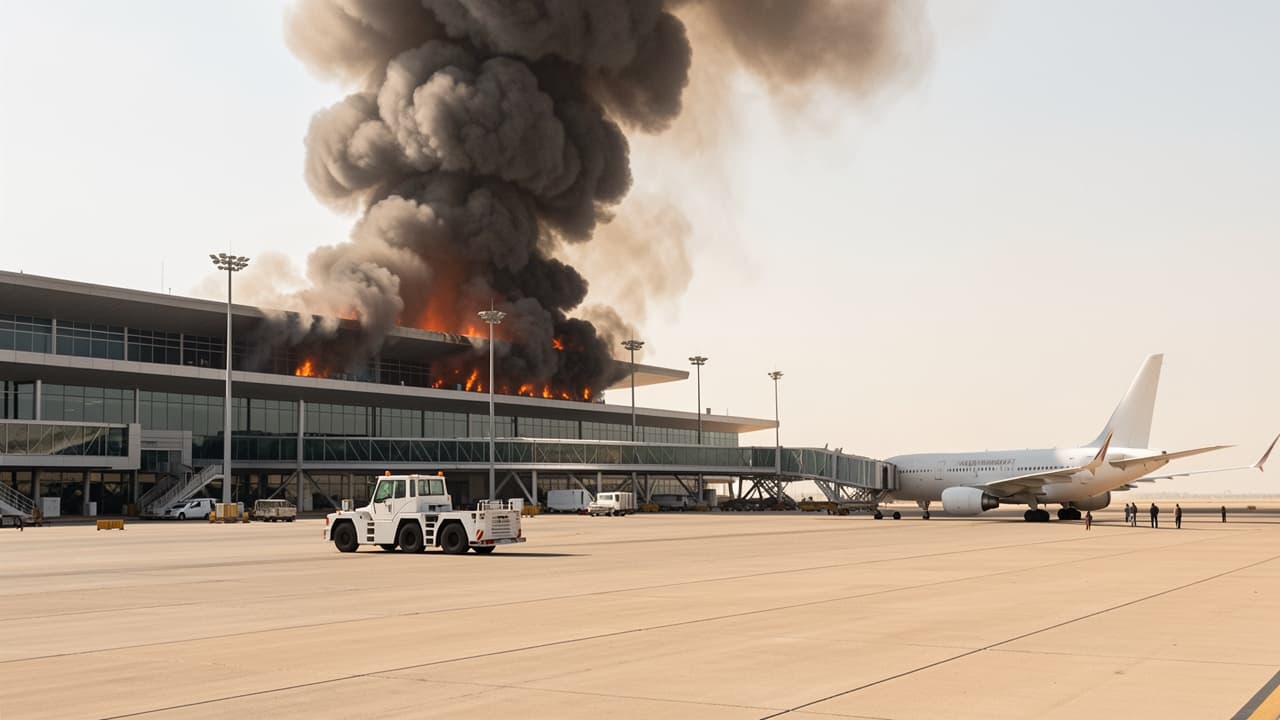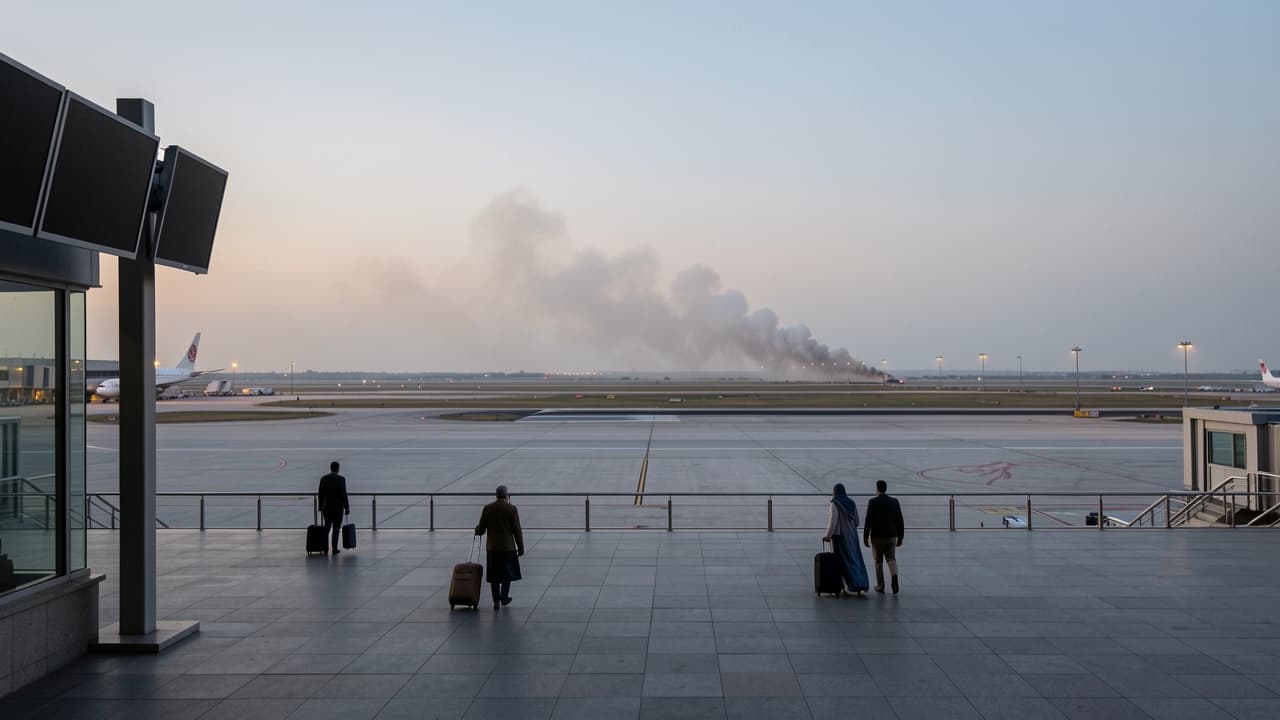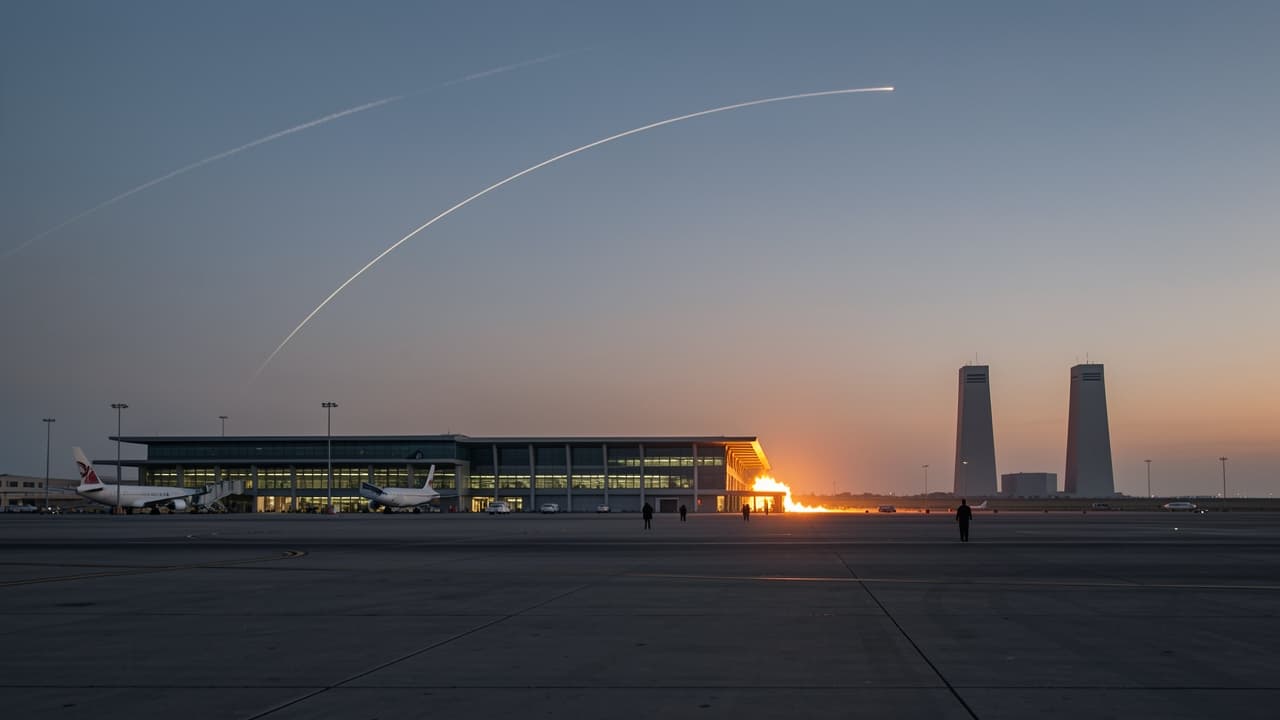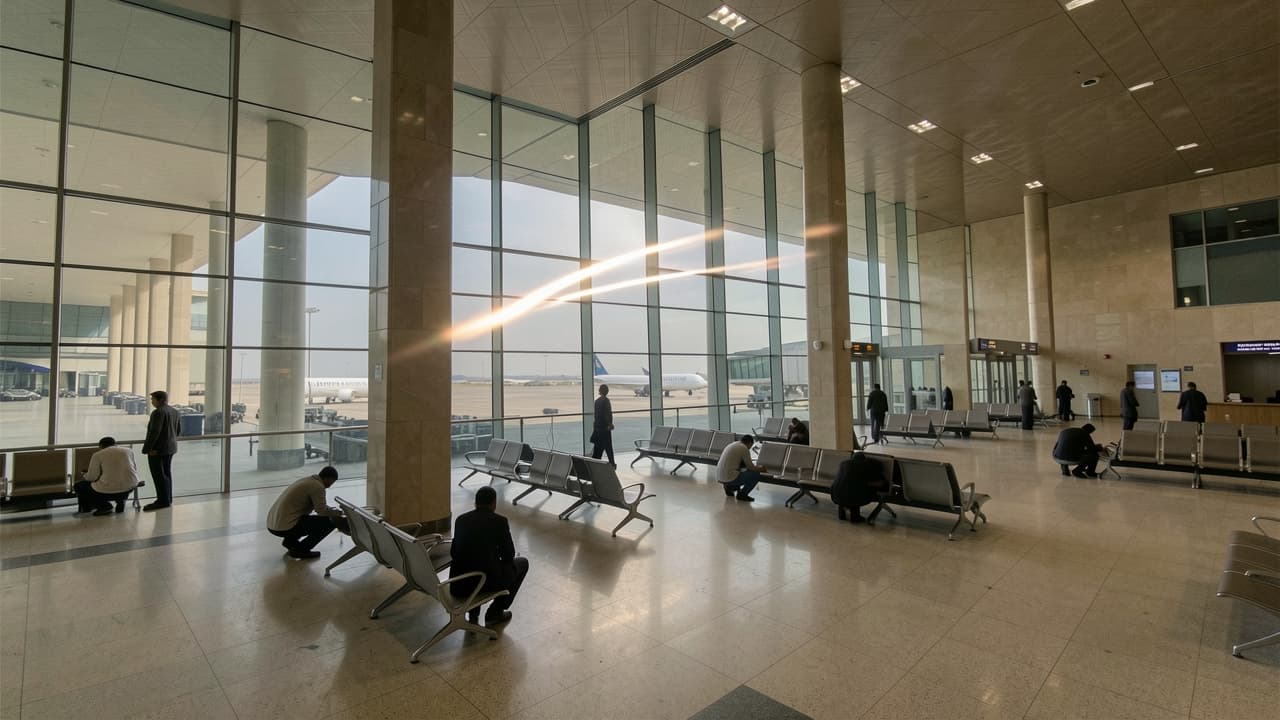
Riyadh airport news, as published by the BBC, concerns two strikes on Saturday at the international airport in the Saudi capital. The BBC says 14 people were killed and more than 300 were injured. Footage from security cameras inside King Khalid International Airport shows people taking cover as one missile hits the building.
What the CCTV shows
The clip is recorded CCTV of Saturday's strike. The BBC page does not present it as a live picture of the airport today. The video shows the moment of impact from inside the airport. One headline says people take cover. Another headline on the same footage says people are queuing. The text with both versions says the cameras show people taking cover.
The BBC also says a series of other attacks happened earlier in the week. Those earlier attacks are not described in this report. The report does not say whether King Khalid International Airport is open or closed, and it does not say whether flights are operating.
Who claimed the Riyadh airport missile strike
Yemen's Houthis say they carried out the strikes. They warned airlines and passengers against using Saudi Arabian airports and airspace. The group said it targeted the airport with a mix of ballistic missiles, cruise missiles and drones.
A ballistic missile follows a high arc, a cruise missile is steered in flight, and a drone is an aircraft with no pilot on board. The BBC is reporting the Houthis' account of that mix. The video report does not give a separate number for each weapon.
Brig Gen Yahya Saree, their military spokesman, said the group also attacked oil facilities and Dammam airport in eastern Saudi Arabia. He said the group would continue "escalating operations deep inside Saudi Arabia". He warned that all Saudi airports were potential targets apart from those in the holy cities of Mecca and Medina.
What remains unclear for travellers
Readers looking for Riyadh airport news have the Saturday casualty figures, the CCTV and the Houthi claim. The BBC account does not include a shutdown notice, a reopening notice or a list of cancelled services.
For Pakistanis going to Saudi Arabia for work, family or pilgrimage, the practical issue is that gap. The Houthi warning is a statement from the group about risk to airports and airspace. Flight status sits with the airlines. Saree placed Mecca and Medina outside the airports he called potential targets, and the BBC does not describe day-to-day operations at those airports. Travellers should check with their own carrier before they leave.