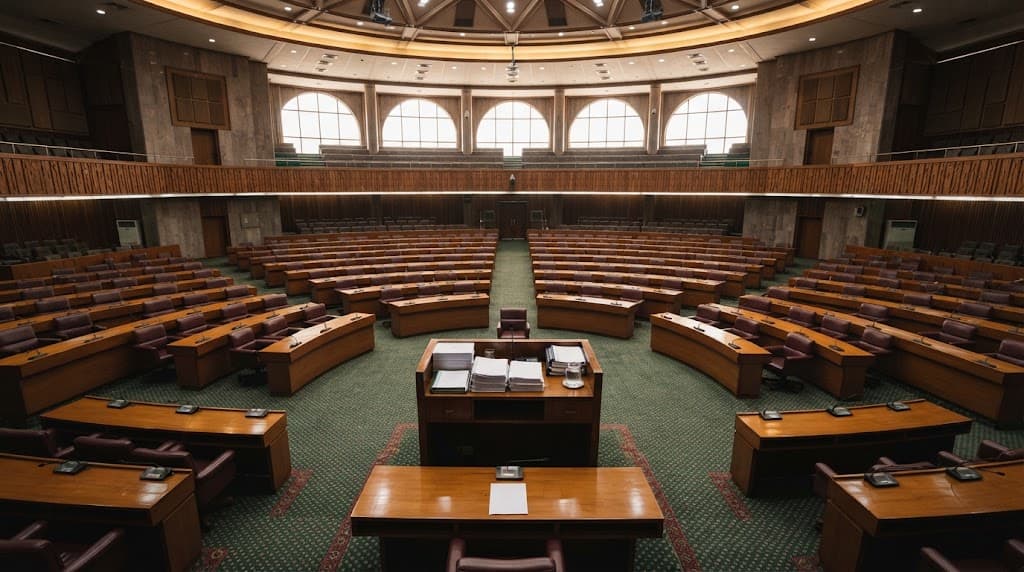
Democrats win House control of the US House of Representatives, with a projected haul of about 248 seats — well beyond the 218 needed for a majority and potentially their largest majority in nearly two decades. The result is widely read as a rebuke of President Donald Trump and Republican lawmakers. Control of the chamber is due to begin on Jan. 3, the first time in Trump’s second term that he will not have full Republican control of Congress.
Voters flipped many more Republican-held seats than the net of three Democrats needed to reclaim the majority they lost in 2022. Many of those districts had backed Trump in the 2024 election. The Senate outcome has not yet been projected.
Where Democrats flipped seats
In Pennsylvania, Democrat Bob Brooks defeated Republican Rep. Ryan Mackenzie in the 7th District; Paige Cognetti beat Rep. Rob Bresnahan in the 8th; and Janelle Stelson ousted Rep. Scott Perry in the 10th. In Virginia, former Democratic Rep. Elaine Luria defeated Rep. Jen Kiggans around Virginia Beach. In Colorado, state Rep. Manny Rutinel beat Rep. Gabe Evans. In North Carolina, farmer Jamie Ager defeated Republican Jennifer Balkcom in a district Trump had won two years earlier by more than nine percentage points. Balkcom became the nominee after Rep. Chuck Edwards left the race amid harassment allegations.
What the new majority can do
When Democrats take the gavel, they will run House committees, with subpoena power and the ability to investigate Trump’s administration, family and business interests. That oversight could mean public hearings and legal fights over subpoenas. Some Democrats have talked of a third impeachment of Trump, though the party is divided on whether to pursue it. House Democratic leader Rep. Hakeem Jeffries of New York said Democrats “haven’t ruled anything in and we haven’t ruled anything out” on impeachment.
Rep. Robert Garcia of California is poised to chair the Oversight Committee and has said the panel will focus on what he called “Trump family corruption,” including cryptocurrency ventures that have earned Trump more than $1 billion, as well as ICE and Department of Homeland Security practices, corporate corruption and the Jeffrey Epstein files. Jeffries has also pointed to four legislative priorities: reversing Trump’s Medicaid cuts, extending Affordable Care Act credits, restoring congressional authority over tariffs, and stopping Trump’s war with Iran. Jeffries is expected to be sworn in on Jan. 3 as the first Black speaker of the House.
Why voters turned against Republicans
The Democrats win House race was widely framed as a referendum on Trump’s unpopular policies, including a tough immigration crackdown, an eight-month war with Iran, and tariffs on US allies that pushed up prices of petrol, groceries and other goods. Since returning to the White House, Trump has tested the limits of executive power — including agency cuts through the Department of Government Efficiency, sweeping tariffs and moves to rescind congressionally approved funding — while a Republican House and Senate largely stood aside. The outcome is a setback for Speaker Mike Johnson of Louisiana; it is unclear whether he will stay on as minority leader.
Timeline: what has happened so far
- 2022: Democrats lost the House majority they are now reclaiming.
- 2024: Trump carried many of the districts Democrats flipped in this cycle.
- Summer 2025: Trump urged Republican allies in Texas to redraw congressional maps; Republicans also redrew maps in Florida, North Carolina, Tennessee, Alabama, Louisiana and Missouri.
- California response: Gov. Gavin Newsom, former Speaker Nancy Pelosi and allies backed Proposition 50, approving a new Democratic-drawn map that helped pick up Republican-held seats.
- Election night 2026: Democrats are projected at about 248 House seats; Senate control remains unprojected.
- Jan. 3: Democrats are due to take House control, with Jeffries expected to become speaker.
Aasan alfaaz mein
America ki House of Representatives ab Democrats ke paas ja rahi hai. Trump ko pehli dafa apni doosri term mein Congress ka poora control nahi rahega. Democrats January mein committees chalaenge aur Trump ki policies check kar sakte hain. Pakistanis ke liye seedha matlab yeh hai ke America ki tariff, Iran war aur oil politics ab zyada debate aur rukawat ke saath chal sakti hain.