Poverty gains reverse after 2018
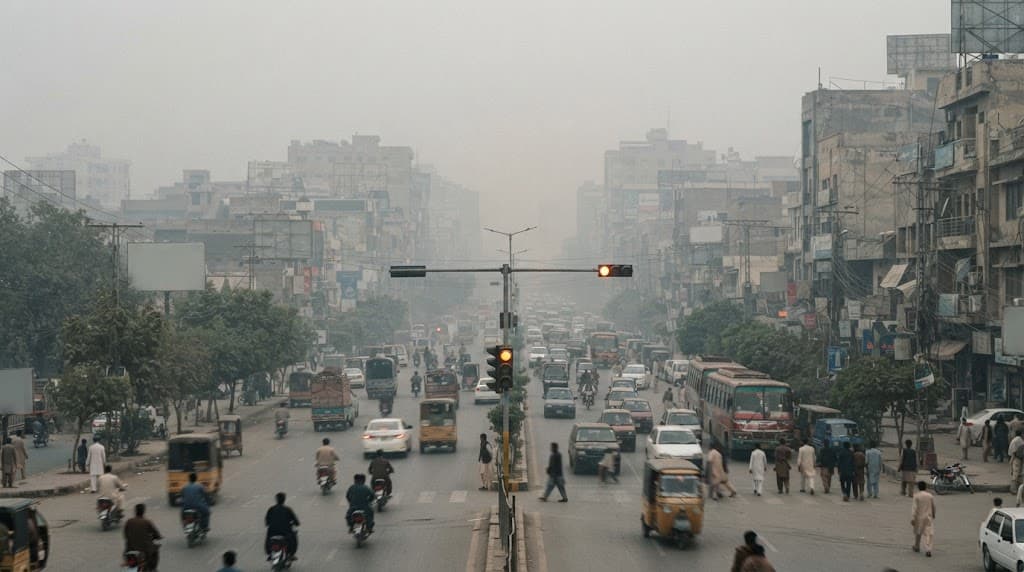
Planning, Development and Special Initiatives Minister Professor Ahsan Iqbal said on Wednesday that Pakistan’s drive to shrink hardship lost steam after 2018. He put the poverty share at 28.9 per cent in 2024-25, up from 21.9 per cent in 2018-19, and blamed unsettled politics, repeated economic stress, stop-start policies and climate shocks.
He spoke in Islamabad at a forum on routes to a poverty-free country and on using multidimensional measures for policy. Oxford Poverty and Human Development Initiative (OPHI) director Professor Sabina Alkire joined officials, donors, researchers and academics.
Earlier fall, then successive shocks
Iqbal recalled that cash-based poverty eased from 29.5 per cent in 2013-14 to 24.3 per cent in 2015-16 while the PML-N held office from 2013 to 2018. He said growth, development spending and human capital sat at the centre of Vision 2025 then.
Later, he argued, unsettled politics, broken policy threads, the COVID-19 outbreak, major floods and intense macroeconomic strain—including a default risk in 2022—eroded those advances. Steady politics, durable growth and continuous policy, he said, are needed to turn the curve again.
Development budget stuck near Rs1 trillion
On financing, he noted the federal Public Sector Development Programme (PSDP)—the government’s main capital and project budget—was Rs1,001 billion in 2017-18, or 19.6 per cent of federal spending and 2.5 per cent of GDP. For 2026-27 the envelope is still about Rs1 trillion in cash terms even as the population, prices and needs grow. Holding the older budget share, he warned, would push the programme above Rs3 trillion today. Thin public investment, he said, hurts schooling, clinics, water security, roads, skills and jobs, especially in poorer areas.
He pressed for finishing devolution under the 18th Constitutional Amendment. Provinces take 57.5 per cent of the federal divisible pool under the 7th National Finance Commission Award and lead on education, health and welfare, yet that larger fiscal room has not reliably lifted basic services. Article 140A, he said, should move real political, administrative and money powers to elected local governments, backed by working Provincial Finance Commissions and open, need-based transfers.
Multidimensional index and URAAN Pakistan
Pakistan first published a National Multidimensional Poverty Index (MPI)—a score of overlapping gaps in schooling, health and living conditions, not only income—in 2016 with OPHI and the United Nations Development Programme. That map flagged the 20 worst-off districts: eleven in Balochistan, five in Sindh, three in Khyber Pakhtunkhwa and one in Punjab, guiding federal PSDP targeting.
The government now plans a National MPI 2027 with OPHI, the Pakistan Bureau of Statistics and partners, drawing on the Pakistan Social and Living Standards Measurement Survey 2026-27. Fresh themes would cover climate risk, insecurity, youth hardship, gender gaps, digital exclusion, early childhood, nutrition, stunting and migration, he said, if methods and data stay rigorous. Work could also map hardship at National and Provincial Assembly seat level using the 2023 census so lawmakers see local gaps.
Iqbal asked the Planning Commission, the statistics bureau, Benazir Income Support Programme, the Pakistan Institute of Development Economics, provincial planners, universities and partners to fold poverty evidence into planning, PSDP choices, social protection and results tracking. Under URAAN Pakistan, he said, stability must sit beside lasting human-development outlays, stronger accountability and fair chances—judged by better schooling, health and livelihoods, not only rupees spent or schemes finished.
Timeline: what has happened so far
- 2013-14 to 2015-16: Monetary poverty fell from 29.5% to 24.3%, Iqbal said of the PML-N years.
- 2016: First National Multidimensional Poverty Index launched with OPHI and UNDP.
- 2017-18: Federal PSDP at Rs1,001 billion (19.6% of the federal budget; 2.5% of GDP).
- 2018-19 to 2024-25: Poverty rate rose from 21.9% to 28.9%, he said.
- 2022: Severe macro stress included a threat of financial default, according to the minister.
- Planned 2026-27 / 2027: PSLM survey data to feed National MPI 2027; PSDP still near Rs1 trillion nominally.
Aasan alfaaz mein
Wazir Ahsan Iqbal ke mutabiq gharibi 2018 ke baad phir barh gai hai. Pehle kam ho rahi thi, ab 2024-25 mein 28.9 percent ho gai. Unhon ne kaha ke siyasat, economy aur flood jaise masail ne pehle ke faiday kharab kiye. Sarkari development budget lagbhag wahi hai jabke mehengai aur log barh rahe hain—iska asar school, hospital aur rozgar par parta hai.