Pakistan's textile mills have made a fresh APTMA's FBR demand that the Federal Board of Revenue (FBR, the national tax and customs authority) keep its Central Appraising Unit (CAU, the team that values and classifies imports) in Karachi, warning that longer clearance, valuation fights and higher costs are already hurting importers.
In a letter dated 27 October to FBR Chairman Rashid Mahmood Langrial, the All Pakistan Textile Mills Association (APTMA) also asked the board to review the faceless customs assessment system—where officers assess cargo without face-to-face dealing—and to hold off on further expansion or major changes until an independent review is done with trade and industry.
What APTMA says is going wrong
APTMA argued that the faceless system has not improved assessment quality despite nearly 21 months of operations. Importers, it said, still face delays, arbitrary value enhancements, classification disputes, repeated examinations and laboratory referrals. Those frictions, the association added, bring demurrage and detention charges, tie up working capital and disrupt export production.
Citing an FBR review committee, APTMA said average assessment time rose to 40.2 hours from 25.6 hours after faceless assessment began on 15 December 2024. The share of consignments cleared within 48 hours fell to 70% from 84%, while requests for reviews climbed to 14% from 6%. The committee, APTMA said, reportedly found no quality gain and advised against further rollout until a review.
Why Karachi's CAU matters for ports
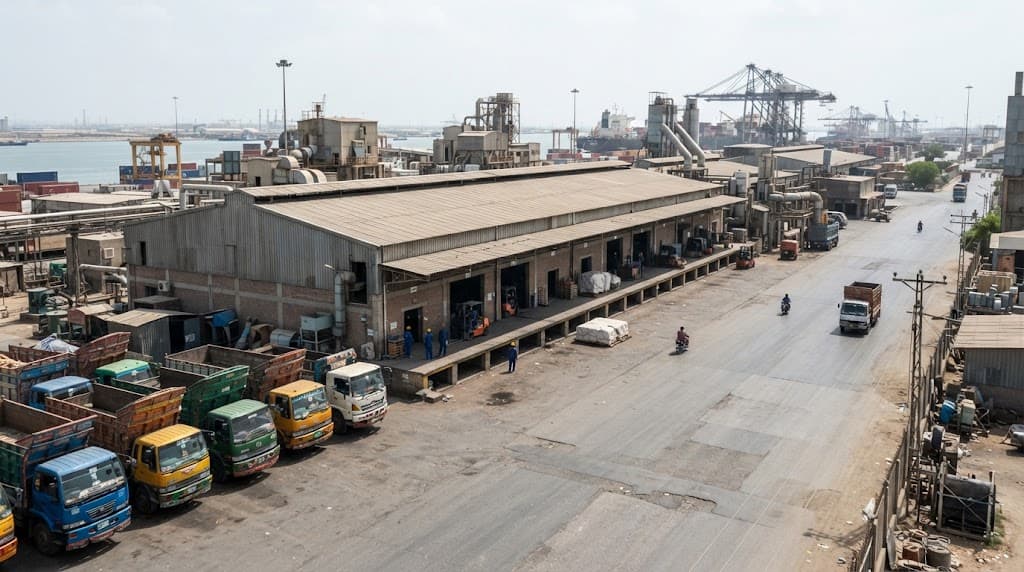
Moving the CAU to Islamabad would worsen those problems, the association warned. Karachi handles most seaborne imports, and examination facilities, laboratories, terminals and technical staff sit near the ports. Relocation, APTMA said, risks losing experienced appraisers, weaker coordination, extra costs and disrupted clearances. Faceless assessment, it argued, can continue through random electronic allocation without physically shifting the CAU—central to this Karachi CAU clearance debate.
What the mills want next
Beyond retaining the Karachi unit, APTMA asked the FBR to set up a dedicated backlog clearance cell, prioritise Export Facilitation Scheme (EFS) and other export-oriented imports, and extend green-channel treatment to Authorised Economic Operators and compliant importers.
It also proposed binding timelines: 24 hours for assessment and first review, 48 hours for a second review, 24 hours for examination after grounding, and 72 hours for laboratory results, with automatic escalation and provisional release under Section 81 of the customs law where that provision applies. Those steps, APTMA said, would cut delays and protect textile production and exports—echoing the core of APTMA's FBR demand on the textile industry FBR customs process.
Timeline: what has happened so far
- 15 December 2024: Faceless customs assessment is introduced, according to APTMA's account of the FBR review.
- After that change: Average assessment time rises to 40.2 hours from 25.6 hours; 48-hour clearances fall to 70% from 84%; review requests rise to 14% from 6%, per APTMA's summary of committee findings.
- Nearly 21 months into the system: APTMA says assessment quality has still not improved.
- 27 October: APTMA writes to FBR Chairman Rashid Mahmood Langrial seeking retention of Karachi's CAU, a system review, and binding clearance timelines.
Aasan alfaaz mein
APTMA ne FBR se kaha hai ke Karachi ka CAU wahan hi rahe. Un ka kehna hai ke faceless assessment se saman clear hone mein zyada waqt lag raha hai. Mill owners ko dar hai ke unit Islamabad shift hua to ports ke paas coordination kamzor ho jayegi. Agar clearance tez hui to textile production aur exports ke liye asani ho sakti hai.