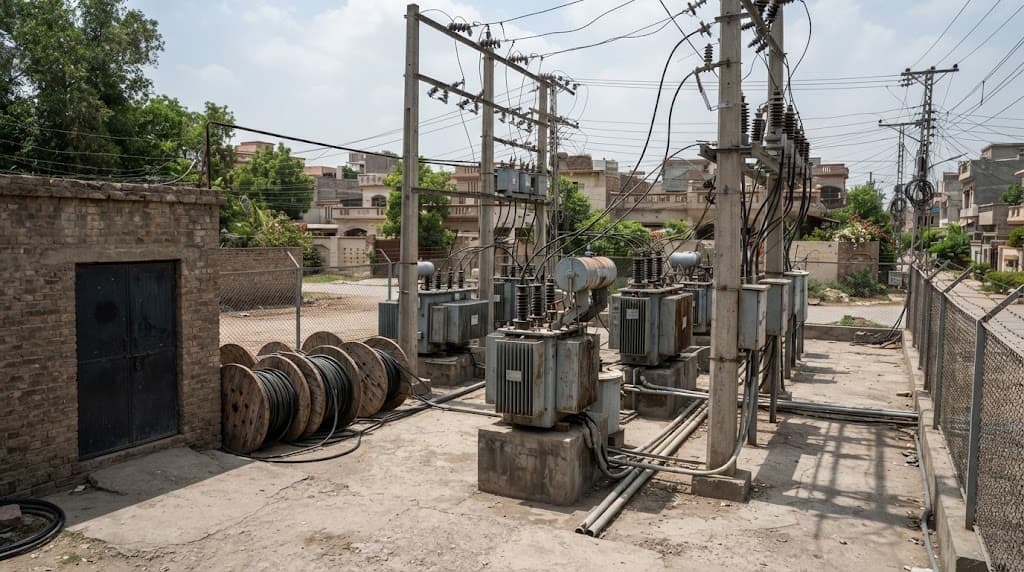
Industrial users are pushing back against a planned electricity tariff increase that would let power distribution companies (DISCOs) recover their income-tax bills from consumers. According to industry sources, the government has reportedly assured DISCOs that those liabilities will be treated as pass-through costs in tariffs whether a company makes a profit or a loss.
Critics say the arrangement moves the tax cost of commercial entities onto electricity users. Lahore Electric Supply Company (LESCO) has reportedly sought around Rs20 billion under this head, while Faisalabad Electric Supply Company (FESCO) has put its tax liability at about Rs15 billion.
How the tax reaches the bill
The dispute centres on the minimum turnover tax—a levy charged on a company’s sales rather than its profit. DISCOs are required to pay at a reported rate of 1.25 percent of turnover, so a firm can owe tax even when its accounts show a net loss.
Industry representatives estimate that, at an electricity tariff of around Rs35 per unit, that minimum tax alone can add about 50 paisa per unit. The load could rise further where a DISCO reports a net profit and its full income-tax bill exceeds the turnover-based minimum. Industrial consumers argue this weakens pressure on DISCOs to cut waste and improve finances, because tax costs can be shifted into regulated revenue requirements.
The industrial sector has asked the government either to exempt DISCOs from tax on their income or to make them meet liabilities from their own resources instead of automatic recovery through bills. Representatives also say any reading of the true cost of power and of subsidy relief should include this extra tax built into distribution companies’ revenue needs.
Rates elsewhere and the HESCO case
Industry sources say some other businesses saw minimum turnover tax cut to as low as 0.2 percent after raising concerns, and that gas distributors including Sui Northern Gas Pipelines Limited (SNGPL) and Sui Southern Gas Company Limited (SSGC) face a reported rate of 0.75 percent. They want an explanation for why electricity distributors face 1.25 percent and why the resulting liability should sit in consumer tariffs.
A separate dispute at Hyderabad Electric Supply Company (HESCO) has sharpened the worry. The Federal Board of Revenue (FBR)—Pakistan’s federal tax authority—has reportedly told HESCO to count government subsidies in turnover for minimum tax. HESCO had been excluding subsidies; after the direction, it faces an additional demand of around Rs3 billion. Industry sources say that could further swell amounts recoverable through the power tariff if tax treatment of subsidies feeds into regulated costs.
Privatisation questions remain open
Under the proposed privatisation framework, private investors would take ownership or management of DISCOs. Industrial consumers want a clear policy on whether users would still fund income-tax liabilities of privately owned firms, including tax on profits earned by new owners. They argue that if a private operator profits from a DISCO, tax should ordinarily fall on the company, not automatically on electricity users.
Industry representatives are seeking clarity on three points: whether income tax remains recoverable through tariffs; how minimum turnover tax is treated when a DISCO loses money; and whether the approach will change after privatisation. Any revision of tax treatment for regulated utilities would need a review of the applicable tax rules for each category of company.
Aasan alfaaz mein
Sarkar DISCOs ke income tax ko bijli ke bill mein shamil karne ka irada rakhati hai, chahe company nuqsan mein ho. Industry ke mutabiq sirf minimum turnover tax se lagbhag 50 paisa per unit zyada bojh ho sakta hai. LESCO ne is mad mein lagbhag 20 arab rupay aur FESCO ne 15 arab rupay ka andaza diya hai. Is se factory aur ghar dono ke bills mehngay ho sakte hain, is liye industry sarkar se wazeh policy maang rahi hai.