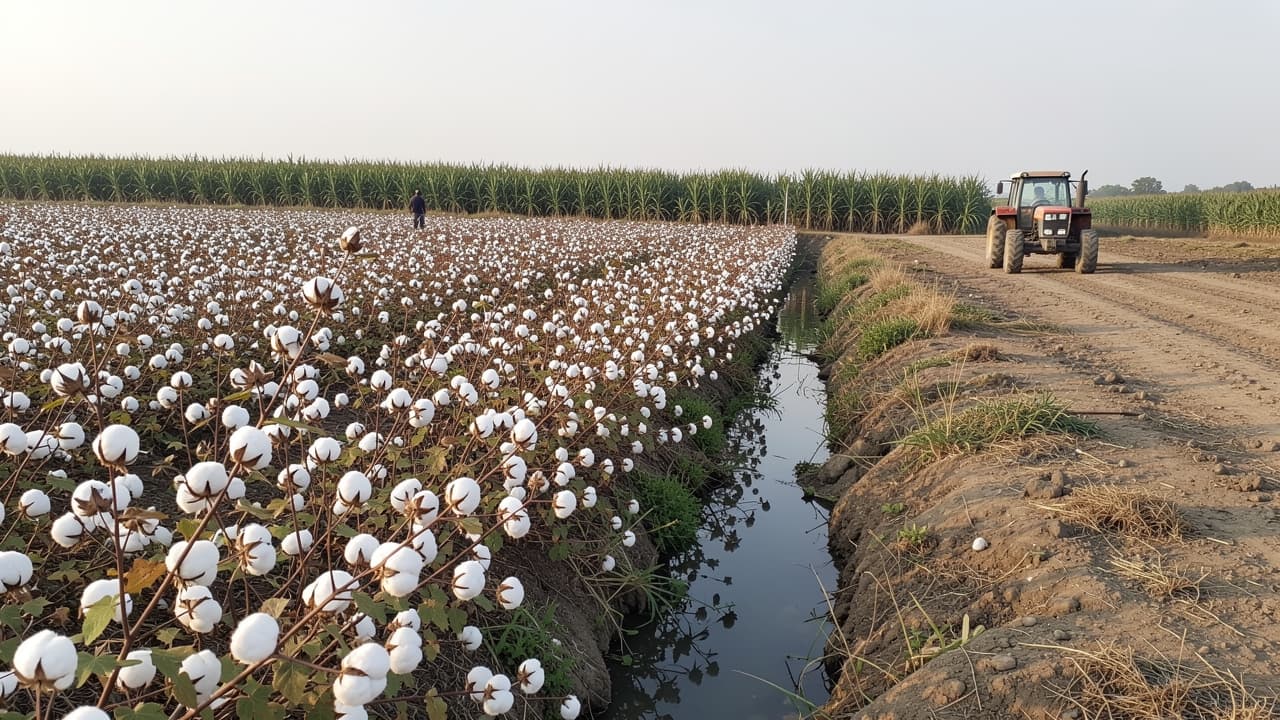
Pakistan's cotton crop for 2026-27 is estimated at 6.71 million bales, against a target of 9.64 million, a shortfall of about 30 per cent. The Federal Committee on Agriculture met in Islamabad and confirmed the figure, which is the sixth consecutive season in which the target has been missed. A column by a former senator and former Punjab Minister for Irrigation argues that the bigger change is in planting: farmers sowed far less cotton.
Cotton area fell 12.6 per cent in one year, from 4.97 million acres to 4.35 million, a drop of more than 600,000 acres. Punjab recorded a steeper fall of 16.4 per cent. Preliminary reports put yield per acre up by nearly 9 per cent, so total output fell mainly because less land was sown. The land moved to sugarcane (up 11.2 per cent), maize (up 11.5 per cent) and rice (up 3.9 per cent).
Why farmers are walking away
The Agriculture Policy Institute, a government body, estimated Punjab's 2022-23 net income at about Rs64,000 an acre from cotton, against Rs42,000 from sugarcane. A later provisional assessment by Fauji Fertilizer put 2025-26 net income at barely Rs5,000 an acre for cotton and Rs54,000 for sugarcane. The two studies use different methods and cover different seasons, but the columnist says together they show cotton's returns collapsing when a season goes wrong.
Sugarcane carries its own risks, including heavy water use, long occupation of land, payment delays and mill disputes. Near an established sugar mill, however, buyers are more identifiable and the price, though no longer officially notified, moves in a narrow band. The columnist's point is that farmers are choosing the crop whose risks they feel they can manage, not necessarily the one with the highest return.
Seed, water, research and tax gaps
Seed is the first hurdle. The federal food ministry acknowledged widespread uncertified seed sales in 2025 and acted against hundreds of non-compliant companies, yet much seed still changes hands informally. When a seed fails, a farmer has no formal claim or compensation.
Research and water add to the risk. The Pakistan Central Cotton Committee, which develops better varieties, has struggled to finance itself. Its outstanding cess liabilities exceeded Rs3.44 billion in 2025, and staff salaries and pensions have been cut by 50 to 80 per cent since 2022. An enforcement mechanism approved in late 2025 has not been implemented, and the columnist says canal deliveries remain unpredictable when cotton needs water most.
Tax policy has also tilted the market. The 2024-25 budget imposed an 18 per cent sales tax on domestic cotton, while imports of cotton, yarn and grey cloth entered tax-free under the Export Facilitation Scheme, a trade facility. The government taxed imports from July 2025, but the 18 per cent tax on domestic cotton remains. The Pakistan Cotton Ginners Association recorded arrivals of about 5.6 million bales, while the official 2025-26 estimate was 7.05 million, and the US Department of Agriculture (USDA) estimates that 28 to 30 per cent of the domestic crop escapes formal reporting. The figures do not reconcile.
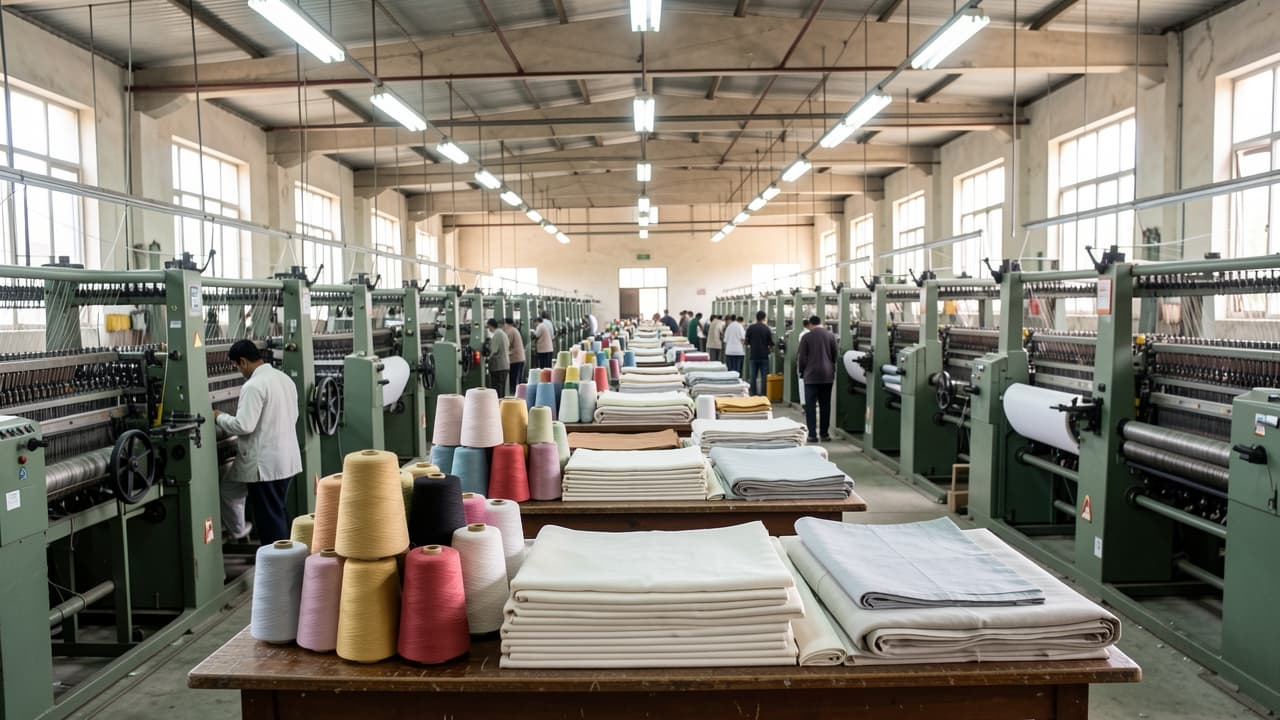
Imports are a further pressure. Domestic supply now covers barely half of the industry's needs, and imports are projected to meet nearly half of mill requirements. Pakistan spent $2.69 billion on raw cotton imports in 2024-25 and $1.53 billion in 2025-26, while textile exports, around $18 billion in the latest year cited, remain the largest manufacturing earner.
The columnist calls for equal tax treatment of domestic and imported cotton, refunds paid in weeks rather than years, certified seed available to every grower, and one reconciled crop figure published with its method. The sources do not include an official response to these proposals.
Timeline: what has happened so far
- 2014-15: Cotton output reached a high of nearly 14 million bales.
- Since 2022: Salaries and pensions at the Pakistan Central Cotton Committee were cut by 50 to 80 per cent.
- 2023: Punjab adopted a new irrigation law to replace the Canal and Drainage Act of 1873.
- 2024-25 budget: An 18 per cent sales tax was imposed on domestic cotton.
- July 2025: The government began taxing imports of cotton, yarn and grey cloth.
- 2026-27: Output is estimated at 6.71 million bales against a 9.64 million target.
Aasan alfaaz mein
Pakistan mein is saal cotton ki paidawar 6.71 million bales rehne ka andaza hai, jo 9.64 million ke target se kam hai. Kisanon ne cotton ki kasht 12.6 fisad kam kar di hai kyunke ganna, makai aur chawal unhein zyada munasib lag rahe hain. Is ka asar cotton par mabni karobar, mazdoor aur kapre ki qeematon par ho sakta hai. Beej, paani aur tax ke nizam mein behtari ki zaroorat batai gayi hai.