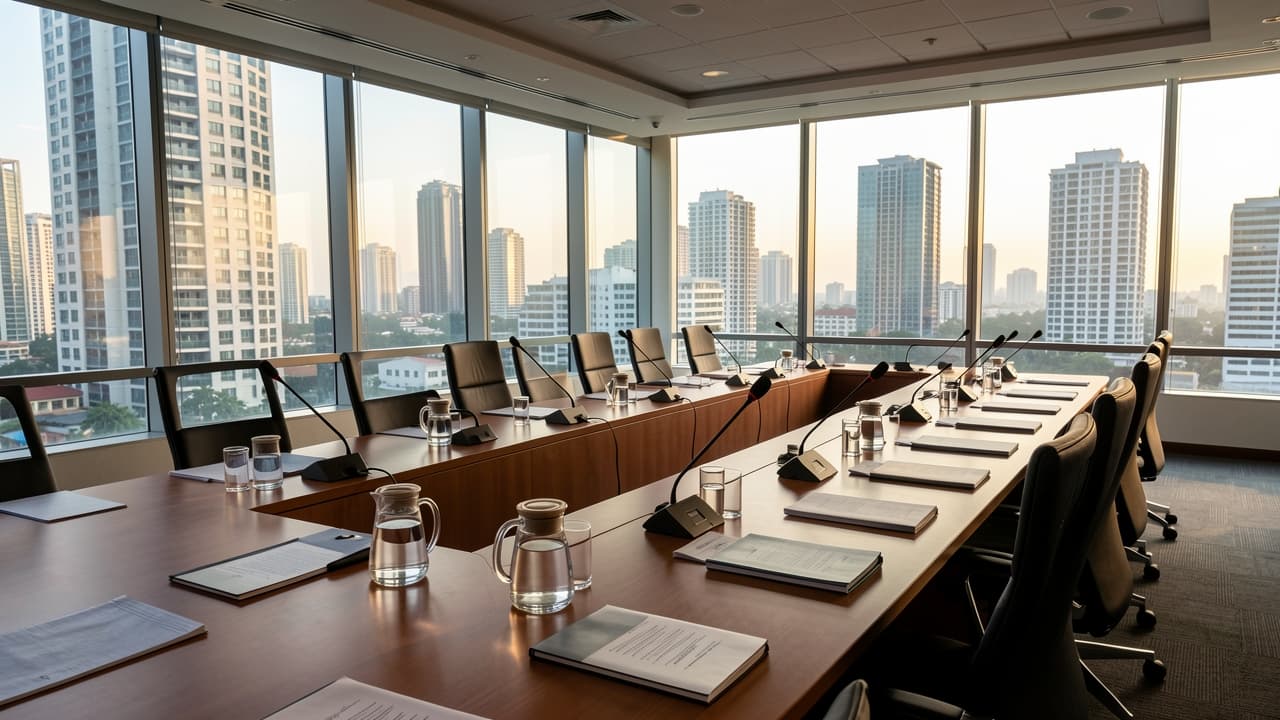
Finance Minister Muhammad Aurangzeb used a meeting in Bangkok on Wednesday to set out Pakistan economic reforms and to tell the International Monetary Fund how subsidies should work. He met the IMF's managing director and said support must be budget-neutral, targeted and time-bound, so that vulnerable households are protected and social cohesion holds. The IMF is the international lender that agrees economic programmes with member governments. Aurangzeb was speaking at the Middle East, North Africa, Afghanistan and Pakistan (MENAP) meeting, held on the sidelines of the 2026 World Bank Group-IMF Annual Meetings.
What Aurangzeb said about subsidies
He said subsidies should not add a fresh burden to the budget, should reach people who need them, and should last only for a set period. That is what budget-neutral, targeted and time-bound mean in practice. He presented the approach as part of the government's commitment to reform and to targeted subsidies for low-income families.
He did not give a rupee figure, a fuel price or a power tariff. The Bangkok remarks set a direction for policy. They were not a notice that household bills had changed that day.
Progress he cited, and what he asked of the region
Aurangzeb paired that subsidy line with a list of results he called recent progress. He said the fiscal deficit was at a 22-year low, that Pakistan had run a primary surplus for three years in a row, and that economic growth was 3.7 percent. A primary surplus means the government collected more than it spent before interest payments are counted. He said foreign exchange reserves were at a historic high and enough to cover three months of imports, and that buffers against climate-related and regional shocks were stronger.
He also pointed to sovereign credit rating upgrades, Pakistan's Eurobond issuance in September, and the IMF staff-level agreement of 7 October. A staff-level agreement is an understanding reached with IMF staff. He called them further signs of progress under Pakistan economic reforms, and he did not announce a new measure at the meeting itself.
On the wider agenda, he called for diversified energy sources and trade routes, deeper regional integration, and more investment in logistics and food systems. He restated Pakistan's commitment to multilateralism - working with other countries through shared institutions - and said Pakistan was ready to contribute actively to regional cooperation.
Timeline: what has happened so far
- September 2026: Pakistan issued a Eurobond, which Aurangzeb later cited in Bangkok as a sign of progress.
- 7 October 2026: An IMF staff-level agreement was reached. He cited it with the bond, the deficit and the reserve position.
- 14 October 2026: In Bangkok, at the MENAP meeting beside the World Bank Group-IMF annual meetings, he told the IMF managing director that subsidies should be budget-neutral, targeted and time-bound.
Aasan alfaaz mein
Finance Minister Aurangzeb ne Bangkok mein IMF ko kaha ke hukumat reforms par qaim hai. Subsidy aisi honi chahiye jo budget ko kharab na kare, sirf kamzor gharanon ko mile, aur hamesha ke liye na ho. Unhon ne 3.7 percent growth, teen saal ki primary surplus, aur teen mahine ki imports cover karne wale reserves ka zikr kiya. Aam aadmi ke liye abhi koi naya rate nahi aaya; yeh meeting ki policy baat hai.