Pakistan’s Sensitive Price Indicator (SPI)—a weekly gauge of essential-item prices—fell by 0.04 percent in the week ended 15 October 2026, the Pakistan Bureau of Statistics (PBS) said. The combined SPI slipped to 372.43 points from 372.58 a week earlier. On a year-on-year basis, the same index was still 11.38 percent higher.
PBS compiles the SPI with a 2015-16 base of 100, covering 51 essential items in 17 urban centres. One dataset also notes monitoring across 50 markets in those cities. The reading is meant to show short-term pressure on kitchen and household costs, not the full consumer price basket used for monthly inflation.
What became cheaper and dearer this week
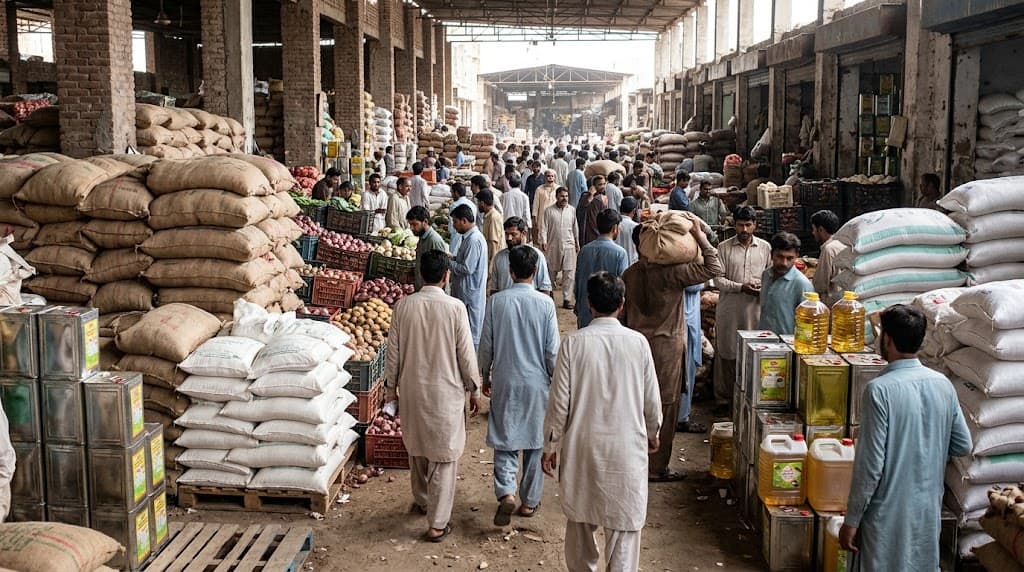
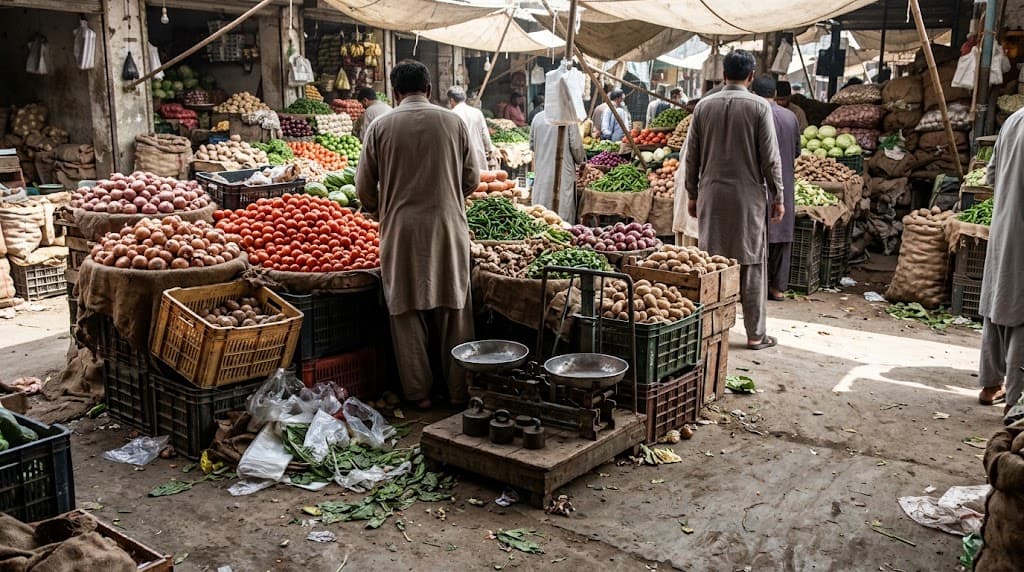
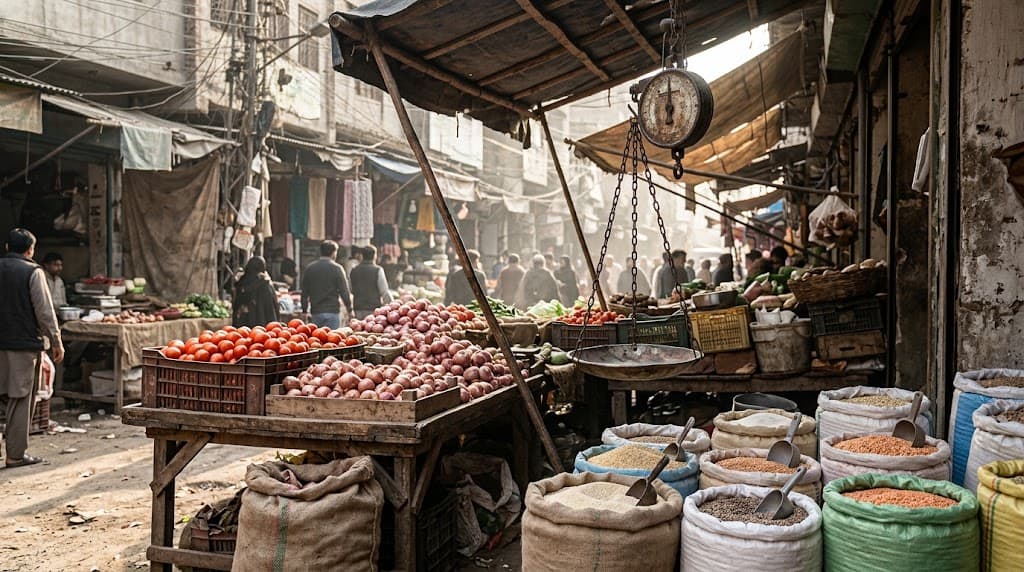
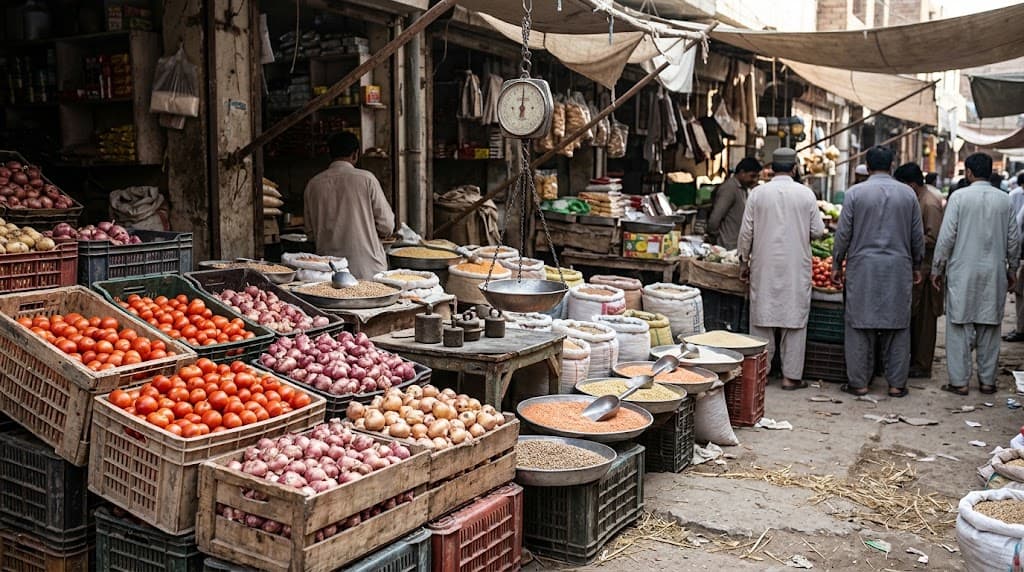
Prices fell for seven items. Tomatoes led with a 23.05 percent week-on-week drop, followed by onions (4.90 percent) and bananas (2.59 percent). Petrol eased 0.70 percent. Broken basmati rice, sugar and gur declined by 0.65 percent, 0.62 percent and 0.36 percent respectively.
Twenty-three items rose. Pulse gram jumped 4.97 percent. Wheat flour climbed 3.36 percent and chicken 3.31 percent. Smaller weekly increases included eggs (0.99 percent), pulse mash (0.98 percent), pulse masoor (0.95 percent), firewood (0.69 percent), shirting (0.58 percent), cooked daal (0.55 percent), diesel (0.47 percent), LPG (0.42 percent) and prepared tea (0.28 percent). Twenty-one items, about 41 percent of the basket, held steady.
How different income groups fared
PBS said every consumption group it publishes saw a slight weekly decline. For households spending up to Rs17,732 a month, the SPI fell 0.06 percent to 356.35 from 356.56. Groups spanning Rs17,733–22,888, Rs22,889–29,517, Rs29,518–44,175 and above Rs44,175 recorded declines of 0.04 percent, 0.01 percent, 0.02 percent and 0.06 percent respectively.
Year-on-year pressure remains high
Compared with a year earlier, onions were 75.19 percent more expensive. LPG was up 68.95 percent and first-quarter electricity charges 58.59 percent. Petrol and diesel were higher by 49.60 percent and 43.98 percent. Wheat flour rose 35.13 percent year-on-year, chicken 20.77 percent, chilli powder 15.55 percent, mutton 14.90 percent, beef 12.27 percent, plain bread 9.02 percent and prepared tea about 8.4 percent (sources differ slightly at 8.36 versus 8.38 percent).
Annual relief showed up elsewhere: tomatoes were 63.65 percent cheaper than a year ago, potatoes 39.93 percent, sugar 23.20 percent and eggs 19.83 percent. Salt powder, pulse masoor, gur and pulse moong also recorded year-on-year declines.
PBS also reported that a 50-kilogram bag of Sona urea stayed at Rs4,780 for the week, 9.19 percent above a year earlier, while a 50-kilogram cement bag averaged Rs1,600—up 0.27 percent on the week and 14.66 percent year-on-year.
Aasan alfaaz mein
Is hafte overall kitchen aur rozmarra cheezon ki mehengai thori si kam hui hai—SPI 0.04 percent geeri. Tamatar, pyaaz aur petrol saste hue, lekin aata, chicken aur daalen mehengi ho gayin. Saal pehle se muqabla karen to mehengai ab bhi 11.38 percent zyada hai, khas tor par pyaaz, gas, bijli aur fuel par. Matlab thori saans mili hai, lekin ghar ka budget ab bhi tight hai.