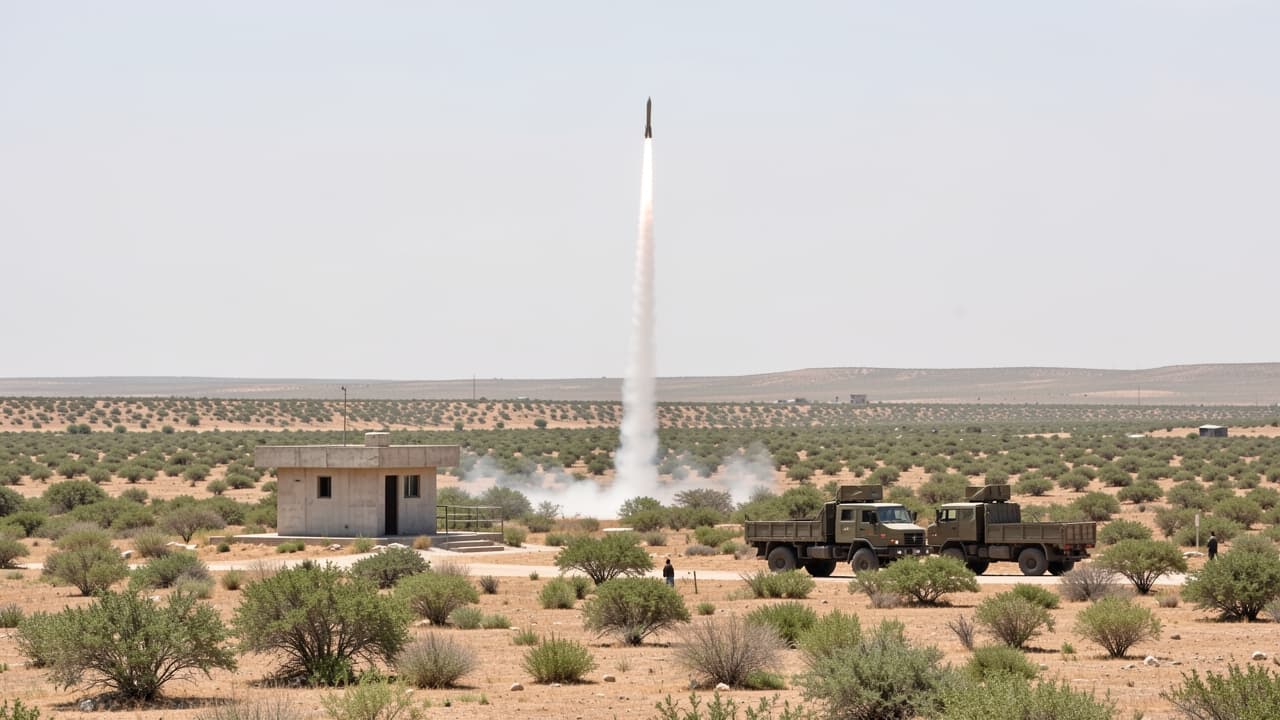
The Pakistan Army has carried out a Fatah-2 missile test of an extended-range hypersonic ballistic missile, and the service says the launch succeeded. Inter-Services Public Relations (ISPR), the military's media wing, issued the statement on Tuesday.
What ISPR says the missile can do
The Fatah-2 extended-range weapon, shortened to Fatah-2 ER in the statement, is fitted with advanced navigation and modern avionics. Avionics are the onboard electronics that steer and track a missile once it is in the air. A ballistic missile, in plain terms, is boosted upward and then travels on a high path toward its target, unlike a cruise missile that stays powered for most of its flight.
ISPR said the system can engage targets with high precision. It added that the missile can defeat an enemy's missile defence systems because of its "unique trajectory and manoeuvrability features", a flight path and the ability to change course that are meant to make interception harder. The military said that extra distance would stretch how far Army units can fire, including at targets the statement called deep. The note gave no distance in kilometres and no speed.
Manoeuvrability, as used here, means the missile can alter its course in flight rather than holding one fixed arc. ISPR presented that movement, together with the shape of the path, as the reason a defender's missile defences would struggle to stop it. The statement does not name a test range, a province, or a target point.
Who was at the test
The launch was watched by Army Rocket Force Command chief Lt Gen Nauman Zakaria, together with senior Pakistan Army officers, Dawn reported. Scientists and engineers linked to the programme were also present. The commander praised them for their dedication and for the technical skill that went into the weapon.
Leaders who sent congratulations
President Asif Ali Zardari and Prime Minister Shehbaz Sharif congratulated the scientists and engineers. So did the Chief of Army Staff and Chief of Defence Forces, along with the chiefs of the services. In its account of the Fatah-2 missile test, ISPR said those leaders had praised the people who developed the system.
Reports say this firing came days after a successful test of an extended, locally developed version of the Fatah-4 ground-launched cruise missile. The ISPR note on Tuesday did not give a calendar date for that earlier test, and it did not compare this missile with other systems.
Aasan alfaaz mein
Pakistan Fauj ne Fatah-2 missile ka lamba range wala test kiya hai. ISPR ke mutabiq test kamyab raha aur missile seedhe nishane par chal sakti hai. Fauj kehti hai ke iska raasta dushman ke missile defence ko mushkil mein daal sakta hai. Is se aap ke bill ya safar ka kharcha nahi badlega, aur doori ya speed ka number abhi nahi diya gaya.