The World Food Programme (WFP), the United Nations’ main food-aid agency, is cutting critical support for about 500,000 Palestinians in the Gaza Strip after a sharp funding shortfall. Monthly assistance there will fall from about 1.6 million people to 1.1 million, the agency said in a statement on Monday, as many families still struggle to eat enough.
WFP said it received less than half as much funding for its Palestine operation in 2026 as in previous years. It said it urgently needs a further $450 million to keep critical operations running in the occupied Palestinian territory over the next six months. Its Palestine director, Shaun Hughes, said the reductions are driven by finances, “not because the needs are coming down, or because we don't have access — we do.”
What the cuts mean for food parcels and hot meals
Under the new plan, rations will fall from two food parcels per family to one, and bags of flour will be smaller. The number of people given bags of flour and ration boxes each month will drop from 1.1 million to 600,000, according to the agency’s account of the changes.
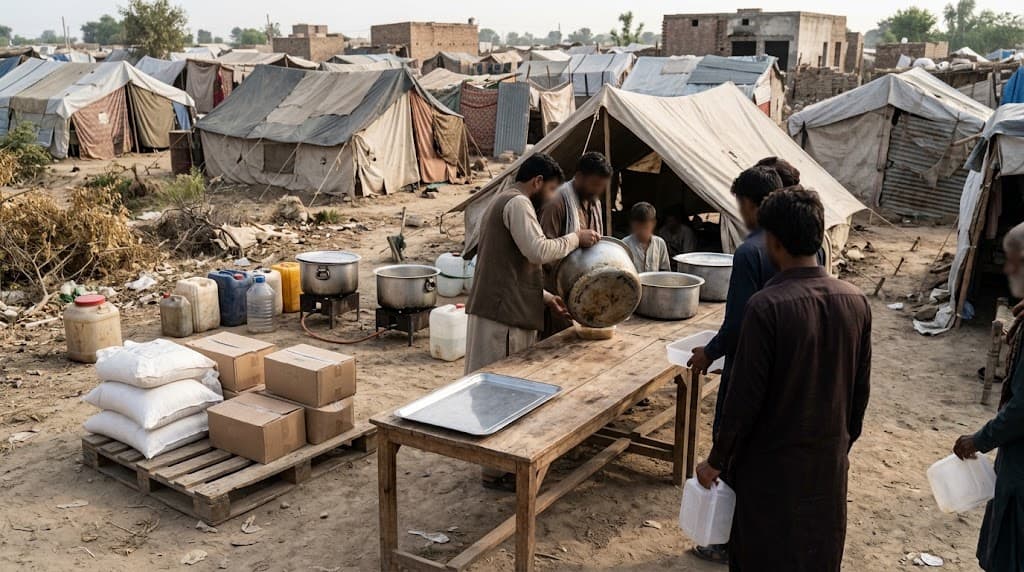
Hot meals from community kitchens will be cut from 250,000 to 150,000 a day—100,000 fewer meals daily. Families in hard-to-reach areas, including near the so-called “yellow line” that marks Israeli military control, will receive a hot meal every other day instead of every day.
Cash transfers for some half a million people have already been reduced since July, leaving households with less money to buy food in local markets. WFP warned that funding shortages threaten to reverse what it called “modest and fragile” gains on food security.
Families say smaller help will hit children hardest
Displaced residents described the cuts as severe even before winter. Mervat al-Satari, a mother of five in a camp in the al-Mawasi area of Khan Younis, called the news a “disaster” and asked how families would feed small children on reduced rations. Sawsan Bahloul, a mother of three from the same area, said meals every two days would hurt households that already found kitchen portions—often pasta or lentils, sometimes with potatoes or aubergines—too small for a whole family.
Nearly all of Gaza’s about 2.1 million people remain displaced, and reports say two-thirds still depend on food aid. Markets may have more goods than before, but unemployment is widely estimated above 80%, so many cannot afford fresh or protein-rich food when it appears. Only about one in five children eats a sufficiently diverse diet, and health-service access remains limited.
Food insecurity stays high despite a slight easing
An estimated 1.4 million people—67% of Gaza’s population—are in acute food insecurity at crisis levels or worse. That is down from 1.6 million, or 77%, at the end of 2025, yet WFP said the improvement remains modest and fragile. Gaza’s health ministry puts the Palestinian death toll from the war at more than 74,245 since the Hamas-led 7 October 2023 attack on Israel and the fighting that followed.
Despite a ceasefire between Hamas and Israel agreed about a year ago, violence has continued, including frequent Israeli strikes, and there has been little reconstruction. Israel tightly controls goods entering through crossings. Funding pressure has also hit the occupied West Bank, where the number of people receiving WFP assistance was halved in September, from 400,000 to 200,000.
Timeline: what has happened so far
- 7 October 2023: A Hamas-led attack on Israel is followed by a prolonged war that devastates Gaza’s economy, services and access to food and other basics.
- End of 2025: About 1.6 million people (77% of Gaza’s population) are in acute food insecurity at crisis levels or worse.
- Since July: Cash transfers for some half a million people are reduced, cutting buying power in local markets.
- September: In the occupied West Bank, WFP halves its assistance caseload from 400,000 to 200,000 people.
- Monday: WFP announces Gaza cuts that drop monthly aid from about 1.6 million to 1.1 million people, shrink rations and reduce hot meals, and seeks $450 million for the next six months.
Aasan alfaaz mein
UN ki food agency WFP ne Gaza mein madad kam kar di hai, roughly 5 lakh logon ki monthly help rukne wali hai. Ghar ke food parcels ab ek rahenge, aur garam khane bhi kam milenge. Yeh funding kam hone ki wajah se ho raha hai, zaroorat kam nahi hui. Agar naye paise na aaye to agle chhe mahine critical madad chalana mushkil hai.