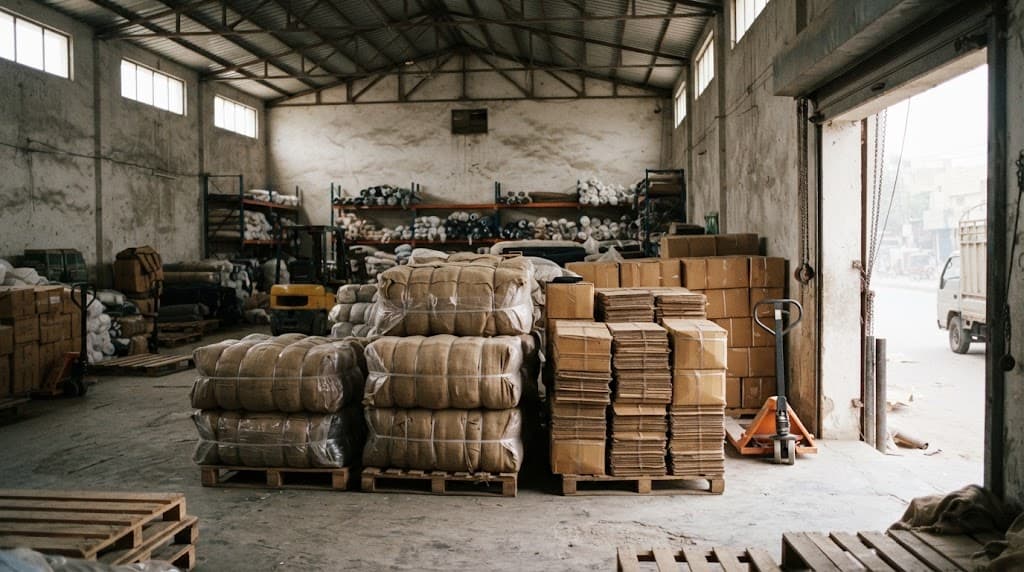
Cotton arrivals in Pakistan in 2024-25 rose 6.88 per cent year-on-year to about 4.74 million bales by 31 October, according to the Pakistan Cotton Ginners Association (PCGA), which tracks deliveries to ginning factories. Punjab accounted for nearly 1.999 million bales, while Sindh and Balochistan together recorded more than 2.743 million. Arrivals in Balochistan alone were up 35.41 per cent.
Where the cotton is arriving
Sanghar led the districts with 1.21 million bales, followed by Bahawalnagar with 526,442. Textile mills had purchased 3.997 million bales and exporters 98,000, leaving 648,034 bales unsold. Cotton Ginners Forum Chairman Ihsanul Haq said Pakistan had, for the second year running, failed to record one million bales in any single fortnight during the peak September–October window—a shortfall he linked mainly to sugarcane spreading through traditional cotton belts and to new sugar mills.
Industry figures still diverge from provincial crop data. The PCGA put Punjab near two million bales by 31 October, while the Punjab Crop Reporting Service reported 3.577 million bales by 29 October. Officials and ginners partly credit the Federal Board of Revenue’s digital invoicing drive for lifting reported cotton arrivals in Pakistan in 2024-25 by pulling more trade into the formal system.
Quality concerns and industry pressure
Mr Haq said unusually high temperatures from July into early November had hurt seed germination and fibre quality, shortening staple length and strength and pushing mills toward imported high-grade cotton. He argued that government steps to curb sugarcane in cotton zones and limit new sugar mills have been weak, and that high power tariffs, high interest rates, weak crop zoning and thin exporter incentives continue to squeeze textiles.
He added that ideas such as a cotton board under the All Pakistan Textile Mills Association and easier cotton-seed imports would do little unless those structural problems are fixed. Alleged below-market imports of Chinese fabric and yarn, he said, have added to the pressure on local mills. Even so, ginners said the current crop could still exceed six million bales despite a smaller planted area than last year.
Timeline: what has happened so far
- July–early November: Unusually high heat across most cotton-growing areas damaged germination and fibre quality, according to the Cotton Ginners Forum.
- September–October peak: For a second consecutive year, no fortnight recorded one million bales of arrivals.
- 29 October: Punjab Crop Reporting Service put provincial cotton at 3.577 million bales.
- 31 October: PCGA recorded over 4.742 million bales nationwide, versus 4.437 million a year earlier.
Aasan alfaaz mein
Is saal 31 October tak ginning factories ko lagbhag 4.74 million ganne kapas mil chuki hai, jo pichhle saal se ziyada hai. Sindh aur Balochistan mil kar Punjab se aage hain, lekin garmi aur ganne ki kheti kapas ke ilaqon mein masla bana hua hai. Kapas ki quality kamzor hone se mills achhi quality ke liye import par zyada depend karti hain. Textile industry ke liye yeh ab bhi mushkil season hai, go ke kul pedawar chhe million gannon se upar ja sakti hai.