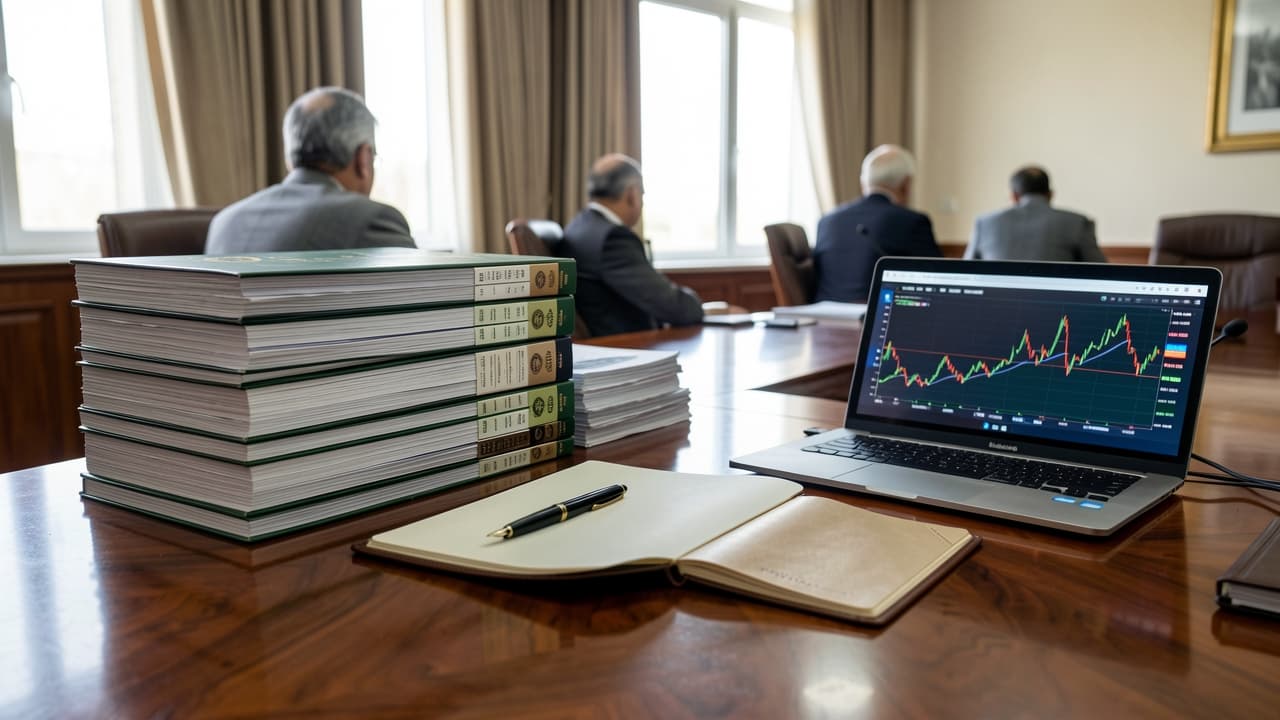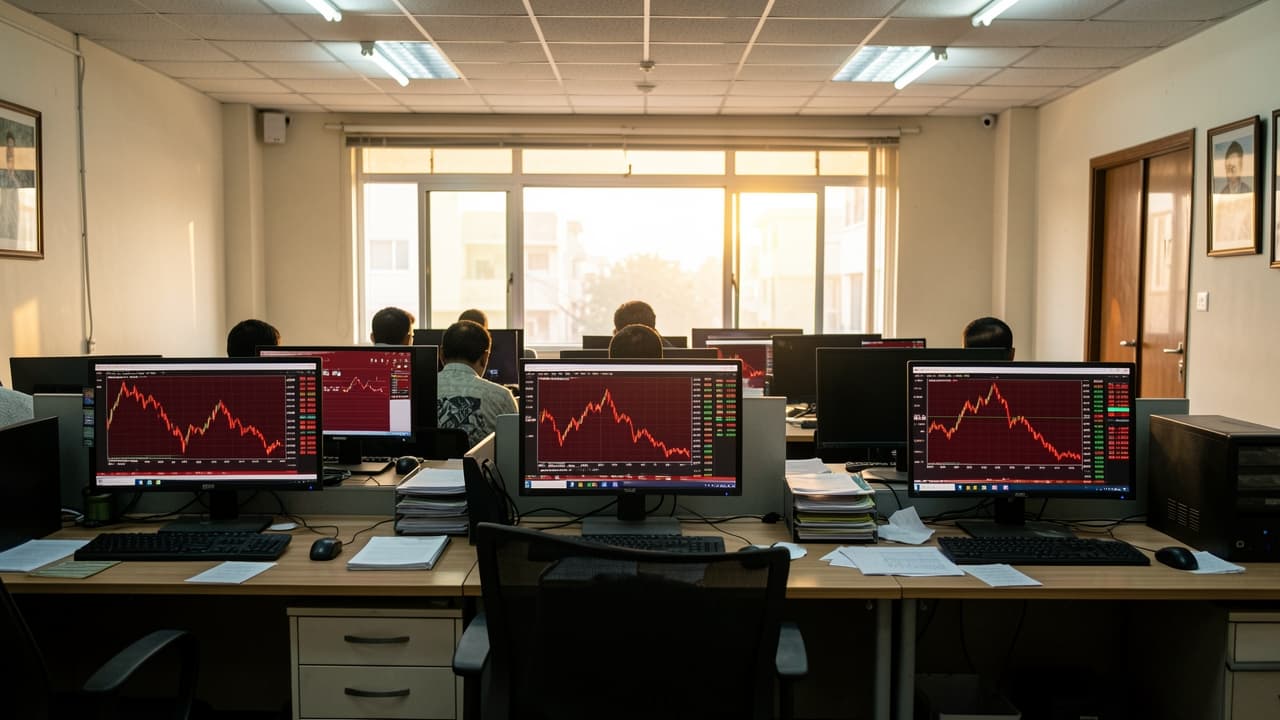
The main share index fell on Monday after the federal government imposed governor's rule and an emergency in Khyber Pakhtunkhwa, adding political strain to a market already unsettled by oil prices, inflation and tension in the Middle East. The KSE-100, the Pakistan Stock Exchange benchmark of leading shares, closed at 165,124.41, down 1,964.87 points, or 1.18 percent, and finished below 166,000.
Selling ran through the session. Topline Securities said the KSE-100 fell 1,920 points at one stage before ending the day even lower. A staff-level agreement with the International Monetary Fund, the global lender backing Pakistan under two ongoing programmes, has opened the way for $1.2 billion once the Fund's executive board approves it. That prospect has not steadied prices in recent days.
Why the market sold off
The immediate trigger was Sunday's decision. President Asif Ali Zardari approved a federal cabinet recommendation to impose an emergency in the PTI-ruled province. Governor's rule is the arrangement under which a province is administered through the governor. The step deepened political uncertainty, and investors largely stood aside in the absence of a fresh reason to buy.
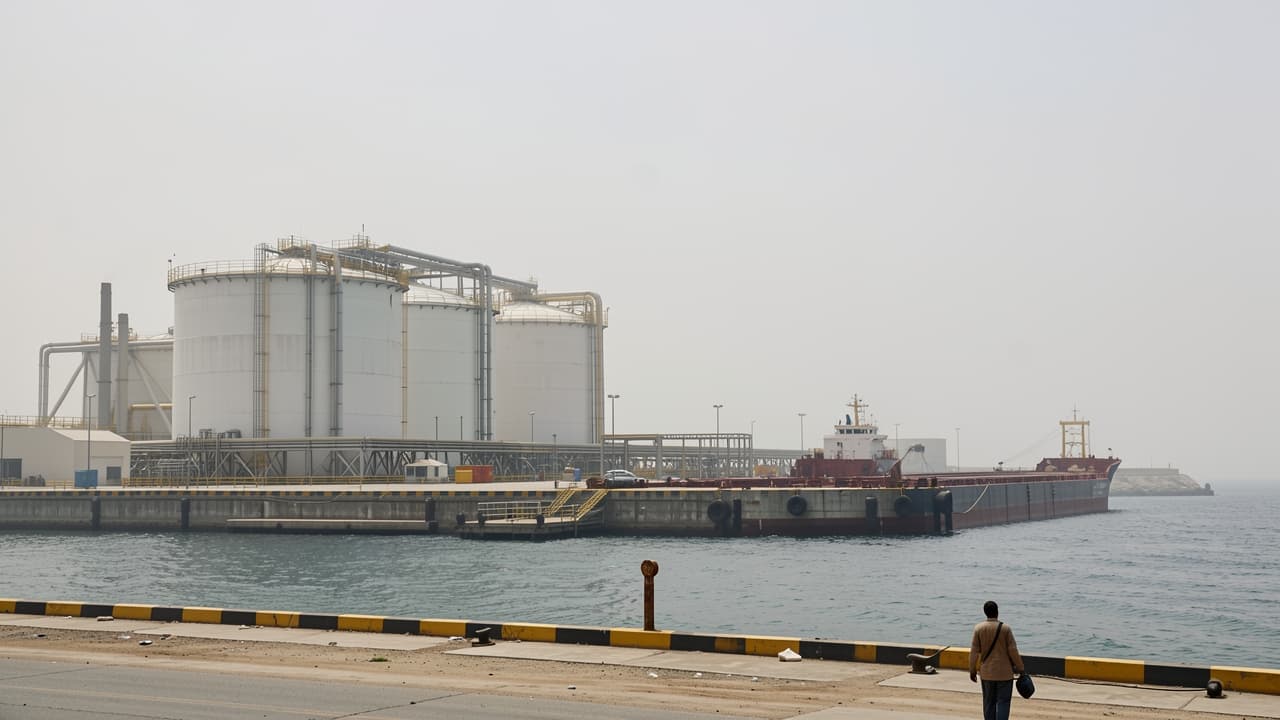
Oil prices sharpened the caution. Brent crude rose $2.07, or 2 percent, to $106.79 a barrel, the highest since Sept 29, while US West Texas Intermediate crude stood at $93.54, up $1.69, or 1.8 percent. Prices climbed to near two-week highs as attacks on Saudi Arabia outweighed the chance of further supplies reaching the market. Dearer oil sits alongside the inflationary pressure that has already been weighing on local shares.
Banks and cement pulled the index down
United Bank, Oil and Gas Development Company, Habib Bank, Meezan Bank and Lucky Cement did the most damage. Together, those five names took about 645 points off the index.
More shares changed hands than in the weekend session, but participation stayed subdued. Volume rose 17.3 percent to 362.95 million shares, still well short of 500 million, and the value of trading rose 6.02 percent to Rs14.5 billion. Treet Corporation was the busiest stock, with 27 million shares.
Ali Najib, deputy head of trading at Arif Habib Ltd, said the market opened lower in a weak, uneven session as political uncertainty at home increased. Buying at lower prices produced a brief bounce that did not last, and the close was firmly down. He said more weakness could not be ruled out, although cheaper prices might attract buyers from time to time, and he urged investors to be selective, prefer fundamentally strong companies, and avoid aggressive positions until sentiment settles.
Timeline: what has happened so far
- Sept 29: Brent crude last stood this high before Monday's rise to $106.79 a barrel.
- Sunday: President Asif Ali Zardari approved the federal cabinet's recommendation for an emergency in Khyber Pakhtunkhwa.
- Monday: Governor's rule and the emergency weighed on trading, and the KSE-100 closed at 165,124.41, down 1,964.87 points.
Aasan alfaaz mein
Khyber Pakhtunkhwa mein governor's rule aur emergency lag gayi hai. Is ke baad share bazaar gir gaya aur bara index 165,124 ke qareeb band hua, taqreeban 1,965 points kam. Jin logon ke paas shares hain un ki qeemat ek din mein kam ho gayi, aur bazaar agay bhi utar charh sakta hai. Duniya ka tel $106.79 tak pahunch gaya hai, is liye mehngai ka darr abhi baqi hai.