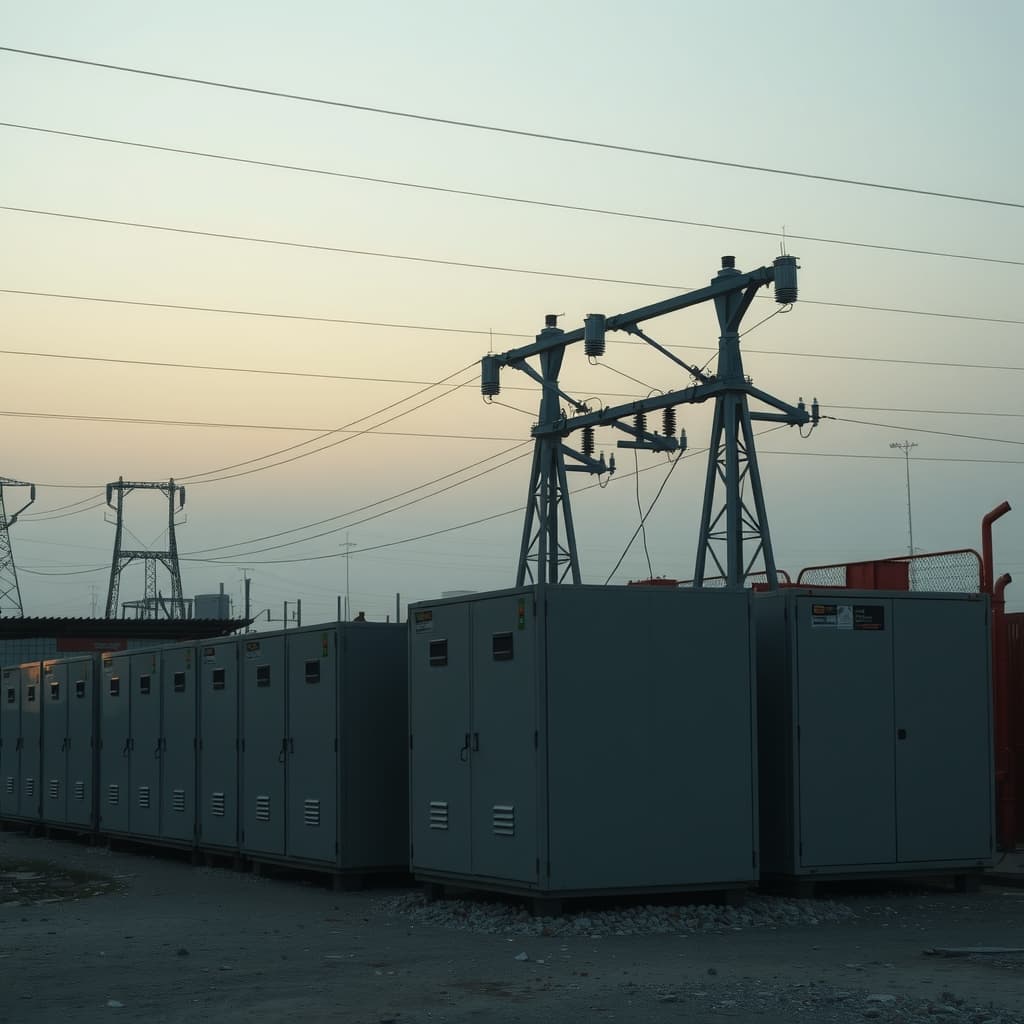
Pakistan battery imports of battery storage equipment topped 4.5 gigawatts (GW) in the first six months of 2026 alone, a Pakistan Solar Association representative told a parliamentary energy dialogue in Islamabad—nearly matching half of the country’s cumulative historic intake of 9.5GW.
The figure was presented at a high-level session of the Parliamentary Forum on Energy & Economy, where legislators, utility chiefs and ministry advisers framed battery energy storage systems (BESS)—equipment that stores electricity for later use—as an operational necessity for the power sector, not an optional extra.
Why lawmakers say storage matters now
Convener Sher Ali Arbab, MNA, opened by urging long-term planning rather than short-term fixes. He argued that battery storage is central to optimising the power sector for the next two decades, noting that expensive generation often sits underused in peak daytime hours even as electric vehicles expand and more than 40 data centres grow. He called for a transparent, holistic legislative framework built through cross-party consensus.
Co-convener Dr Nafisa Shah, MNA, warned against an unregulated market that could turn Pakistan into a dumping ground for substandard, unsafe imports lacking testing, safety rules or recycling protocols. Policy, she said, must balance grid stability with public welfare so cleaner power benefits also reach low-income households.
Grid stress, pilots and regulation
Responding for the Ministry of Energy, Syed Faizan Shah, adviser to the Power Division, said competitive tenders for four 10 megawatt-hour pilot BESS projects would be launched within 15 days across LESCO, MEPCO, IESCO and PESCO—the distribution companies serving Lahore, Multan, Islamabad and Peshawar regions. He added that NEPRA, Pakistan’s power regulator, is formally designating battery storage as a regulated asset, which would let utilities relieve overloaded transformers at roughly half the capital cost of building new grid stations.
LESCO chairman Amir Zia described daytime reverse solar flows of up to 70% into distribution transformers, followed by sharp evening demand spikes—conditions that make storage useful for capturing surplus daytime power and releasing it after sunset. Moderator Usama Mela flagged a related risk: as more consumers adopt BESS, gradual “grid defection” could leave utilities under financial strain and push tariff pressure onto remaining customers unless the shift is managed.
Industry costs, taxes and provincial concerns
MNAs Chaudhry Mubeen Arif Jutt and Asad Alam Niazi said factory owners are diverting capital into captive solar and battery storage systems—sometimes investing up to twice as much on that kit as on production machinery—simply to secure affordable power and stay competitive. Jutt warned that without market-driven procurement signals from the Energy Division, utilities could end up penalising off-grid users and low-income consumers who cannot afford storage.
Sanaullah Baloch and Phullain pressed for decentralised frameworks under the 18th Amendment, arguing that Balochistan’s unmapped lithium deposits should support local mineral-to-battery manufacturing and jobs rather than raw extraction without provincial consensus. Pakistan Solar Association vice chairman Engr Chaudhry Uzair challenged affordability claims, saying energy storage equipment still faces a 35% to 40% cumulative tax and customs burden, while a basic 5 kilowatt-hour battery costs upwards of Rs250,000.
The dialogue closed with unanimous agreement that both utility-scale and distributed BESS are urgently needed for Pakistan’s power system.
Timeline: what has happened so far
- First six months of 2026: Pakistan battery imports of storage equipment exceed 4.5GW.
- Cumulative historic total cited at the dialogue: 9.5GW of battery storage equipment imported over time.
- 29 October 2026: Parliamentary Forum on Energy & Economy dialogue in Islamabad reviews the surge and policy gaps.
- Within 15 days of that dialogue: Power Division to launch tenders for four 10MWh pilot BESS projects on LESCO, MEPCO, IESCO and PESCO networks.
Aasan alfaaz mein
Pakistan ne 2026 ke pehle chheh mahine mein 4.5 gigawatt se zyada battery storage saman kharida. Yeh andazn mulk ki kul tareekhi imports ka aadha hissa hai. Sarkar jald chaar chhote BESS projects ke tenders nikalne wali hai. Sasta nahi: 5 kWh battery Rs250,000 se oopar aur upar tax-duty bhi 35–40% tak hai.