Pakistan has told the Afghan Taliban that it will no longer accept inaction on terrorism from Afghan soil, with the Ministry of Information and Broadcasting stating on Saturday that threats across the border will not be allowed to undermine the country’s security.
In a statement dated 31 October 2026, the ministry said Islamabad rejects efforts by Kabul to blame Pakistani policies for worsening bilateral ties. It argued that the Taliban leadership is shifting responsibility instead of confronting what Pakistan sees as the central problem: militant sanctuaries operating from Afghan territory.
What Islamabad said
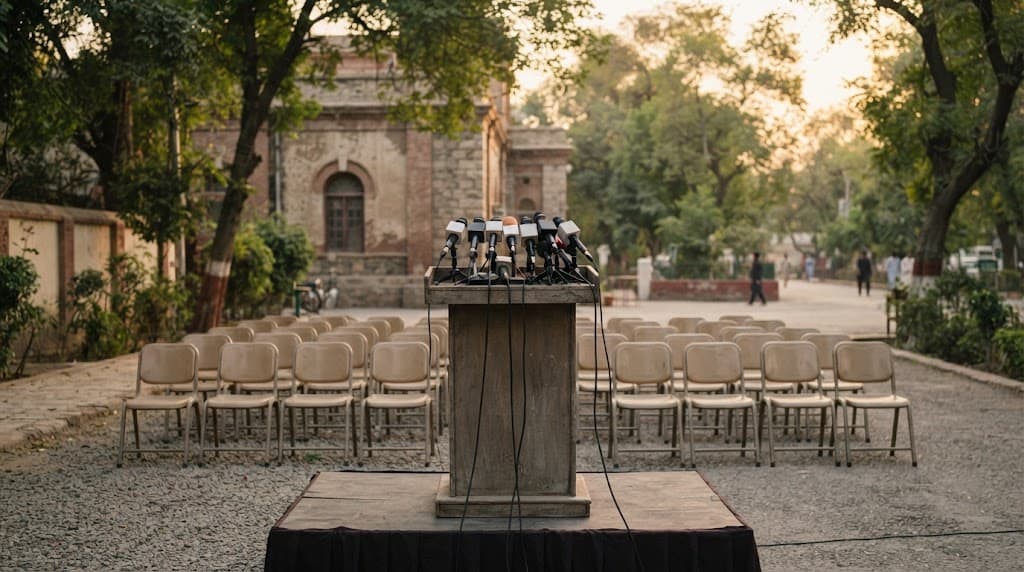
The ministry’s message was blunt. “Pakistan’s position is unequivocal: terrorism is a red line, and the security of its citizens is non-negotiable,” it said. Officials added that Pakistan will not tolerate cross-border sanctuaries that endanger its people, and that the Afghan Taliban regime must accept responsibility for addressing threats that originate on its side of the frontier.
Islamabad also said it reserves the right to take all necessary measures, in line with international law, to remove threats to national security wherever they arise. “Pakistan’s resolve to protect its people must never be mistaken for weakness,” the ministry said. It further stated that “Pakistan’s security will not be held hostage to Afghan Taliban’s inaction, evasions or misplaced priorities,” and dismissed what it called hollow assurances and blame-shifting as insufficient to repair the relationship.
Why ties remain strained
The warning fits a longer dispute in which Pakistan has accused outlawed groups, especially Tehreek-e-Taliban Pakistan (TTP)—a banned militant organisation—of using Afghan territory to stage attacks inside Pakistan. On 24 October, the same ministry pointed to United Nations and US assessments of militant activity in Afghanistan, including the TTP, and urged the Afghan Taliban to take verifiable steps against the TTP and the Balochistan Liberation Army (BLA).
Security pressures have been severe. Figures from the Pakistan Institute for Conflict and Security Studies (PICSS) show 225 militant attacks in Pakistan in September 2026—the highest monthly count in 12 years. Diplomatic contacts and mediation have not closed the gap: in September, Taliban spokesperson Zabihullah Mujahid said Kabul wanted continued dialogue and cooperation, while Pakistan insisted that concrete action against militant groups was required for ties to improve.
Timeline: what has happened so far
- September 2026: PICSS recorded 225 militant attacks in Pakistan, the highest monthly total in 12 years; Zabihullah Mujahid said Kabul sought dialogue, while Islamabad demanded concrete action against militants.
- 24 October 2026: The Ministry of Information cited UN and US assessments and called on the Afghan Taliban for verifiable action against the TTP and the BLA.
- 31 October 2026: The ministry issued a fresh warning that Afghan Taliban inaction on terrorism will not be tolerated and that Pakistan may act under international law to protect its security.
What comes next
Pakistan has framed the dispute as a responsibility that rests with the Afghan Taliban regime and has linked any reset in relations to measurable steps against groups it says operate from Afghan soil. Until those steps appear, officials say blame directed at Islamabad’s policies will neither settle the crisis nor clear Kabul of its obligations.
Aasan alfaaz mein
Pakistan ne Afghan Taliban ko clear message diya hai ke Afghanistan se aane wali dehshatgardi ab bardasht nahi hogi. Hukumat ka kehna hai ke border ke us paar hideouts band karna Kabul ki zimmedari hai. Agar yeh khatre jaari rahe, to Pakistan international qanoon ke mutabiq apni hifazat ke liye zaruri qadam utha sakta hai. Aam logon ke liye matlab yeh hai ke amn aur border ke ilaqon ki suraksha ab bhi sab se bari masla hai.