Federal Information and Broadcasting Minister Attaullah Tarar on Saturday proposed a National Cyber Security and Social Media Awareness Council to tighten coordination across government, expand digital literacy and raise public awareness of misinformation and emerging online threats.
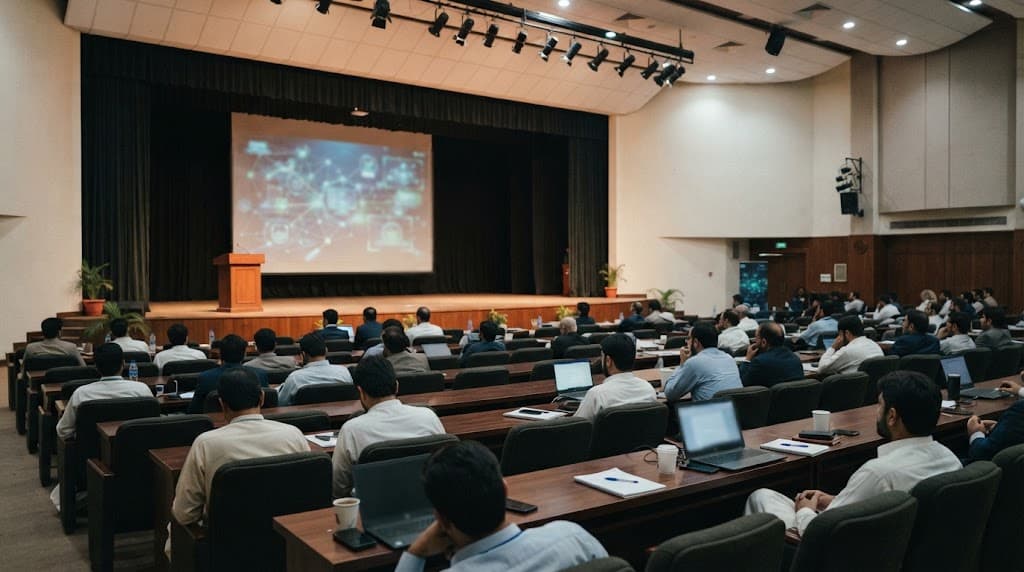
He put forward the idea as chief guest at the inaugural ceremony of Cyber Security Awareness Week 2026 in Islamabad, organised by the Pakistan Telecommunication Authority (PTA), the telecom regulator, under the theme “Building a Safe, Secure and Resilient Cyberspace”. PTA Chairman Major General (Retd) Hafeez ur Rehman, United Nations Development Programme (UNDP) Resident Representative Dr Samuel Rizk, UNDP representative Babar Yaqoob Fateh Muhammad and Pakistan Electronic Media Regulatory Authority (PEMRA) Chairperson Ambreen Jan attended.
How the proposed council would work
Tarar said the body should bring together federal ministries and divisions, provincial governments, regulatory authorities and other relevant institutions. The aim, he said, is a coordinated national response to cyber security challenges and more responsible use of digital platforms.
He asked organisers to include the proposal in the event’s concluding declaration and suggested consultations within one to two weeks, with the PTA leading the process. He assured participants that the Ministry of Information and Broadcasting would fully facilitate setting up the council. Awareness work, he argued, should run through the year rather than as occasional campaigns.
Digital literacy, AI labels and online risks
Pointing to Pakistan’s shift from print, radio and television toward a fast-growing digital sphere, Tarar said technology had moved ahead of regulation, leaving gaps in policymaking and enforcement. He described misinformation as a major present-day challenge and said heavier social media use had raised the need for public awareness, effective rules and institutional readiness.
He proposed making digital literacy compulsory across primary, secondary, college and university levels so students can spot misinformation, recognise online scams, understand deepfakes and protect personal data. The curriculum, he said, should be research-based and updated regularly. Digital literacy should also reach citizens outside classrooms through public campaigns and institutional training.
Tarar further proposed dedicated digital literacy cells in government organisations to train officials and the bureaucracy. Citing the growing role of artificial intelligence, he called for mandatory labelling of AI-generated content on social media so users can tell synthetic material apart from other posts. Awareness messaging, he added, should be targeted—including through micro-influencers and specialised digital platforms—rather than only broad mass communication.
He warned of financial scams, deepfakes and privacy breaches, saying a single click can expose personal information. He noted that the National Cyber Crime Investigation Agency (NCCIA), the cyber crime investigation body, is building operational capacity and would support the PTA. His ministry, the Ministry of Information Technology and Telecommunication and the PTA are also talking with social media platforms, he said, and closer coordination with the Social Media Protection and Regulation Authority (SMPRA) remains essential.
What officials say comes next
Tarar said his ministry has strengthened digital communication through changes to its rules of business and Pakistan’s first dedicated digital communication department, which is expanding regionally, using fact-checking tools and relying heavily on young Generation Z professionals. He appreciated UNDP support for training and awareness work with the ministry, and stressed a whole-of-government approach with regulators, public bodies and technology platforms to offer citizens practical protection online.
Aasan alfaaz mein
Wazir Attaullah Tarar ne Islamabad mein ek qomi council ki tajweez ki hai jo cyber security aur social media awareness par kaam kare. Iska maqsad logon ko jhooti khabaron, scams aur online khatron se behtar mehfooz rakhna hai. Woh digital literacy school se university tak lazmi banana chahte hain, aur AI se bani content par label chahte hain. Agar yeh plan aage barha, to awam ko saal bhar digital safety ki behtar rehnumai mil sakti hai.