Israel’s President Isaac Herzog on Wednesday opened talks on forming a new government, urging compromise after the country’s first election since the October 7, 2023 Hamas attacks left no clear winner.
More than a week after the Oct 27 vote, Herzog began meeting party leaders to decide whether to give Prime Minister Benjamin Netanyahu or his rival Gadi Eisenkot the first chance to assemble a coalition. Neither bloc holds a majority in the 120-seat parliament, and Herzog said both sides must accept that “not every commitment and promise can be fulfilled” if Israel is to avoid fresh elections.
“In the current reality, in which there is no clear winner after the elections, I ask for originality and creativity, courage and goodwill, so that the State of Israel emerges the winner,” Herzog said.
Arab parties’ gains and the war of words
Support rose sharply for lists from Israel’s Arab minority — descendants of Palestinians who remained in Israel after 1948 and who make up about 20 per cent of the population. Those lists could help put Eisenkot in office if they align with his bloc.
Netanyahu has attacked Arab-majority lists. He pointed to arrests of people carrying envelopes of cash on election day, which authorities called localised incidents, and accused leaders of accepting money from Qatar — a charge also levelled against aides of the prime minister himself.
Without naming any leader, Herzog said he had “great respect” for the Arab minority and condemned “the coarseness and racist expressions” directed at any community in Israel.
National Security Minister Itamar Ben Gvir, an ultra-nationalist ally of Netanyahu, said his party did not accept the results and called for the arrest of Arab-Israeli party leaders. Authorities are investigating Arab lawmaker Ayman Odeh, of the Joint List, over alleged foreign funding; the Joint List called the move “political persecution.”
Results upheld, rivals trade charges
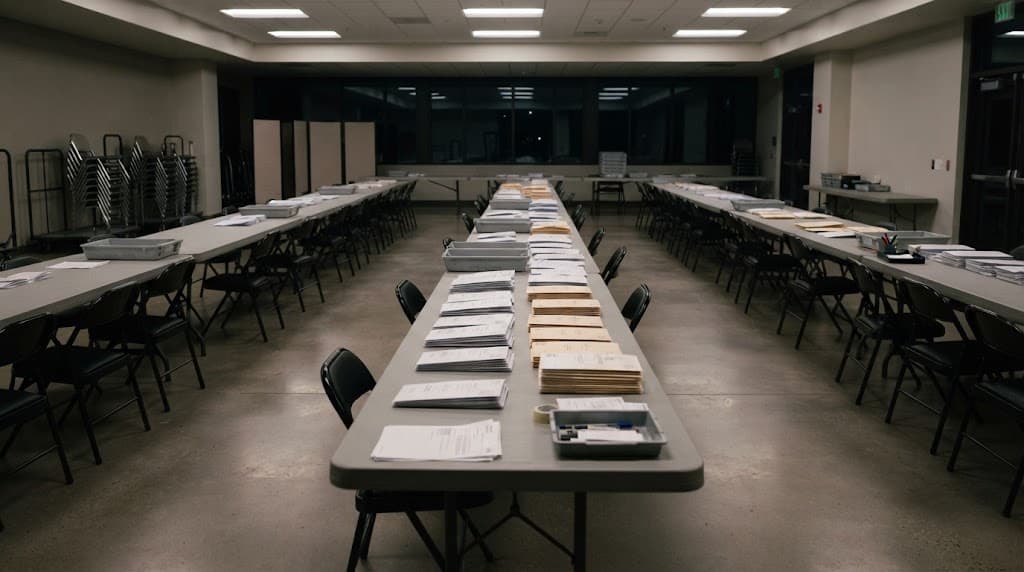
The Central Elections Committee said it audited 9,069 polling stations after complaints and found nothing that would cast doubt on the integrity of the results. The committee, reflecting the outgoing parliament, approved the outcome with 15 votes in favour, two against and 14 abstentions.
Eisenkot, a former military chief who has pledged to end Netanyahu’s long, polarising tenure, accused the prime minister of trying to “undermine Israeli democracy” and inflame feeling against elected officials. Marking the 1995 assassination of prime minister Yitzhak Rabin, he said: “We will not allow the State of Israel to be dragged into a dark abyss, far beyond the bounds of democratic conduct.”
Eisenkot has also warned Netanyahu against launching a new war, alongside US President Donald Trump, against Iran — a step that could help Netanyahu press for a unity cabinet or delay until another vote. Netanyahu, Israel’s longest-serving prime minister and facing corruption charges that could mean jail if he leaves office, has called for a “broad national government” with himself at the top. Eisenkot and his allies have ruled that out.
Opposition figures said Tuesday’s US midterm elections, in which Democrats heavily defeated Trump’s Republicans, strengthened the case for removing Netanyahu. Trump said while voting was underway that he had agreed with Netanyahu to end nearly $4 billion a year in US military aid to Israel by year-end. Yair Golan, who leads the most left-wing party in the opposition bloc, warned that keeping Netanyahu and Ben Gvir in power could lead to sanctions, isolation and a clash with Washington.
Timeline: what has happened so far
- November 2022: Netanyahu formed a government 58 days after that election, when Likud had a stronger showing.
- 2019–2022: Israel held five elections amid repeated deadlocks.
- October 7, 2023: Hamas attacks; the Oct 27 contest was Israel’s first election since then.
- Oct 27: Voting produced no majority for either Netanyahu’s or Eisenkot’s bloc in the 120-seat parliament.
- Tuesday (US midterms): Democrats defeated Trump’s Republicans; Trump said he and Netanyahu had agreed to end nearly $4 billion in annual US military aid by year-end.
- Wednesday: Herzog began two days of consultations; a designated contender will then have 28 days to form a government, with a possible 14-day extension.
Aasan alfaaz mein
Israel ke president Isaac Herzog ne election ke baad parties se baat cheet shuru kar di hai. Oct 27 ke vote mein kisi group ko parliament ki majority nahi mili. Herzog ne dono sides se compromise mangaa hai taake naya election na ho. Arab parties ke khilaf racist baaton ki unhone sakht mukhalifat ki hai, aur ab yeh dekhna hai ke Netanyahu ya Eisenkot mein se kise sarkar banane ka pehla mauqa milta hai.