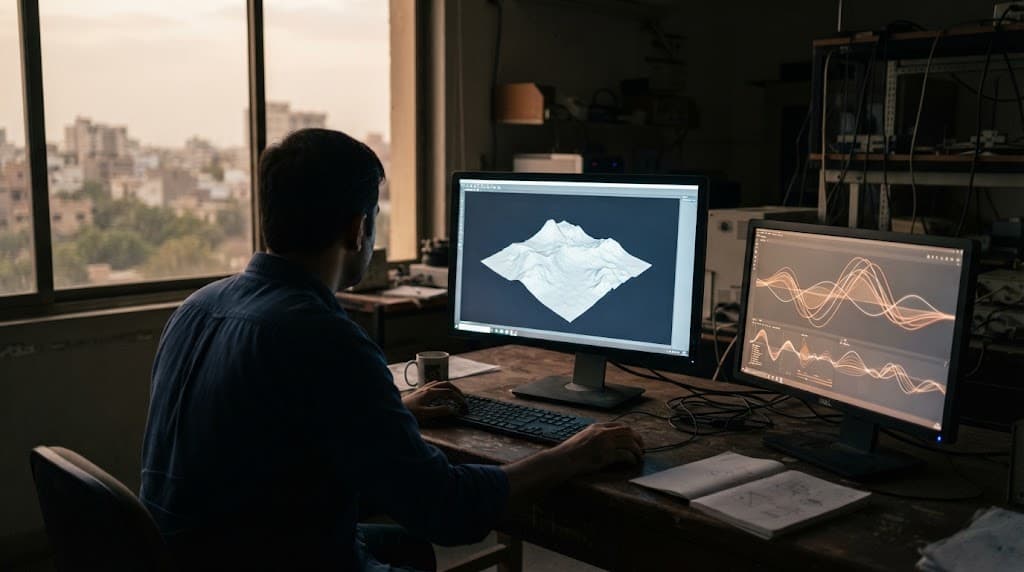
Google DeepMind Genie 4 is a new “world model”—software that builds interactive simulated environments from prompts—now in research preview for trusted testers. It answers the basic question many readers ask: what is new here? The model aims for more photorealistic, playable scenes, lets users type instructions while a simulation is running, and generates real-time audio that matches the virtual world, including music, ambient sound, and interactive dialogue.
What Google DeepMind Genie 4 can do
Compared with Genie 3, released as a research preview a little over a year ago, Google DeepMind Genie 4 is described as far more photorealistic and, for the first time in this line, audio-capable. Users can make freeform mid-run changes such as altering the weather or camera angle, or adding people and objects. The team says a scene can stay consistent for up to two minutes—twice the earlier limit—with improved physics and more human-like characters.
Gemini, Google’s broader AI system, is more tightly linked to Genie 4. In the setup described by the company, Gemini acts like a director: it plans steps and checks frames while Genie builds the visuals. In a research experiment linked to Gemini Robotics, a Gemini 4 Argon model broke tasks into steps that Genie 4 then simulated in real time—an early look at testing robot scenarios in simulation before they happen in the physical world.
Tejas Kulkarni, a research director at Google, said future systems will increasingly be hybrid: Gemini writing code and text, and Genie taking that input in real time and simulating reality at different levels of detail. Pitched commercial directions include gaming, interactive learning, and robotics. One learning example floated by the company is stepping into a historical painting and talking with the people shown in it.
Who can try it, and what creatives see
Access today is limited to trusted testers—people who get early use of Google’s cutting-edge tools. Some of those testers are already looking at film prototyping. Diego Rivas, a Google DeepMind engineer, said the real-time side matters most where creative flow matters: ideation and storyboarding, when rapid try-outs are useful.
Rivas also pointed ahead to a longer path in which Gemini Omni—a multimodal model meant to work with images, audio, and text—could help turn such prototypes into finished creative assets, though he said those capabilities are still some way off. He stressed that it is still early for Genie 4 and that the final product experience is not yet clear.
Limits and what comes next
The team has flagged open gaps. Details and objects can drift the longer a run continues. Accurate audio and legible text inside the simulated world are not fully solved. Google DeepMind Genie 4 features are therefore best read as a research step, not a finished consumer app.
In the coming weeks, the model is due to reach Google AI Ultra subscribers inside Project Genie, Google’s tool for making interactive worlds from text or image prompts, and early-access partners of the Gemini API and Google AI Studio. Until then, ordinary users cannot simply open a public download.
Timeline: what has happened so far
- A little over a year ago: Genie 3 launched as a research preview.
- Tuesday: Genie 4 entered research preview for trusted testers, with audio, stronger realism, and mid-simulation prompts.
- Coming weeks: planned roll-out to Google AI Ultra users in Project Genie, plus early-access Gemini API and Google AI Studio partners.
Aasan alfaaz mein
Google DeepMind ne Genie 4 launch kiya hai, jo text se chalney wali interactive duniya banata hai. Ab is mein awaaz bhi aa sakti hai, aur simulation ke dauran aap naya hukum likh kar scene badal sakte hain. Abhi yeh sirf trusted testers ke liye hai; aaane wale hafton mein Google AI Ultra wale Project Genie par isay try kar sakein ge. Filhal yeh research preview hai, poora consumer product nahi.