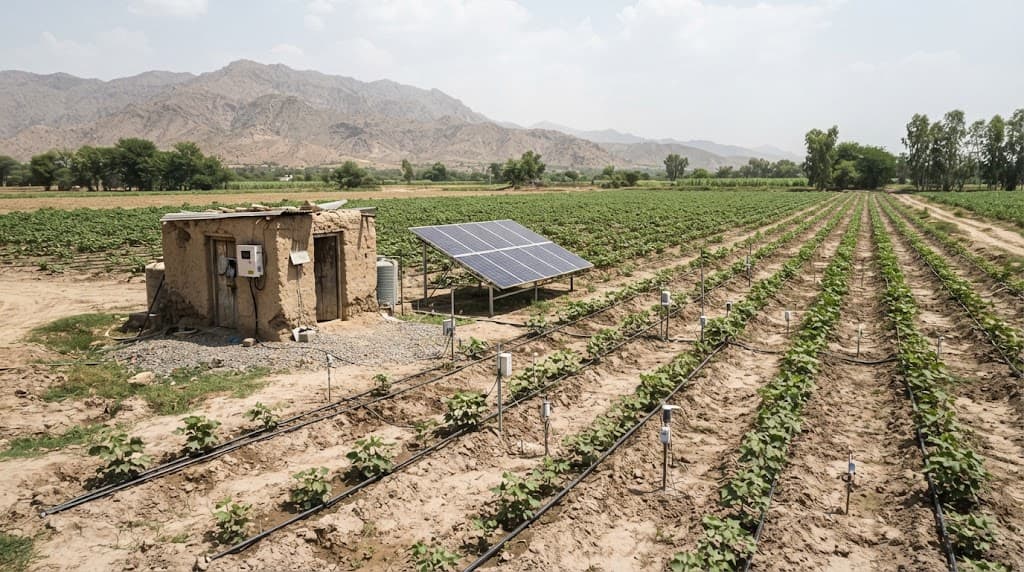
The Khyber Pakhtunkhwa government has floated a £180,000 plan for a smart irrigation system in Pakistan built around solar pumps and artificial intelligence at six farms used for agricultural research. Papers describing the idea set a target of using about 30 to 50 percent less water for crops, by pairing sensors with tighter watering methods and steps that help refill underground stores.
How the pilot would work
The scheme, under a title that stresses water harvesting plus AI-backed solar drip and sprinkler gear on provincial research farms, would blend solar pumping, drip and spray lines, and software that decides when and how much to water. Officials want solar gear, efficient pipe networks and recharge works at the six trial locations. Field kits would watch soil, weather, flow and pressure, then feed that data through connected devices, online platforms and AI tools so watering matches what each crop and plot needs.
Who leads and who takes part
Provincial agriculture officials—through agricultural engineering and on-farm water management units—would act as the government and technical lead. Staff at the research farms and farmers linked to them would host and run the hardware day to day. Universities and research bodies would advise and study the results, while technology suppliers would help install and keep solar units, pipes, sensors and AI controls working. The stated goals include thriftier water use, stronger groundwater recharge, better harvests and practical skills for people who must run modern irrigation methods.
Timeline: what has happened so far
- 28 October: Proposal for the £180,000 AI and solar irrigation pilot at six KP research farms is outlined in official documents.
- Months 1–3: Choose sites, record baseline conditions and design the systems.
- Months 4–8: Buy and install solar irrigation and groundwater recharge works.
- Months 7–10: Fit sensors and link IoT with AI controls (overlaps the install window).
- Months 10–15: Run the systems, train users and tune performance.
- Full span: About 18 months from start to the training and optimisation phase.
This smart irrigation system in Pakistan remains a proposed pilot on research farms rather than a finished province-wide network. If approved and built as described, the AI farming technology would first prove itself where scientists and trained staff can measure water saved and yields before any wider lesson is drawn for growers elsewhere in KP.
Aasan alfaaz mein
Khyber Pakhtunkhwa sarkar ne £180,000 ka plan diya hai jismein chhe research farms par solar aur AI se pani dena hai. Maqsad yeh hai ke faslon ko 30 se 50 percent tak kam pani lage. Sensors batayenge kab aur kitna pani chahiye. Abhi yeh proposal hai; kaam lagbhag 18 mahine mein mukammal hone ka schedule hai.