Pakistan’s current account deficit rose to $874 million in July–September of FY27, State Bank of Pakistan (SBP) data showed on Friday, as a wider trade gap offset export gains and remittance strength from last year.
The shortfall compares with $755m in the same quarter a year earlier. A current account deficit means the country spent more on imports, services and income payments abroad than it earned from exports and similar inflows. The first-quarter figure has already surpassed the $391m deficit recorded for the whole of FY26.
September swing and a larger trade gap
The deterioration was sharpest in September, when the current account posted a $356m deficit after a $133m surplus in the same month last year.
During July–September FY27, the goods trade deficit rose by more than 15% to $10.79bn from $9.37bn. Goods exports increased by $604m to $8.454bn, but imports climbed by more than $2.2bn to $17.784bn. Exports and imports of services each rose by almost half a billion dollars in the quarter.
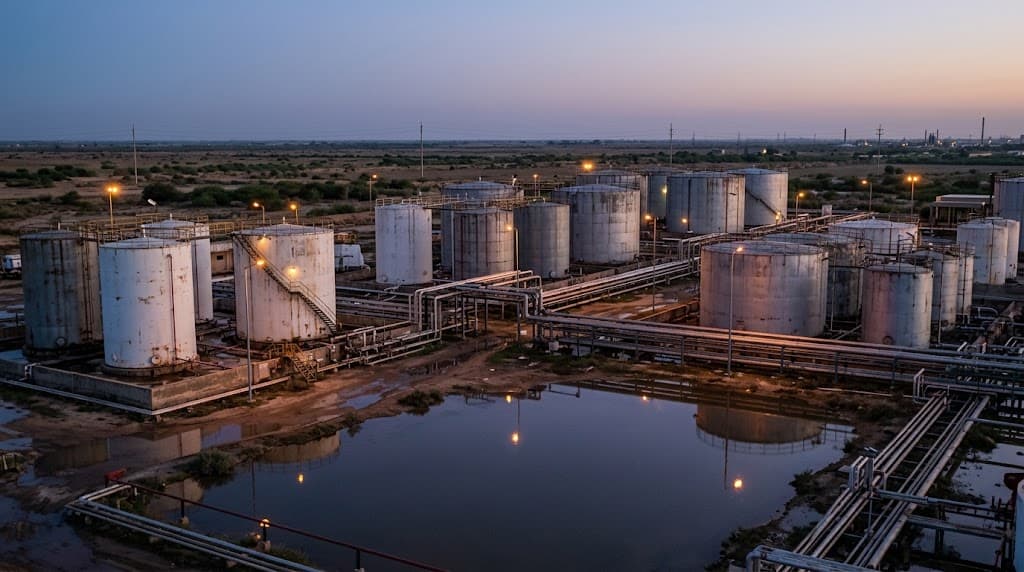
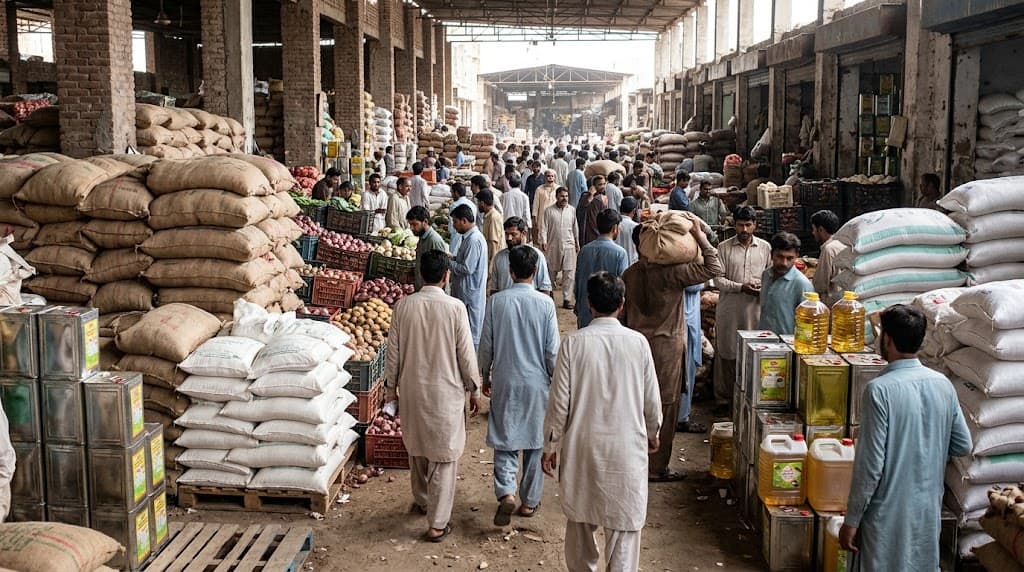
Officials and analysts link the wider gap to higher international oil and gas prices and a heavier food import bill. After cotton, Pakistan has also been importing wheat. Edible oil remained a major burden in FY26, when those imports reached $3.357bn. Food imports totalled $8.3bn that year and petroleum imports $15.5bn. Remittance inflows of more than $41bn in FY26 did not fully offset the pressure from rising imports.
What the numbers suggest for FY27
Because imports are rising faster than exports, the current account deficit could widen further in FY27 unless the trade imbalance eases. Financial experts warn the gap may grow again if conflict in the Gulf continues and global oil prices stay high.
Foreign investment edges up
Foreign direct investment (FDI)—money committed by overseas investors into businesses and projects—rose 20% in the first quarter despite regional and domestic uncertainty. SBP data put FDI at $719.7m in July–September FY27, up $119.3m from $600.4m a year earlier. September alone saw $219.5m, about $34m more than a year before.
Canada was the largest source in the quarter, with $229m (against $225m previously). China, long the biggest investor, sent $197.5m, up from $121m. Other inflows included $83.4m from the United Kingdom, $54.8m from the United Arab Emirates and $25.6m from Hong Kong. The total remains modest relative to the size of the economy, though the year-on-year rise could support stronger flows over the rest of the fiscal year.
Timeline: what has happened so far
- FY26: Full-year current account deficit stood at $391m; food imports were $8.3bn, petroleum $15.5bn, edible oil $3.357bn; remittances exceeded $41bn.
- July–September FY26 (comparison base): CAD was $755m; trade deficit $9.37bn; goods exports $7.853bn and imports $15.558bn; FDI $600.4m.
- July–September FY27: CAD rose to $874m; trade deficit $10.79bn; goods exports $8.454bn and imports $17.784bn; FDI $719.7m.
- September FY27: Current account showed a $356m deficit (versus a $133m surplus a year earlier); FDI was $219.5m.
- Friday (latest SBP release): Quarterly CAD and FDI figures for July–September FY27 were published.
Aasan alfaaz mein
Pakistan ka current account deficit pehle teen mahine mein $874 million ho gaya hai—matlab mulk ne bahir se zyada kharcha kiya, kam kamaya. Import, khas kar oil aur khurak, export se tez bari. Is se rupay aur mehengai par dabao barh sakta hai. FDI thori barhi hai, lekin trade gap kam na hua to deficit aur barh sakta hai.