Planning Minister Ahsan Iqbal has asked officials to prepare a broad plan for overhauling education in Islamabad, centred on a new autonomous education authority. He gave the team 60 days to draft the legislation and a transition roadmap. The instruction came on Friday, 6 November, at a meeting of a committee overseeing education reforms in the federal capital. The minister said the Prime Minister had asked for a fast but practical strategy to improve how schools are managed and how well students learn.
A 60-day deadline and a new governance model
Under the proposed design, a Board of Governors would run the authority, with independent members forming a majority. A chief executive would be picked on merit, and the authority's functions, powers and terms of reference would be spelled out clearly. Ahsan Iqbal stressed that the Federal Directorate of Education (FDE), which currently runs government schools, must keep working without a break during the change. He wants the body to have wide administrative and operational freedom, with a remit covering every education provider in Islamabad, public and private.
Funding, staffing and the 432 schools
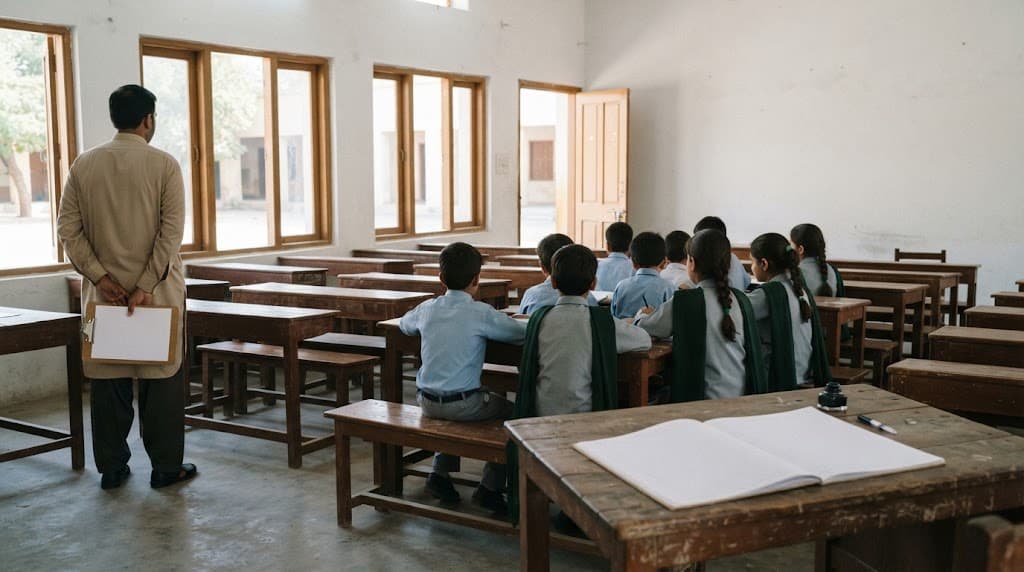
The minister said public-sector schools were not delivering results in line with the money spent on them. Employee-related costs take up 77 per cent of the directorate's budget ceiling, he noted, which he linked to the need for stronger performance and better use of public funds. A Planning Commission presentation told the committee that the FDE currently operates 432 educational institutions. Islamabad also has a much larger network of private schools, including low-fee ones, along with informal and special education facilities.
The committee also discussed a proposed hiring of 1,100 teachers by the Federal Public Service Commission, known as FPSC. Ahsan Iqbal asked for a review of the recruitment process and a look at contract-based hiring to attract young, highly qualified professionals. He pointed to Punjab's earlier scheme of hiring educated teachers on five-year contracts as a model worth learning from. He also asked officials to check the legal side of the appointments and consider local recruitment and school-based postings, so teachers are not moved unnecessarily and stay connected to their communities.
Teaching quality, girls' schools and next steps
On infrastructure, the minister said safe and fully working buildings come first, followed by a costed and verified plan to bring every school up to model standards. Rural schools and girls' education need special attention, he said. MNA Raja Khurram Nawaz pointed to a shortage of facilities in government schools, especially extra blocks for girls, and called for one curriculum across public and private schools to narrow gaps between students. Ahsan Iqbal said Pakistan can learn from China's stress on teacher-student interaction, and that reforms should also cover fairness, student welfare, curricula and learning outcomes.
The committee heard that three working groups have been set up, with a focus on infrastructure and other areas, following the Prime Minister's instructions and the panel's first meeting. The legislative proposals and the transition plan are due within the 60-day period. Until then, the FDE continues to operate, as the minister directed, so schooling in government institutions is not expected to stop. The next test for the Islamabad education reforms will be whether the draft law and roadmap arrive on time and address the funding and staffing concerns raised at the meeting.
Aasan alfaaz mein
Islamabad mein taleem ke nizam ko behtar banane ke liye ek khud mukhtar education authority banane ka mansooba hai. Planning Minister Ahsan Iqbal ne officials ko 60 din mein qanooni tajaweez aur transition roadmap tayyar karne ka hukm diya hai. Abhi FDE ke schools mein parhai mamool ke mutabiq jaari rahegi. Aam parent ke liye abhi koi foran tabdeeli nahi, lekin teachers ki bharti aur school ke nizam mein aagey tabdeeliyan aa sakti hain.