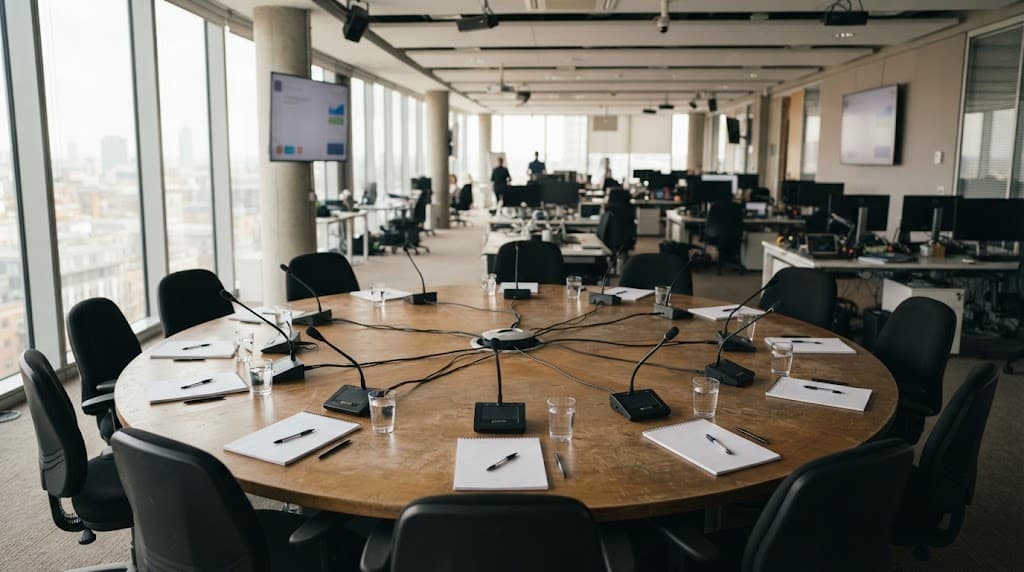
Senior journalists, press unions, political leaders and civil society members have formed a united alliance in Islamabad to protect freedom of expression in Pakistan's constitution and to widen civic space. The step was taken at a roundtable on strengthening the custodians of free speech, moderated by Munizae Jahangir and chaired by Nasir Zaidi.
Why a new alliance was formed
Speakers said censorship, legal harassment, economic insecurity and limits on digital communication are weakening independent journalism across the country. The meeting brought together elected journalist unions from Punjab, Sindh, Khyber Pakhtunkhwa (KP), Balochistan, Azad Jammu and Kashmir (AJK) and Gilgit-Baltistan (GB) to assess those pressures and discuss practical ways to protect reporters and civic freedoms.
Hamid Mir said accounts from the provinces pointed to longstanding curbs, and argued that political parties' role in introducing and passing restrictive laws should be recorded. He cited roughly 500 cases under the Prevention of Electronic Crimes Act (PECA)—the main cybercrime law—including about 35 against journalists, while stressing that those numbers require independent verification. He also pointed to a proposed bill on social media use by children under 16 that, he said, would punish parents for their children's violations, and called for a white paper on restrictions and parties' part in them.
What senior journalists said
Mujeebur Rehman Shami said Pakistan's difficulty was not only a lack of laws but weak enforcement of rules already on the books, and proposed a document that maps those laws, how they are applied and their effect on free speech. Sohail Warraich said defending the right to speak freely is a duty for society as a whole, and urged political parties and other groups to state their commitment clearly and match words with actions.
Najam Sethi said parties have not been strong defenders of free expression, and that self-censorship—sometimes pressed by media owners—has damaged journalism, with outlets focused on survival rather than a wider public agenda. He argued that sustained protest could help only if journalists and their organisations set aside divisions. Asma Shirazi said laws such as PECA should not be used to silence journalists, and warned that online trolling of women, often treated as minor, has pushed many off social platforms. Arifa Noor called for systematic documentation of abuses against journalists and of censorship.
Provincial unions on threats and livelihoods
Saleem Shahid said journalists in Balochistan face threats from non-state actors, political parties and religious groups, while self-censorship has grown. He said many TV channels have cut provincial teams to one reporter and one cameraman, leaving workers jobless, and that the provincial government had not offered enough relief.
Karachi Union of Journalists president Tahir Hasan said self-censorship is widespread, though Sindhi-language outlets still report more freely; the economic crisis has driven many from the profession, and political splits have weakened unions. PFUJ KP chapter vice president Nasir Hussain said conditions there resemble Balochistan, with security threats, censorship and hardship. He said more than 30 journalists have been killed in KP since 9/11, the Peshawar Press Club has been attacked, and 22 journalists faced threats in 2025. He also described a KP Assembly proposal that would have imposed jail and heavy fines for journalists speaking against the speaker; it was withdrawn after protests when the government disowned how it had been passed.
Aasan alfaaz mein
Islamabad mein sahafi unions aur civil society ne azadi-e-izhaar bachane ke liye ek committee banaayi hai. Unka kehna hai ke censorship, qanooni dabao aur paise ki tangi journalism ko kamzor kar rahi hai. Is se aam logon tak bilawajah khabar pahunchna mushkil ho sakta hai. Committee ka maqsad yeh hai ke sahafiyon aur awami guftagu ki jagah bachayi jaye.