Federal Climate Change Minister Dr Musadik Malik said on Monday that Pakistan must move past routine training workshops and scattered projects toward an innovation-led model for green skills that joins scientific research, practical training, entrepreneurship and investment.
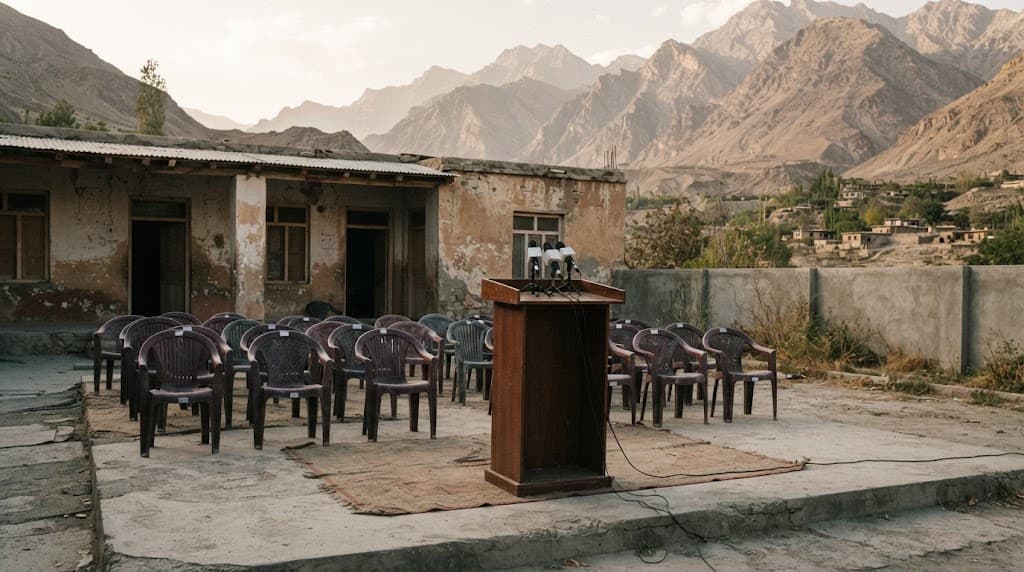
Speaking as chief guest at the concluding event of the Green Skills Development Initiative in Islamabad, he said success should be measured by skills people actually gain and put to use, not by how many workshops, meetings or coordination sessions are held. He called for clearly defined green skills, recognised certifications, partnerships with international universities and structured research pathways for Pakistani graduates, and backed direct investment in young researchers, innovators and entrepreneurs through a proposed $10 million innovation fund.
From workshops to a working ecosystem
The minister said universities, research bodies, industry and investors need to work as one system so scientific knowledge becomes usable technology and viable green businesses. NAVTTC Chairman Engr Qamar ul Islam Raja said the commission covers over 200 trades, of which more than 12 relate to green skills, and argued the priority must be action rather than talk. He said NAVTTC would help implement the experts’ recommendations.
SDPI Executive Director Dr Abid Qaiyum Suleri said the debate was timely, coming about two weeks before COP31. He linked green skills to jobs and livelihoods, pointing to demand created by electric vehicles, solar panels and battery maintenance. He said Pakistan still lacks a formal green skills programme, even though people are learning informally—from solarisation to e-bikes—and that GIZ and SDPI had mapped opportunities and how government policy could unlock them. Federal policy should enable the work, he said, while bodies such as NAVTTC deliver it and keep projects running after external support ends; outside funding should mainly kick-start efforts.
Jobs, governance and a proposed national council
Presenting a study, governance expert Dr Safdar Sohail said the climate transition could create many jobs over the next decade in energy, construction, manufacturing and agriculture, if governance weaknesses do not block the chance. He recommended a National Green Skills Development Council as a strong top-level steering body to mobilise finance, fix coordination gaps, align agency strategies and review results, and to help federal and provincial governments draft a five-year Green Jobs and Skills Development, Financing and Monitoring Framework under Uraan.
Dr Shabana Haider of the Ministry of Planning stressed outcome-based accountability and a single government-led performance frame for donor support, suggesting a start in a few sectors such as climate-smart agriculture. Mr Jamal S. Malik of the Special Investment Facilitation Council said any national council should coordinate existing structures rather than add another layer. Labour market expert Dr Aliya Khan urged a labour market information system, closer links between climate goals and workforce readiness, and inclusion of youth, women and marginalised groups.
Skills planning, research and the road to COP31
Mr Akbar Hussain of the Punjab Skills Development Fund pointed to gaps in curricula for green trades and said skills planning should come before investment. Dr Muhammad Ali Nasir of the Higher Education Commission called for a single national umbrella for green research and innovation. Online, Dr Farhan Saeed of UET Lahore cited an industry–academia plastics recycling consortium as a model that innovated without government funding. Ms Huma Ruqaya Safdar of the Ministry of Industries and Production backed a single council and warned that awareness and data on skills needs—including for electric vehicles and mining—remain weak.
GIZ’s Wolfgang Hesse said Pakistan, as a green skills champion country, was visible on the issue at COP30, where a flagship report including Pakistan’s labour market information was launched. He said the initiative aimed to help Pakistan take a coordinated stance at COP31 and that Monday’s event closed the project. SDPI project coordinator Dr Razia Safdar said skills must be used as well as taught, with supply matched to demand and strong curricula, and that such skills could also be exported. Dr Suleri also announced SDPI’s 29th Sustainable Development Conference from 2 to 5 November on “Rethinking Development in an Age of Disruption,” with about 300 speakers from 18 countries.
Timeline: what has happened so far
- COP30: Pakistan was presented as a green skills champion country; a flagship report including its labour market information was launched.
- 26 October: The Green Skills Development Initiative’s concluding event was held in Islamabad with Minister Musadik Malik as chief guest.
- About two weeks before COP31: Speakers said the Islamabad discussion was timed to help Pakistan prepare a coordinated position.
- 2–5 November: SDPI’s 29th Sustainable Development Conference is scheduled in Islamabad on rethinking development amid disruption.
Aasan alfaaz mein
Wazir Musadik Malik ne kaha hai ke Pakistan ko sirf workshops nahi, balkay asli green skills chahiye jo kaam aayein. Certification, research aur jawanon ke liye proposed $10 million fund ka zikr kiya gaya. Abhi mulk mein rasmi green skills programme nahi, magar solar aur e-bike jaisi cheezein log seekh rahe hain. Agar yeh skills jobon se jud jayein to energy aur construction jaise shobaon mein rozgar ke mauqe badh sakte hain.