Egypt’s parliament on Monday authorised President Abdel Fattah al-Sisi to take “all necessary measures” to help Saudi Arabia defend itself against escalating attacks by Yemen’s Houthi movement — a step that could draw Cairo closer to a widening regional conflict if Riyadh formally asks for assistance.
At least two-thirds of the chamber supported the measure, according to a parliamentary statement shared by members of the house. Sisi had sought the authorisation last week so Egypt could back its Gulf ally — a major oil exporter — should Saudi Arabia request help. Officials stress that any Egyptian role remains contingent on that request and on Riyadh’s stated needs.
What Cairo has authorised
Before the vote, Foreign Minister Badr Abdelatty and intelligence chief Hassan Rashad travelled to Riyadh with a letter for Saudi Crown Prince Mohammed bin Salman. In that message, Sisi made clear that Egyptian support would be limited to defending Saudi territory and borders rather than attacking Yemen. Abdelatty later said Cairo still favours exploring “every opportunity” to settle the Yemen conflict through diplomacy.
Egypt has repeatedly condemned attacks by Iran and groups aligned with Tehran on Gulf states, but has so far avoided public, direct combat in the current fighting. It also stayed outside the Makkah mutual defence agreement signed in August by Saudi Arabia, Pakistan and Türkiye. On the same day as the Cairo vote, top officials from those three Makkah-pact countries were meeting Iranian leaders in Tehran in an effort to cool the crisis.
Why the Bab al-Mandeb matters
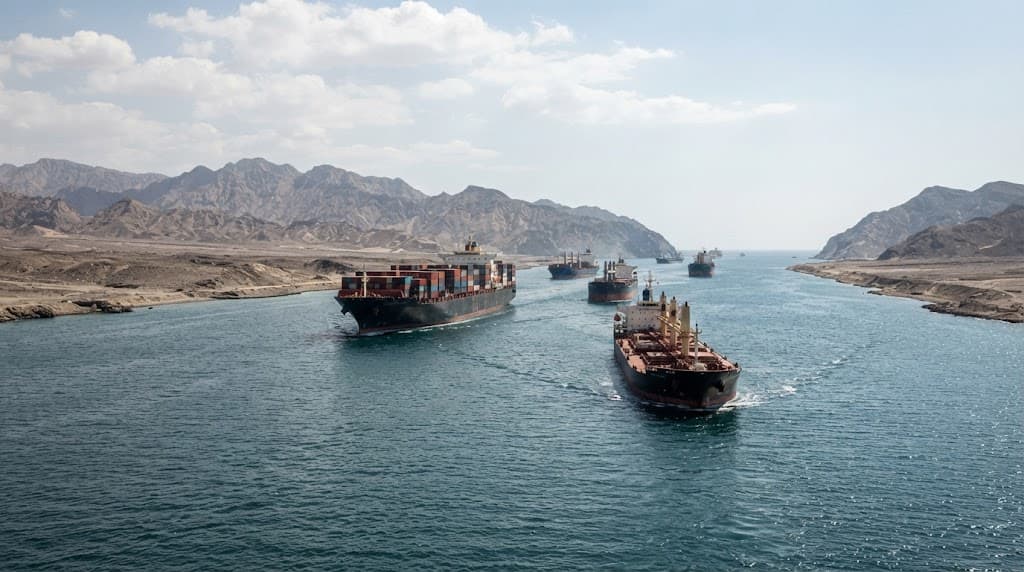
The Houthi campaign has also raised alarms over the Bab al-Mandeb Strait, the southern gateway between the Red Sea and the Gulf of Aden. The passage is vital for Egypt’s link to the Suez Canal and for global shipping and energy traffic. Houthis have reportedly targeted Saudi oil infrastructure and airports in several cities and imposed a naval blockade in the strait. Those attacks have reportedly killed more than a dozen people and injured around 20 others. Strikes on Riyadh’s international airport and state oil company Saudi Aramco have disrupted flights and oil exports, while aid agencies have warned that conditions in Yemen — already among the world’s worst humanitarian crises — are worsening.
Iran had earlier warned Egypt that joining the fighting risked spreading the conflict beyond the region. Separately, the Saudi crown prince had sought U.S. military help; people familiar with the matter said in September that President Donald Trump did not agree to strikes on the Houthis, and that Washington offered intelligence sharing and targeting support instead.
Timeline: what has happened so far
- 1960s / 1991: Egypt fought a costly campaign in Yemen in the 1960s and has not mounted a large-scale foreign ground deployment since the 1991 Gulf War.
- March 2015: Egypt joined the Saudi-led coalition in an earlier phase of Yemen’s war, mainly as a naval partner securing Red Sea lanes, with around 800 ground troops and a limited combat role.
- August: Saudi Arabia, Pakistan and Türkiye signed the Makkah mutual defence pact; Egypt did not join.
- September: Riyadh sought U.S. strikes on the Houthis; people familiar with the talks said Washington declined combat strikes and offered intelligence support.
- Last week: Sisi asked parliament to authorise support; the vote was postponed while Cairo’s foreign minister and intelligence chief delivered his letter in Riyadh; Yemen’s House speaker Yahya Ali al-Rai urged Egyptian MPs to reject the plan.
- Monday: Parliament approved the authorisation; Makkah-pact officials met Iranian leaders in Tehran to push for de-escalation.
Saudi Arabia remains a major political and financial partner for Cairo, providing billions of dollars in aid, deposits at the central bank and energy supplies under Sisi. Yahya Ali al-Rai last week argued that backing Riyadh would threaten Egypt’s own national security and internal stability. How far any Egyptian military support goes will still hinge on whether — and how — Saudi Arabia asks for it.
Aasan alfaaz mein
Misr ki parliament ne Saudi Arab ke liye fauji madad ki ijazat de di hai, lekin pehle Riyadh se darkhwast aani chahiye. Yeh madad sirf Saudi zameen aur sarhadon ki hifazat ke liye hogi, Yemen par hamle ke liye nahi. Houthi hamlon se Red Sea aur Suez Canal ke raaste pe pressure hai, jisse oil aur shipping mutasir ho sakti hai. Pakistan Makkah defence pact mein hai jab ke Misr us se bahar hai — is liye yeh fasla poori region ke amn aur tijarat ke liye ahem hai.