Pakistan has a chance to expand AI jobs in Pakistan beyond routine software outsourcing by building expertise in industrial artificial intelligence, according to computer scientists at the Lahore University of Management Sciences (LUMS). They argue that skills in watching automated systems, spotting equipment trouble early and cutting costly downtime are becoming more valuable as factories rely on connected machinery.
Dr Hamad Alizai, Associate Professor of Computer Science at LUMS, said engineering and technology graduates should be prepared for that demand with practical, industry-specific training. Universities, he explained, still teach broad foundations, while employers want people who can use particular tools. Some workplace adjustment has always been normal, but he said the gap is growing as AI changes what firms expect.
Why industrial EdgeAI matters
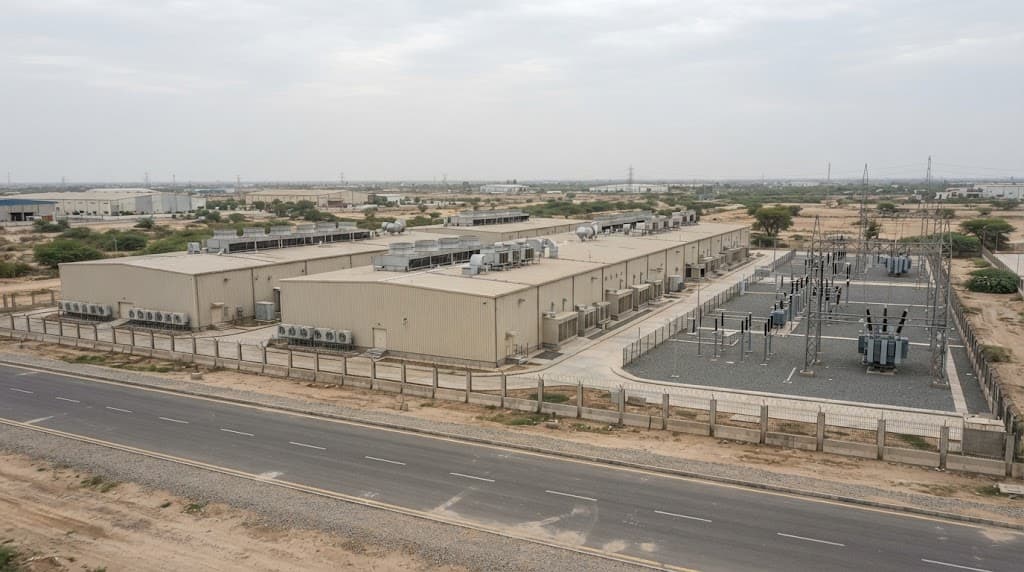
Dr Naveed Anwar Bhatti said industrial EdgeAI—AI that runs close to factory equipment rather than only in distant data centres—could help Pakistan move past traditional software services, especially in monitoring and maintaining automated systems. Sensors paired with AI can flag that a motor may fail or that a robot battery is weakening, so parts can be replaced before production stops. That approach, called predictive maintenance, aims to limit downtime and the losses that follow.
Graduates trained in industrial sensing, AI and automation could help run those systems, he said. For manufacturers, better monitoring could raise efficiency and cut losses from breakdowns. Dr Alizai cautioned that export results still also depend on government policy, institutions and the wider economy.
Discussing employment, Dr Alizai said AI is increasingly able to handle routine tasks once done by people. “Knowledge-based jobs, particularly those involving repetitive tasks, are being affected,” he said. The shift, he added, is not limited to computer science and also touches electrical and mechanical engineering and related fields.
How fast is the change in Pakistan?
Dr Bhatti said Pakistan has so far felt a more gradual AI impact than some overseas markets, though that may change as firms grow more confident. Universities are already seeing effects: AI can finish some research tasks with fewer people, even as pressure for faster output rises. He likened the moment to the move from radio to television—some work shrinks, but new industries and roles can appear. “The competition will not simply be about who is best, but also about who moves first,” he said.
Bridging campus and factory floor
The MSAI–LUMS Industry 5.0 and EdgeAI IoT Innovation Lab and Skills Accelerator is meant to give students exposure to industrial sensing, connected equipment and computing. Dr Alizai said universities cannot fully copy industrial settings across many fields because the cost and specialised gear are heavy; industry-backed labs can supply equipment and know-how campuses often lack.
Lab gear is expected to enter courses first, then course and capstone projects, with deeper research later. The aim is to move students from theory to real industrial problems. With willing partners, he said, a similar model could later reach agriculture, water management, energy and other areas.
AI may also cut monitoring costs in some cases by pairing cheaper sensors with models that interpret their signals when full specialised accuracy is not required. “If you don’t need 100 percent accuracy and 95 percent is sufficient, an AI-based solution may help reduce costs,” Dr Alizai said, stressing that this is not a blanket substitute for specialised sensors.
Dr Bhatti said a longer-term goal is a pipeline in which industry brings real problems to researchers and judges the solutions. Priorities he described include graduates with skills tied to specific industries so firms need less extra training after hiring, closer links between students and employers, and joint work on practical problems. Wider success, Dr Alizai concluded, hinges on credible industrial partners who invest in skills before those capabilities become an urgent necessity—opening paths for graduates in emerging technology fields and strengthening AI jobs in Pakistan tied to industry, not only traditional software coding.
Aasan alfaaz mein
Pakistan ke experts kehti hain ke AI sirf software coding tak limited nahi rehna chahiye. Factories mein machines ki hifazat aur pehle se kharabi pakarna bhi AI ka kaam ban sakta hai. LUMS ka naya lab students ko sensors aur connected machines par practical training dega. Jo log ye skills seekhein, unke liye naye industrial AI roles banne ka mauqa barh sakta hai.