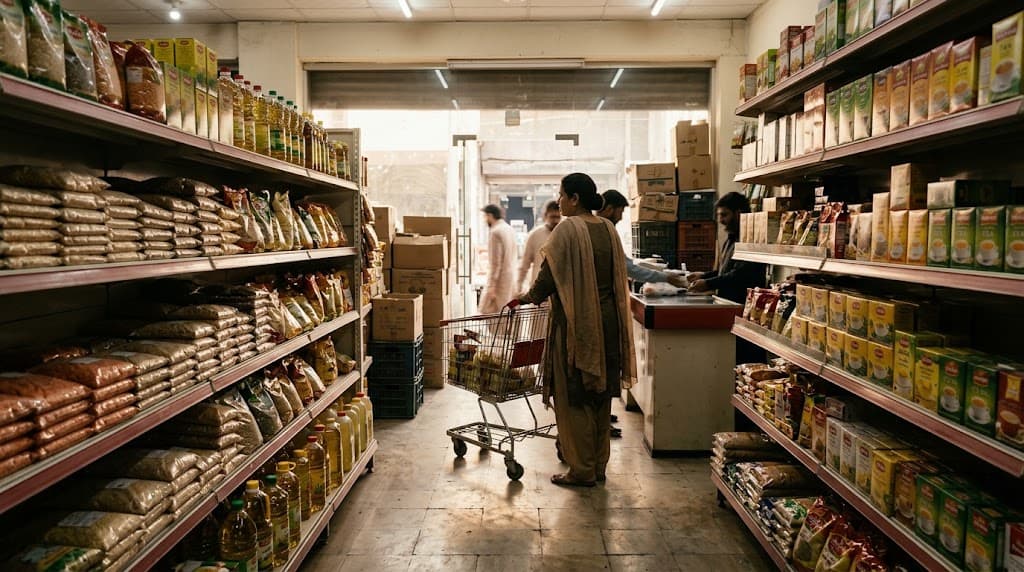
Business and trade leaders in Hyderabad have warned that a wheat shortage in Sindh could lead to a flour crisis within a couple of months unless the federal and provincial governments act now. In a joint statement, they said the situation was heading for a full-blown food security crisis by December 2026 or January 2027. Food security means steady access to enough food at affordable prices.
Stocks and shortfall figures
The Hyderabad Chamber of Small Traders & Small Industry, whose president is Nadeem Ahmed Siddiqui, said governments should have taken timely decisions before the shortage grew into a crisis. Its leaders want the federal government to allow private-sector imports under a clear, transparent and non-discriminatory policy, so that domestic needs are covered and flour prices stay reasonable.
Yaser Malik, chairman of the subcommittee on flour mills of the Federation of Pakistan Chambers of Commerce and Industry (FPCCI), gave the supply figures. He said Sindh's estimated wheat availability for 2026-27 is 4.84 million tonnes against a demand of 6.53 million tonnes, a shortfall of 1.69 million tonnes. Nationally, he said production is estimated at 27.5 million tonnes against a target of 29.7 million tonnes, a gap of 2.2 million tonnes.
Malik said the Sindh government holds 346,414 tonnes in its stocks. Adding 190,000 tonnes from Passco, a state-run storage body, and 300,000 tonnes of planned imports, the total would reach 836,414 tonnes. He said that is not enough for the next five months, until the new crop arrives.
What the business groups want
The leaders asked the Sindh government to inspect wheat stocks in the food department’s warehouses immediately, separate substandard and unfit grain, and make sure flour mills receive only good-quality wheat. They said the cost of uncertain supplies and policy delays should not fall on consumers through expensive flour. Mills, they added, should not be forced to suspend or cut output because of the wheat shortage.
Malik also warned the federal government against repeating what he called the mistake of importing wheat through the Trading Corporation of Pakistan (TCP) alone, the state trading agency. The chamber leaders said timely planning was essential to protect the next harvest and meet food requirements. They asked both governments to announce an ‘action plan’ without delay, covering stock verification, private-sector imports, quality wheat for millers and steps to stabilise flour prices.
What happens next
It is not yet known whether the federal and Sindh governments will announce the plan the business groups have requested. The warnings put pressure on both governments to act on stock checks and import decisions before the next harvest. For households, the immediate question is whether flour prices hold steady in the coming months.
Aasan alfaaz mein
Sindh mein gandum ki kami ki wajah se aate ka bohran aane ka khatra hai, aisa karobari rehnumaon ne kaha hai. Unka kehna hai ke hukumat gandum ka stock check kare aur private sector ko bahar se gandum mangwane ki ijazat de. Agar faisle der se hue to aata mehnga ho sakta hai. Agle chand mahinon mein nayi fasal aane tak sab ki nazar hukumat ke iqdamat par rahegi.