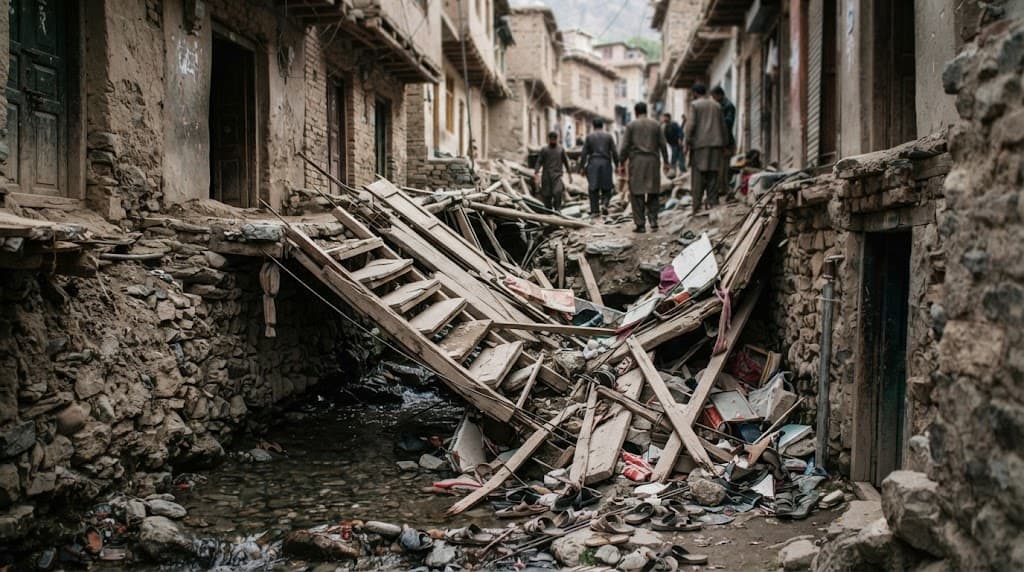
Pakistan Afghanistan border tension sharpened after Khyber Pakhtunkhwa Governor Faisal Karim Kundi on Wednesday condemned what he called unprovoked aggression by the Afghan Taliban and warned that further attacks on Pakistan would be met with unwavering resolve. The remarks followed a Tuesday-night strike on civilian areas in South Waziristan’s Angoor Adda, where one member of a family was killed and five were injured.
What happened at Angoor Adda
According to the governor’s account, Afghan Taliban forces targeted civilian homes and Angoor Adda Bazaar in Lower South Waziristan. In response, the Pakistan Army destroyed Afghan Taliban check posts. Troops remained on high alert along the frontier and were described as ready to stop any further aggression.
Kundi posted a statement on X saying the Afghan Taliban regime should “have no illusions,” and that Pakistan “will never tolerate attacks on its people or violations of its sovereignty.” He saluted the Pakistan Armed Forces for a “swift, forceful and decisive response,” recalled that Khyber Pakhtunkhwa had “sacrificed thousands of lives in the fight against terrorism,” and said the province would not allow anyone to threaten its people or undermine its security.
Official warning and the wider dispute
The governor stressed that any aggression against Pakistan would be confronted with unwavering resolve, and that the armed forces have the nation’s full backing to defend every inch of soil. That message sits inside longer-running Taliban Pakistan tensions over cross-border security.
Islamabad accuses the Afghan Taliban of harbouring militants who launch attacks inside Pakistan. Kabul denies the charge and says the militancy is its neighbour’s domestic problem. Those conflicting positions help explain why Pakistan Afghanistan border tension keeps returning to the public agenda even when fighting briefly eases.
Timeline: what has happened so far
- Late February: Operation Ghazab Lil Haq was launched after renewed clashes along the Pakistan–Afghanistan border, following fire by Afghan Taliban forces on multiple locations and Pakistani military retaliation.
- After those exchanges: Fighting intensified when Afghanistan mounted a border offensive after Pakistani air strikes on terrorist positions.
- 18 March: The two sides agreed a week-long ceasefire on the eve of Eidul Fitr, after appeals involving Turkiye, Saudi Arabia and Qatar.
- April: In peace talks in Urumqi, China, Pakistan set out three core demands: that Kabul formally declare the Tehreek-e-Taliban Pakistan (TTP) a terrorist organisation, dismantle its infrastructure, and offer verifiable proof of that action.
- Tuesday night: Civilian areas at Angoor Adda were targeted; one family member was killed and five injured.
- Wednesday: Governor Kundi issued his warning; the Pakistan Army destroyed Afghan Taliban check posts and kept troops on high alert.
What officials say comes next
Kundi’s statement framed the Angoor Adda raid as a test of sovereignty and public safety rather than a distant frontier incident. He cast the military’s reply as decisive and insisted that hostile acts would not weaken Pakistan’s determination to protect its soil. How Kabul responds, and whether talks built on Islamabad’s April demands resume, will shape whether Pakistan Afghanistan border tension cools or hardens again.
Aasan alfaaz mein
South Waziristan ke Angoor Adda par hamla hua, jis mein ek shakhs jaan se gaya aur paanch zakhmi hue. KP ke governor ne Afghan Taliban ko khula warning di hai ke Pakistan par hamla bardasht nahi kiya jayega. Fauj ne jawab mein check posts tabah kiye aur border par alert hai. Sarhad ke paas rehne walon ke liye yeh matlab hai ke security tight rahegi aur tension abhi khatam nahi hui.