China has proposed export controls covering 12 technologies used to make solar equipment, framing the move as a national-security step inside a wider update that also touches artificial intelligence and biotechnology.
The Ministry of Commerce said in a Friday statement that photovoltaic know-how should face tighter oversight because solar technologies are increasingly used in sensitive fields such as aerospace and national defence. It proposed placing those solar-manufacturing items on China’s export-control list.
What Beijing wants to ban or restrict
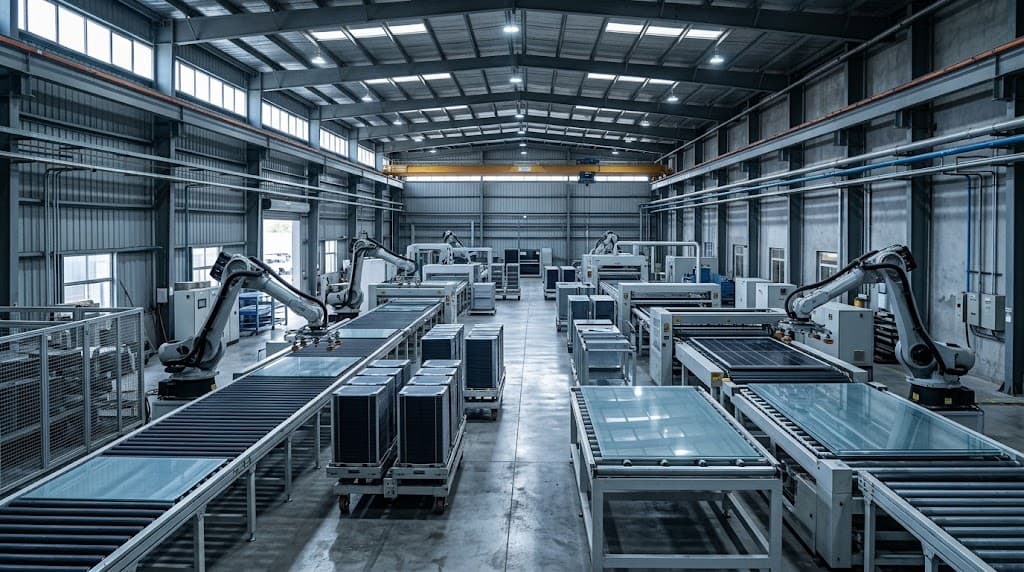
Under the draft, China would prohibit exports of technologies used to make some thin wafers, perovskite cells and tandem solar cells, as well as large-scale fluidized-bed methods for producing polysilicon — the key raw material for many panels. Perovskite is an emerging approach that can raise conversion efficiency; tandem designs stack perovskite with silicon to capture more of the sunlight spectrum. Fluidized-bed polysilicon production is described as cheaper and more energy-efficient than the widely used Siemens process.
Separately, China would restrict — but not outlaw — exports of advanced solar-cell manufacturing technologies, including TOPCon, HJT and XBC. In plain terms, some cutting-edge factory methods would be stopped at the border, while others would face heavier paperwork and scrutiny rather than an outright ban.
Why officials say the rules are needed
The ministry said export limits should “guard against the risks of technologies from running out of control or being improperly disseminated, while safeguarding normal international exchanges and cooperation in science and technology.” Until the export-control catalogue is formally revised, exporters must register certain overseas technology transfers.
Chinese officials had earlier held initial talks with manufacturers about possible curbs on advanced solar-panel manufacturing technologies — a step that could complicate plans by US firms such as Tesla to grow production at home. Beijing has also already limited solar-manufacturing technology exports to India. Analysts say China wants to protect its lead as India builds domestic factories and tries to reduce dependence on Chinese supply chains.
Timeline: what has happened so far
- April: Chinese officials hold initial talks with manufacturers about possible curbs on advanced solar-panel manufacturing technologies.
- Friday (commerce ministry statement): The ministry proposes adding 12 photovoltaic technologies to the export-control list and links the step to aerospace and defence uses.
- Until the catalogue is updated: Exporters must register certain overseas technology transfers.
- 15 November: Public consultation on the proposal closes.
What happens next
The China solar export controls are still a proposal. Stakeholders can comment until 15 November, after which Beijing would need to finalise any catalogue changes. Markets and manufacturers will watch which items stay banned, which stay restricted, and how registration rules work in practice. For now, the clear signal is that China is treating advanced solar factory know-how as strategic technology, not only as ordinary commercial equipment.
Aasan alfaaz mein
China ne solar panel banane wali kuch advanced technologies par export control propose kiya hai. Yeh abhi proposal hai; logon se raaye 15 November tak li jaegi. Kuch techniques bilkul band ho sakti hain, kuch par sirf sakhti barhegi. Aam khareedar ke liye abhi koi final qeemat ka faisla nahi — pehle list final honi hai.