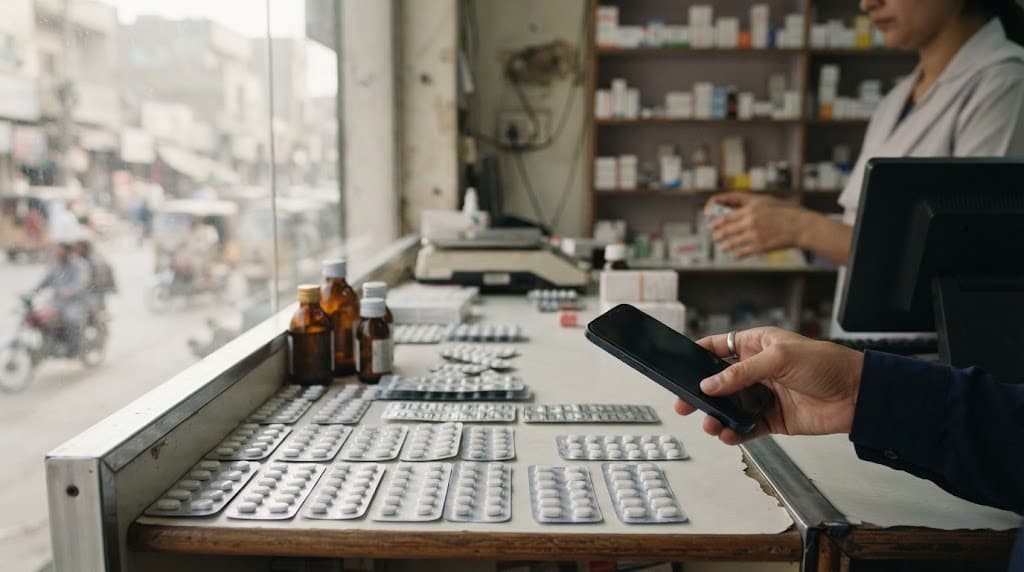
Federal Health Minister Mustafa Kamal said the Drug Regulatory Authority of Pakistan (DRAP), the federal body that regulates medicines, has been made fully transparent and digitalised, with more than 86,000 locally manufactured medicines now listed on its track and trace system. Speaking to industrialists at the Korangi Association of Trade and Industry (KATI) in Karachi on 31 October, he said shoppers can scan packs on their phones to check whether a medicine is genuine and to see price information.
Faster online registration and digital certification
Kamal said pharmaceutical firms can also file medicines and products online. Work that once stretched over years is now finished in 21 days, according to the minister. He added that DRAP moved certification onto a digital system eight months ago and has handled more than 5,000 cases in that period. The Prime Minister has recognised DRAP with an award for its digitalisation performance, he said.
The Korangi Industrial Area hosts a large share of Pakistan’s pharmaceutical plants, KATI President Sheikh Umer Rehan noted, calling the sector central to national drug supply. He welcomed the Health Ministry’s push to digitalise DRAP, saying it had eased long-standing industry bottlenecks. Figures shared at the meeting put pharmaceutical exports at $457 million in fiscal year 2024-25, about 34 percent higher than the previous year.
Medicine prices still before the cabinet
Kamal said medicine pricing needs careful handling. Manufacturers want higher prices, and the federal cabinet is considering the question. He framed a difficult trade-off: raising prices would squeeze household budgets, while freezing them could worsen shortages of drugs used for serious illnesses. In that gap, he said, patients sometimes buy the same products from the informal market at three times the official price.
He suggested the government step back from setting prices directly and let medicines, like other goods, find their level in the open market. No cabinet decision on that proposal was announced at the KATI event.
Industry asks for regular Karachi engagement
Rehan proposed that federal ministers visit Karachi at least once a month to hear sector concerns, following the example set by the Federal Board of Revenue (FBR) chairman. He said Pakistan’s production costs are already among the highest in the region and that a further rise in the interest rate has added to industry’s strain. Because Kamal represents Karachi in the federal cabinet, Rehan said businesses expect him to take the city’s problems to Islamabad.
Kamal said he had carried out his duties sincerely and pointed to what he described as satisfaction in the pharmaceutical industry with current regulatory changes. He also argued that Karachi is not receiving its due share of attention and resources.
Aasan alfaaz mein
Health Minister Mustafa Kamal ne kaha hai ke DRAP ab digital aur transparent ho gaya hai. 86,000 se zyada dawaiyan track and trace par hain, jinhein phone se scan karke asal hone aur qeemat ki jaanch ki ja sakti hai. Company registration ab 21 din mein ho sakti hai. Dawaiyon ki qeematon ka faisla abhi cabinet ke paas hai, is liye patients ko turant sasti ya mehngi dawai ka naya rate nahi mila.