Why tungsten costs jumped
Global tungsten prices climbed 622% from January 2025 through April 2026, the International Energy Agency (IEA, which tracks energy and mineral markets) reported in its Global Critical Minerals Outlook 2026. Over that same span, tantalum advanced 196%, cobalt 134%, neodymium 116% and lithium 108%. Even industrial staples such as copper, aluminium and chromium gained between 39% and 53%.
The move is framed as structural rather than a short-lived bet. Tungsten melts at 3,422°C — higher than any other metal — and is prized for hardness in cutting and drilling gear, aerospace parts, specialised alloys, electronics contacts and defence uses including ammunition. When one supplier tightens export licences, buyers feel it at once.
China dominates both tungsten extraction and, even more so, the refining stage. Broader IEA estimates put Chinese plants at roughly 70% of refined output for major energy minerals in the latest year cited. Cobalt’s jump is linked more to Congolese export limits, and lithium’s to storage demand outpacing supply, yet concentration of processing remains the shared risk: policy in a few capitals can set world prices.
What this means for Pakistan’s mines
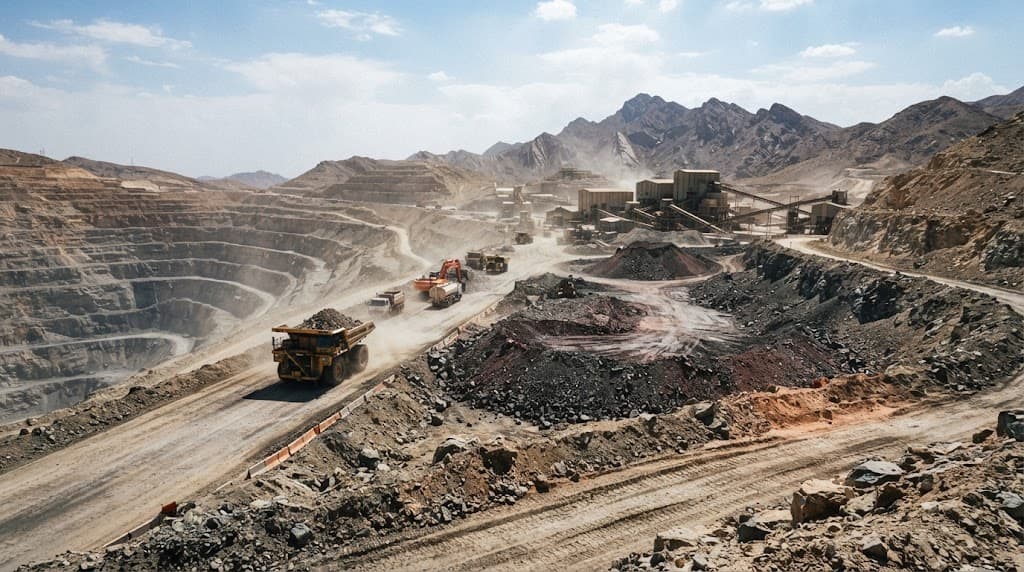
Those market signals land as Islamabad’s mineral file shifts from slogans toward deal-making. Reko Diq, the copper-gold venture in Chagai owned 50% by Barrick, 25% by federal state firms and 25% by Balochistan, obtained $1.3 billion from the US Export-Import Bank in February under Project Vault — a $10 billion US push to stockpile strategic minerals and widen supply beyond China. It is the sole non-American deal in that package. The mine’s full budget is cited near $3.2 billion, with first production planned for 2028. In 2025 the same US lender was already listed among possible backers with the IFC, the Asian Development Bank and export-credit agencies from Canada, Germany, Sweden and Finland.
Deposit assessments for copper, gold, silver, molybdenum, cobalt and minor rare earths such as neodymium and praseodymium put Reko Diq’s contents at $60 billion to $74 billion. Sweeping national claims of $6 trillion in mineral riches mix unproven geology with recoverable ore and are treated as weak; Pakistan also lacks the JORC or NI 43-101 style disclosures investors usually demand. Narrower readings place recoverable wealth across Balochistan, Khyber Pakhtunkhwa and Gilgit-Baltistan somewhere between $100 billion and $300 billion over many decades.
The processing gap at home
Actual digging still punches below that promise. Mining and quarrying have sat at roughly 2% to 3% of GDP for a quarter-century and were 2.1% in FY26 after four straight yearly falls. In 2023 Pakistan ranked 51st of 166 countries by value of minerals taken from the ground, with fuels making up 82% of that total. For non-ferrous metals — the basket that includes rare earths — it stood 58th at $271 million. Just eleven states produced rare earths that year, and China alone held 66% of the tonnage.
The country often sells crude iron ore and bauxite yet buys scrap for steel and aluminium plants, after the Pakistan Steel Mills blast furnace — once the sole local iron-ore smelter — stayed idle for nine years. At Saindak, a long-running Chinese-run copper-gold site, concentrate has left the country for about twenty years, capturing only the thin upstream slice. Smelting, refining and alloying create most of the margin; Pakistan has almost none of that kit.
Diplomacy cuts both ways: decades of Chinese resource and infrastructure ties under CPEC continue while Washington courts Islamabad as an upstream supplier for a Western-aligned chain. Violence in Balochistan and Khyber Pakhtunkhwa still raises costs for workers, roads and investor nerve. Equity talk — including a long-mooted Saudi share in Reko Diq — has been slow to harden into signed stakes. Rules remain split between federation and provinces, and announcements often outrun delivery.
Timeline: what has happened so far
- 2023: Pakistan ranked 51st of 166 for extracted mineral value; non-ferrous metals output was valued at $271 million.
- 2025: US EXIM sat among Reko Diq’s prospective lenders with multilateral and European export-credit partners.
- January 2025–April 2026: IEA data show tungsten prices up 622%, with large gains in other critical metals.
- February (Project Vault): Reko Diq secured $1.3 billion from the US Export-Import Bank; it is the only non-US deal in the $10 billion programme.
- FY26: Mining and quarrying stood at 2.1% of GDP after four years of decline.
- 2028 (target): First Reko Diq production is scheduled.
Priorities drawn from the price shock are plain: modest domestic metallurgical plants to keep know-how and margins onshore; internationally accepted reserve reporting so projects can be financed; and credible security plus clearer governance in Balochistan and the north so risk premiums fall. Extra overseas loans alone do not finish that list.
Aasan alfaaz mein
Duniya mein tungsten bohot mehnga ho gaya hai — January 2025 se April 2026 tak qeemat lagbhag chheh guna barh gayi. Pakistan ke paas minerals hain magar refining factories kam hain, is liye raw maal bech kar tayyar metal wapas kharidna parta hai. Reko Diq ko America se $1.3 billion milay hain, lekin pehli production 2028 tak expected hai. Agar processing yahan na bani to mamooli naujawan ke liye jobs aur local industry ka faida limited hi rahega.