Why flour is so expensive
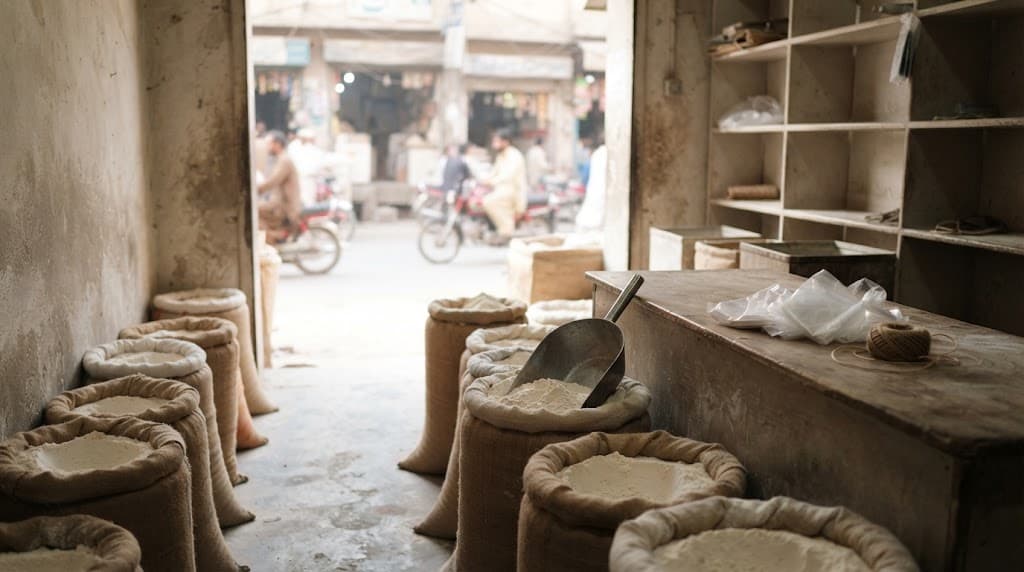
Wheat policy in Pakistan is at the centre of today’s flour squeeze: after Punjab replaced state procurement with private aggregators, provincial stocks cover barely a quarter of local need and national flour prices sit at roughly Rs150 to Rs170 a kilogram—more than triple the about Rs50 a kg seen five years ago. In deficit districts of Punjab such as Rawalpindi, flour has crossed Rs200 a kg. A roti that sold for Rs8 in 2021 now costs about Rs25 in 2026, a climb of more than 212%. For households that once treated flour as a modest weekly outlay, the staple has become a daily budget crisis.
How the aggregator experiment collapsed
Earlier this year, under pressure from lenders, Punjab stepped back from conventional wheat buying and tried a bureaucratically designed aggregator model. Private firms were meant to take bank loans, use public warehouses, and build strategic reserves of three million tonnes. Financing disputes deterred banks—the Bank of Punjab refused to join—and the gap between the government’s procurement rate and the open-market price kept many farmers from selling to the scheme.
Execution failed almost completely. Against the three-million-tonne goal, aggregators secured only about 160,000 tonnes. Nine of the eleven companies never began purchasing at all. The province had left direct procurement yet still carried the financial cost and risk of maintaining reserves—without building the stocks that plan required. The procurement drive ended in May; instead of quickly arranging imports to cover the emerging gap, officials kept arguing that the crop was held inside the country and that exaggerated crop-size claims would eventually ease the market.
Thin official supply, wide retail gap
For the first four of the five years since 2021, government-supplied flour cushioned poorer buyers. This year that cushion is thin: Punjab’s daily wheat release is about 3,500 tonnes, versus a traditional supply near 25,000 tonnes—only about 14% of the earlier flow, or an 86% shortfall. Such limited releases leave private stockists with pricing power rather than forcing them to unload grain.
Officially supplied flour is priced at Rs110 a kg, while private flour sells around Rs150—a Rs40, or about 36.4%, difference. This year’s climb alone, from about Rs79 to Rs180 a kg in some readings of the market, has been especially steep. Many families can no longer buy a full 10 kg bag and turn to loose flour by the kilo. Retailers, sources of the analysis note, have been opening officially supplied bags and selling that grain at private rates, so the subsidy gap often becomes a retail margin instead of relief for buyers. Designated urban sale points still draw long queues, which officials present as relief but which do little when province-wide stocks remain so short.
Timeline: what has happened so far
- 2021: A roti cost about Rs8; flour was near Rs50 a kg at the start of the five-year surge.
- 2021–early 2020s: For four of the five years after 2021, government flour remained a main support for vulnerable households.
- Earlier this year: Punjab dropped conventional procurement and launched the private aggregator scheme aimed at three million tonnes.
- May this year: The procurement drive ended with only about 160,000 tonnes bought; nine of 11 aggregators never started.
- 2026: Roti prices reach about Rs25; national flour trades near Rs150–170 a kg, with Rawalpindi and other deficit districts above Rs200.
Pakistan’s wheat policy will only ease household pressure if provincial authorities rebuild reliable public supply—or import enough grain to compete with private stocks—rather than relying on late assurances and limited trucked flour at a few city points. Food security cannot rest on experiments that leave the private trade holding most of the grain and setting the price.
Aasan alfaaz mein
Punjab ki gandum khareedari scheme fail ho gayi aur sarkaari stock bohot kam reh gaya. Atta ab roughly Rs150 se Rs170 kilo tak bik raha hai, kuch ilaqon mein Rs200 se upar. Roti Rs8 se badh kar lagbhag Rs25 ho gayi hai. Matlab gharane ko chhoti miqdaar mein mehnga atta lena parta hai aur rozmarra ka kharch barh gaya hai.