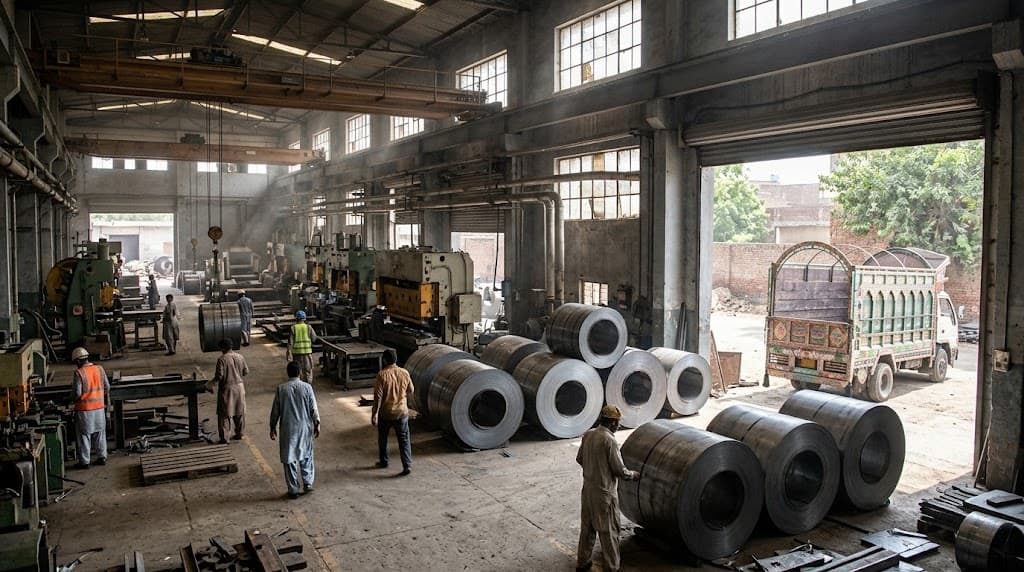
Zahidjee Textile Mills has shut a weaving unit with 262 looms, the company told the Pakistan Stock Exchange (PSX), the country's main securities market. The notice, dated October 16, 2026, described the shutdown as an operational adjustment prompted by business needs and prevailing conditions. The move adds to the textile industry crisis in Pakistan, where mills and power loom operators say cheap imports, electricity costs and taxes are squeezing their margins.
What the filing said
Zahidjee was registered on July 17, 1990, and its core work is shipping higher-value fabrics and made-up textile goods abroad, along with making and selling yarn. The notice did not give the unit's location, how many staff it affects, or the financial effect of the decision. The company also did not say what the facility will be used for, or whether its other operations will be touched.
Pressure on power loom units
Industry representatives cited in a recent press report estimated that around 40% of power loom units in Faisalabad and nearby areas had shut, and that more than 100,000 workers had lost their jobs. These are industry estimates, and no official count has been cited for either figure. Power looms are weaving machines run on electricity. Faisalabad's power loom base has historically included nearly 800,000 looms, ranging from small workshops to larger plants with 1,000 to 5,000 machines.
Aslam Meraj, who leads the Textile, Power Loom and Garment Workers Union Faisalabad, said local makers are losing ground to imported thread, unfinished cloth and finished textiles from abroad. Industry representatives also flagged polyester-based yarn from China. Some of it becomes gray fabric for export, and when orders overseas weaken, that cloth can be diverted to the home market, which squeezes local makers further.
Power tariffs, taxes and wages have also added to the pressure on power loom operators.
Aasan alfaaz mein
Zahidjee Textile Mills ne stock exchange ko bataya hai ke us ne 262 looms wala weaving unit band kar diya hai. Company ne is faisle ko kaam ki zaroorat aur maujooda halaat se jorra hai, lekin yeh nahin bataya ke kitne mazdoor mutassir hue. Faisalabad aur aas paas ke power loom units par sasti import, bijli ke bill aur tax ka dabao hai. Aam logon ke liye iska matlab hai ke is sector mein naukri aur rozgar par nazar rakhni zaroori hai.