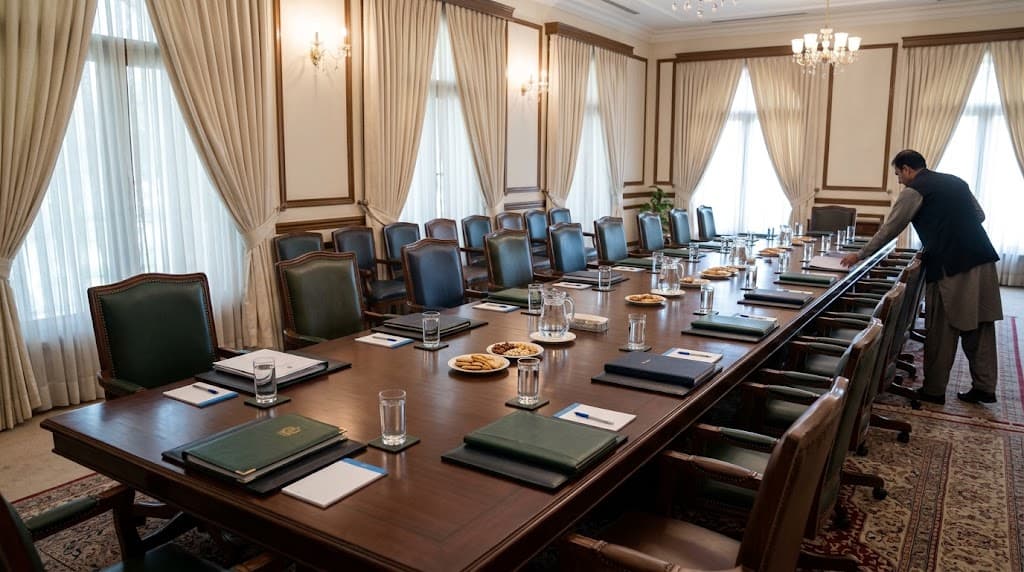
At a two-day conference on the IMF Pakistan tax agenda, the Fund's regional director, Jihad Azour, said on Tuesday that Pakistan needs a fairer and more neutral tax system to improve compliance and help businesses grow. His remarks come after the first two years of the IMF's loan programme, and the official figures show the tax burden falling unevenly. In short, the IMF wants a wider tax base, while the numbers show salaried workers paying more and retailers, farmers and property owners contributing little.
Azour's opening speech set out Pakistan's priorities: broadening the tax base, strengthening revenue administration, reducing tax expenditures (the exemptions and concessions that cut what the state collects), protecting priority spending and improving public services. He said a more neutral structure would let productive firms expand rather than stay small or informal. He described tax reform as central to the Extended Fund Facility (EFF), the IMF loan arrangement that supports Pakistan's stabilisation and reform agenda.
Retailers, farmers and property owners stay largely untaxed
Tax contributions from influential sectors such as retail, agriculture and real estate remained negligible during the first two years of the programme. Retailers are still outside the tax net. As of October 15, only 137 new retailers had joined a scheme for traders, against an annual target of one million. The scheme lets traders deal in cash, a feature that can encourage informality, and the IMF has endorsed it.
Income tax from the real estate sector fell 38% to Rs35.2 billion in the first three months of the current fiscal year, according to data from the Federal Board of Revenue (FBR), Pakistan's main federal tax collector. That was Rs22 billion less than the same period last year, after the government cut income tax for the sector by 50%, a cut the IMF also endorsed. Realty paid Rs200 billion in fiscal year 2024 and Rs236 billion in the last fiscal year, and may now dip below Rs150 billion after the rate cuts.
Agriculture is also a small contributor. Punjab and Sindh together collected Rs5.1 billion in agriculture income tax up to June under a new regime introduced as part of the IMF programme. Last fiscal year, the Sindh target was Rs2 billion but the province collected Rs1.1 billion, while Punjab's budget books showed Rs4 billion collected against a Rs10.5 billion target.
Salaried workers carry a larger share
The salaried class has been squeezed, and the figures show it. Before the IMF programme began, its annual tax contribution was Rs391 billion. By June 2026 it had risen to Rs629 billion, an increase of Rs238 billion, or about 61% by simple arithmetic.
Azour said fairness is central to reform, since taxpayers are more likely to comply when the rules are transparent and the system does not reward informality or give preferential treatment. He suggested a medium-term tax strategy with clear objectives, well-designed policies and transparent responsibilities. Readers who want more background can see our earlier coverage on IMF Pakistan tax reform, widening the net and trimming concessions.
The comments come as a high-level government discussion asks whether the FBR can deliver, and the prime minister has shelved a plan to abolish the FBR. Planning Minister Ahsan Iqbal has questioned the country's economic stabilisation, calling it 'stunted and borrowed', and wrote to the prime minister that the focus has been on fiscal numbers.
Timeline: what has happened so far
- Before the IMF programme began: the salaried class's annual tax contribution stood at Rs391 billion.
- First two years of the programme: retail, agriculture and real estate contributed little, while the salaried figure rose.
- June 2026: the salaried contribution reached Rs629 billion, and IMF management agreed to reduce withholding tax rates for real estate.
- First three months of the current fiscal year: real estate income tax fell 38% to Rs35.2 billion.
- As of October 15: 137 new retailers had joined the trader scheme.
Aasan alfaaz mein
IMF ke regional director Jihad Azour ne kaha hai ke Pakistan ka tax system zyada munsif hona chahiye. Tankhwah daar tabqe ka tax hissa barh gaya hai, jab ke dukandar, zamindar aur property ke sectors abhi tak zyada tax nahi de rahe. Hukumat ko tax net wide karna hoga aur sudhaar par amal karna hoga. Aam shehri ke liye asal asar tab clear hoga jab tax ke naye faisle aur rates samne aayein gay.